A wedding save the date is the first notice family and friends receive, and how you deliver it decides whether the date gets blocked on their calendars or lost among messages. The real decision for couples planning a wedding is not only which design to choose, but when to send it, through which channel, and what details to include without committing to things that may still change.
In Mexico, where weddings bring together large families, guests traveling from other states, and dates that compete with long weekends and vacations, a poorly planned notice leads to avoidable absences.
The short answer: send a wedding save the date 6 to 12 months before the event, only once the date and venue are confirmed, with names, date, and city, through a channel guests can keep, such as WhatsApp, email, or a printed card.
What follows explains each decision with examples, ready to copy texts, and a step by step plan to carry it out without setbacks.
A wedding save the date is an early, informal, short notice that asks guests to reserve the day on their calendars before the formal invitation arrives. Its purpose is practical: it gives people time to request time off work, book transportation or lodging, and arrange family commitments. When the wedding falls on a peak season Saturday in the State of Mexico or Mexico City, that lead time can decide how many people show up.
The early notice does not replace the invitation. The invitation includes the schedule, exact address, dress code, and RSVP, while the save the date only holds the date. That is why everyone who receives one should later receive the full invitation, and why it should go only to people who will be on the final guest list.
The essential information fits in four lines: the couple's names, the date, the city or destination, and a sentence saying the invitation will follow. If you have a wedding website, including its address helps gather lodging and transportation details, something the Dos Terrones guide on what to include in a save the date also highlights. Time, program, menu, and RSVP belong in the invitation, because these details change and create confusion when shared too far in advance.
The ideal timing depends on how much time guests need to get organized. Specialized guides agree on a broad range, between 6 and 12 months before, and adjust it based on distance and season. The table below summarizes the most commonly used criteria, based on recommendations from Knoott and Joy.
| Type of wedding | Recommended timing | Main reason |
|---|---|---|
| Local wedding, with guests from the same city | 4 to 6 months before | Most guests only need to fit it into their schedule and request the day off. |
| Wedding in another city, with out of town guests | 6 to 9 months before | Guests need to book transportation, lodging, and time off work. |
| Destination wedding or with international guests | 9 to 12 months before | Flights and rooms sell out quickly and get more expensive. |
| Peak season, long weekend, or holiday wedding | 10 to 12 months before | Family and friends' calendars fill up well in advance. |
First, the date and location must be confirmed with the venue, because sending a notice and then changing it creates more confusion than waiting a few weeks. Second, the guest list should be settled enough to know who will receive the formal invitation, and the Knoott guide to save the dates for weddings in Mexico considers sending it to people who are later not invited one of the worst mistakes. Third, avoid sending it too early, because after 14 months people tend to forget it.
At a venue like Gran Malinalco, located in Malinalco about 90 minutes from Mexico City, lead time matters even more: many guests will want to use the lodging on the property and arrange transportation from the capital. Couples who have already locked in a date at a wedding venue near Mexico City have exactly the information the notice needs, and that is the natural moment to send it.
Send the notice to the people the couple considers essential: close family, best friends, godparents, witnesses, and guests who will travel. Anyone who receives the wedding save the date should also receive the invitation, so it is best not to include people on a waiting list. If there is a second guest list, it is best to contact those guests directly with the formal invitation, since an early notice creates an expectation that is hard to take back.
Relatives from other states or from abroad need the notice before everyone else. One option is to send them the message with an additional note about the wedding city, so they can start checking flights and routes, and then share the same text with the rest of the group a few days later.
There is no single format. The choice depends on your budget, the style of the celebration, and the channel each guest actually uses. This comparison can help you decide.
| Channel | Advantages | Things to watch |
|---|---|---|
| Arrives instantly, costs little, and shows whether it was received. | Gets lost among chats, so it helps to ask for a short reply. | |
| Supports a full design and a link to the wedding website. | Can land in spam or go unnoticed by people who rarely check it. | |
| Printed card or magnet | Stays visible on the refrigerator or a corkboard for months. | Requires mailing addresses and a budget for printing and shipping. |
| Short video | Conveys emotion and is easy to share among relatives. | Requires production and does not replace the written date. |
| Personal message or phone call | Ideal for grandparents, godparents, and immediate family. | Takes time, so it is best saved for a few people. |
The message works best when sent individually or in a group created just for this purpose, with an image of the notice and the text written below it, so the date can be copied into a calendar. Asking for a reaction or a short reply confirms it was received without turning it into an RSVP. Joy also suggests a follow up message to make sure everyone received it.
A printed card or magnet works well for large families and older guests, who tend to keep the physical item. A middle ground is to combine both formats: a digital message for the whole list and a printed version for godparents and immediate family.
For couples still comparing venues before setting the date, getting to know the private chapel at Gran Malinalco and its gardens helps you picture the celebration before writing the notice.
The tone depends on the couple's style, but the structure stays the same: names, date, place, and a note that the invitation will follow. These examples are a starting point and can be adapted with your real names and date.
“We are so happy to share that [Name] and [Name] are getting married. Please save Saturday, October 16, 2027, in Malinalco, State of Mexico. The formal invitation will follow.”
“Hi, family. We wanted you to be the first to hear our news: we are getting married on October 16, 2027, in Malinalco. Please save the date, and we will send all the details soon.”
“We are getting married on October 16, 2027, in Malinalco, 90 minutes from Mexico City. We are letting you know early so you can look into transportation and lodging. More information on our wedding website.”
A notice that later changes forces you to resend information and creates doubt about which date is correct. It is better to wait for the venue's confirmation.
Schedules, menu, and RSVP overload a message that should be short. The more it contains, the more likely something will change and need correcting.
According to Knoott, a notice sent three months before the wedding has already lost its purpose, while one sent more than 14 months ahead gets forgotten. The 6 to 12 month range avoids both extremes.
This mistake hurts relationships and is avoided with a clear list before sending. Whoever receives the notice assumes they will be invited.
To illustrate the timeline, imagine a couple with 180 guests, about 90 of whom live in Mexico City and the rest in other states. After confirming a Saturday in October at a mountain venue, the couple sends the notice by WhatsApp 10 months ahead, starts with out of town relatives, and hands printed cards to godparents and grandparents. With that lead time, guests book rooms, arrange carpools from the capital, and request days off without rushing. This is an illustrative scenario based on the recommended timelines, not the case of a specific couple.
A venue with lodging on the property simplifies this planning. Gran Malinalco, with 9 hectares, a private chapel, an event hall, and room for more than 200 guests under exclusive rental, lets the notice already say where guests will sleep and what the weekend will look like.
Most commonly between 6 and 12 months before the wedding. For local weddings, 4 to 6 months is enough, while for destination weddings or those with out of town guests, it is best to send it at least 9 months ahead. In peak season or on long weekends, the more lead time, the better.
The couple's names, the date, the city or destination, and a sentence saying the formal invitation will follow. If you have a wedding website, you can add its address. Time, program, and RSVP are left for the invitation.
Yes, it is a valid option and increasingly popular because it is fast and affordable. It works best with an image and the text written below it, plus a short request for a reply so you know it was received. For older relatives, it helps to reinforce it with a phone call or a card.
Only to those who will definitely receive the formal invitation, meaning close family, best friends, godparents, and traveling guests. Whoever receives it assumes they are invited, which is why it should not go to a waiting list. Everyone else can receive the invitation directly.
Sending a wedding save the date well is a matter of order more than design: a confirmed date, a clear list, a channel guests actually use, and a short message that makes people want to attend. With that foundation, the formal invitation reaches people who have already set the day aside, and the couple can focus on what comes next, from the menu to the program of the celebration. For those picturing a wedding in the mountains, with a private chapel, gardens, and lodging for guests, getting to know Gran Malinalco before setting the date helps you decide with complete information. The venue team can advise on availability and timing.
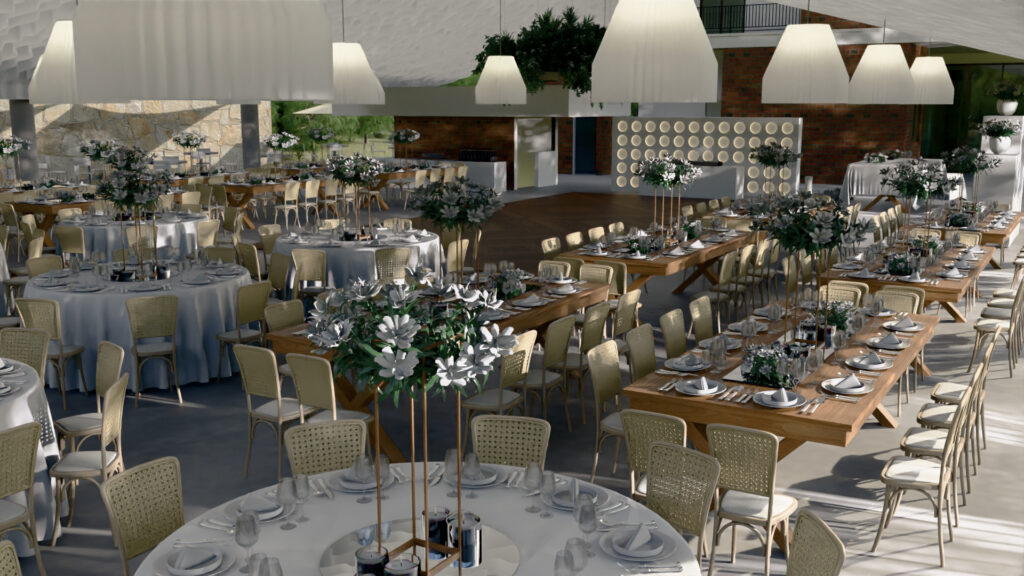
With accommodations for over 200 guests, a chapel, an event hall, and a private estate nestled in the natural surroundings of Malinalco.
Realistic and varied looks for a church wedding, for both women and men