Booking a wedding venue with a hotel on site is one of the biggest logistical decisions a couple will make during planning. It is not just about finding a beautiful setting, it is about deciding how the people who matter most will actually experience the day, from the couple themselves to the guest who flew in from another city. When a wedding brings together family from different states or even different countries, choosing a place where the ceremony, reception, and lodging all happen in one spot changes the entire experience.
The most common mistake is comparing prices at face value. A couple books a lower priced hall, then ends up adding transportation, coordinating late night rides, spreading guests across different hotels, and dealing with the stress of half the room leaving before the last dance. In the end, that "cheaper" choice costs more, in time, money, and energy. This guide breaks down everything worth checking, asking, and weighing before signing a contract with a venue that includes lodging.
Not every venue that claims to include lodging works the same way. Some have a partnership with nearby hotels, sometimes with a discount, sometimes without, while others are a single closed property where the wedding takes place and the rooms sit on the same grounds. The difference in experience is significant.
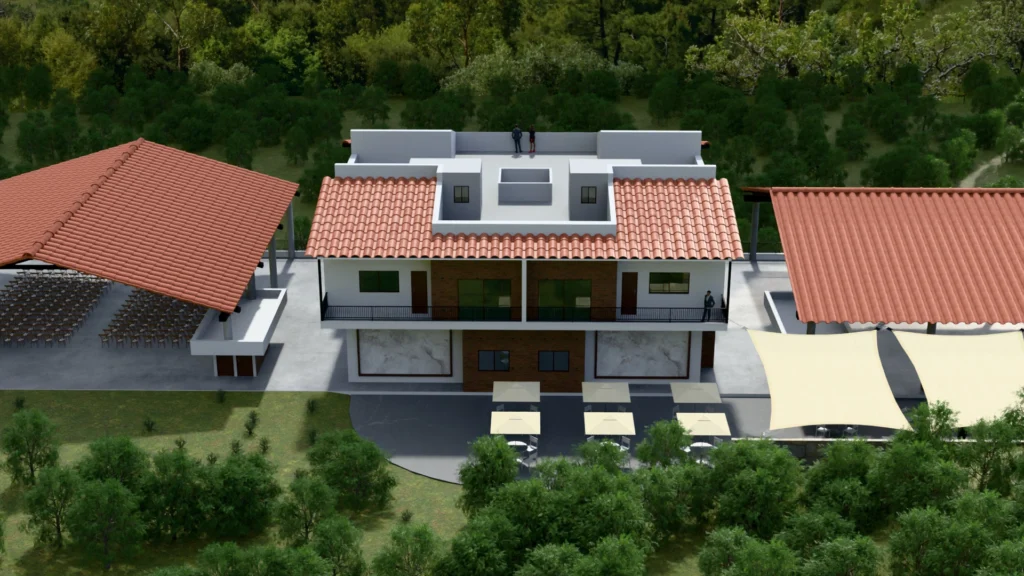
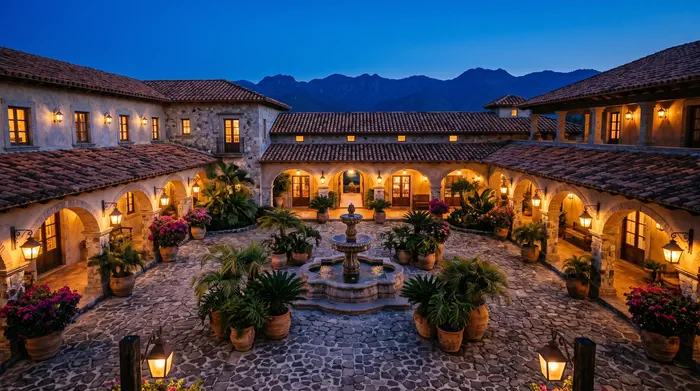
The most complete model, and the one more couples are looking for today, is an exclusive use property: the entire venue is booked for a single event, there are no other guests wandering around, no overlapping events, no noise from another party down the hall. Gran Malinalco, located in the State of Mexico about 90 minutes from Mexico City, operates exactly on that model. The property's 9 hectares, including lodging for more than 200 guests, gardens, an event hall, and a private chapel, belong entirely to the couple who books that date. That continuity is what turns a wedding into a full weekend experience rather than a five hour event.
When a property is booked exclusively, the couple also controls the pace of the night: there is no forced "cutoff time" driven by needing to clean up for another event the next morning, and guests can keep talking on the patio without the pressure of calling a car home at midnight.
Before touring any property, it helps to understand what each model actually involves:
| Factor | Venue without lodging | Venue with a hotel included |
|---|---|---|
| Late night transportation | The couple has to arrange cars, shuttles, or taxis for every guest leaving | No one drives at the end of the night, the room is steps from the dance floor |
| Logistics coordination | A detailed plan is needed across multiple hotels or rental homes | One single location covers ceremony, reception, and rest |
| Event timing | Can get cut short by venue closing hours or transportation pressure | The party flows more freely once guests no longer need to leave |
| Guest experience | Travel fatigue sets in, many guests leave earlier than planned | Guests stay longer and enjoy more, the late hours feel relaxed |
| Real total cost | Early savings often get absorbed by transportation, tips, and extras | One all in price that covers more and removes scattered costs |
| Weekend style wedding | Hard to build out, guests tend to head back to their hotel early | Makes a Friday welcome dinner and Sunday brunch easy to plan |
This comparison highlights something that rarely shows up in an early budget: the time and emotional friction saved when everything happens in one place. That is a value few spreadsheets ever capture.
Touring a venue and falling in love with the afternoon light or the garden is not enough to make this decision. What separates a smoothly run wedding from one full of last minute surprises comes down to the answers to these questions:
If the answer is "nearby hotels," it is worth asking about the actual distance, whether transportation is on the couple to arrange, and what happens if a guest ends up at the wrong hotel. When lodging sits on the same property as the venue, that entire layer of logistics disappears.
Not every room is the same. It is worth knowing how many are doubles, how many are singles, whether there is a suite for the couple, and whether guests who are not staying overnight can visit those who are the next day. That clarity prevents confusion on the day of the wedding.
Some venues advertise an attractive rental price, but lodging carries an additional per room cost that the couple ends up covering or passing on to guests. It is worth asking for an all inclusive quote from the very first conversation to make a fair comparison.
A true hotel style venue lets guests arrive the day before or the morning of the wedding and check out the following day. If checkout is at 11 a.m. on the day of the event itself, the model is not that different from booking rooms at an outside hotel. This question reveals a lot about how the property's business is actually structured.
Furniture, kitchen access, lighting, backup power, parking, security staff: any of these can be included or added as an extra. Asking for an itemized quote from the start is the only way to avoid discovering hidden costs later in the process.
If you are looking for a property in the State of Mexico where the ceremony, the party, and the lodging all happen in one place without added complications, explore Gran Malinalco and its exclusive use model. It is one of the few properties in the region with every element built into a single 9 hectare estate.
There is one detail many couples do not think about until after the wedding: how many guests stay until the very end depends directly on whether they have to drive home afterward. At weddings where lodging is on site, the tables stay full past midnight. At weddings where half the group has to arrange their own way back, the room starts emptying out before the last dance.
This matters especially for guests traveling from outside Mexico City or from abroad. For them, the wedding is not a single day, it is a trip. When a hotel style venue allows for a full weekend, a welcome dinner on Friday, the wedding on Saturday, a farewell brunch on Sunday, the investment they made in that trip pays off in a different way. And what they take home is a memory of an entire experience, not just one night.
Exclusive use properties like Gran Malinalco make that format possible. The gardens and common areas stay open to guests the next morning, the venue's team manages timing without pressure, and the couple wakes up on Sunday surrounded by the people they love most, with no one scattered across different hotels around Malinalco.
One thing that is not always clear in the first conversations with a venue is its vendor policy. Some properties work with a closed list of approved vendors: catering, decor, and music all have to come from companies the venue authorizes. Others allow outside vendors under certain conditions, such as an access fee or restricted setup hours.
Neither model is better in the abstract, it comes down to what matters most to the couple. If full customization is the priority, it is worth confirming early on how flexible the venue is with outside vendors. If operational ease and fewer negotiations matter more, a venue with its own vendor network can simplify the process considerably.
What is non negotiable is that the venue's kitchen needs to be equipped to handle outside catering if that route is chosen. It is worth checking the industrial kitchen's capacity, truck access for deliveries, available power outlets, and setup space. None of this shows up in the property's Instagram photos, but it determines whether the wedding day runs smoothly or runs into friction.
This list covers the points that most often lead to misunderstandings or unexpected costs during the booking process:
Going through this list before signing is not about distrust, it is the only way to reach the wedding day without surprises.
For couples based in Mexico City, or whose guest list is mostly there, venues 60 to 120 minutes away hit an interesting sweet spot: close enough that the wedding does not turn into a flight, but far enough that the change of scenery feels like a real getaway.
The State of Mexico has several destinations that fit that criteria. Malinalco in particular offers a mountain setting, mild climate, and fairly direct access from Mexico City without the traffic that comes with some other routes near the capital. For a wedding with guests who would rather skip flights but still want an experience outside the city, that balance of distance and nature is hard to find elsewhere.
In that context, a venue like Gran Malinalco solves the distance question with a concrete answer: if guests have to drive 90 minutes back to Mexico City once the party ends, they leave early. If instead their room is 50 meters from the event hall, the night does not end with the last toast, it keeps going.
The main advantage is eliminating late night transportation, no guest has to drive home after hours of celebrating, which also takes pressure off the couple as hosts. On top of that, it opens the door to a weekend style celebration, welcome dinner, wedding, brunch, that elevates the experience for everyone who traveled in. For weddings that bring together family from different states or countries, that kind of logistical integration is especially valuable.
Not always, once you look at the real total cost. A venue without lodging can look cheaper on the initial quote, but once you add transportation, outside hotel bookings, group transport coordination, and the extras that come with guests scattered across town, that gap shrinks or even reverses. The smart move is to request itemized quotes from both types of venue and compare cost per guest including every element, not just the hall rental.
It depends on how many guests are traveling from outside the city and how long the event runs. For a wedding with lodging built in, couples typically book rooms for immediate family, the wedding party, and guests traveling the longest distance. Not all 100 or 200 guests will need to stay overnight, but there does need to be enough space for those who do. Exclusive use venues like Gran Malinalco in the State of Mexico offer lodging for more than 200 people on the same property, which simplifies that entire piece of planning.
The most important points are: whether the rental is exclusive or whether other events could happen simultaneously, what the check in and check out times are for rooms, what is included in the price versus what costs extra, and what the policy is for outside vendors. It is also worth confirming that a venue coordinator will be assigned to the event and that the contract spells out setup and breakdown access hours. Transparency from the first conversation is a strong signal of how the wedding day itself will run.
To round out your research before choosing a venue with a hotel, these resources offer useful context on wedding planning in Mexico:
Choosing a venue with a hotel is not just a logistical decision, it is a decision about how the couple and every one of their guests will experience that day. Couples who prioritize this model tend to end up with parties that run longer, guests who are more relaxed, and memories that go well beyond the ceremony itself. The key is asking the right questions before signing and comparing the real total cost, not just the hall rental price.
If you are looking for an exclusive use venue near Mexico City, with a private chapel, event hall, gardens, and lodging for more than 200 people set in the mountains of Malinalco, State of Mexico, Gran Malinalco is available to guide you with no obligation. The first step is getting to know the property and seeing whether it fits what you are looking for.
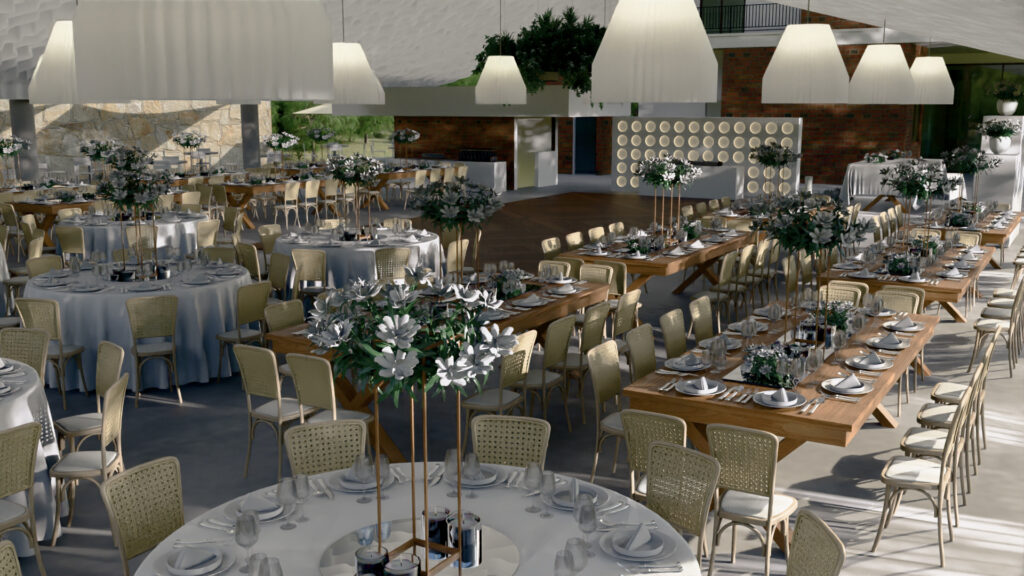
With accommodations for over 200 guests, a chapel, an event hall, and a private estate nestled in the natural surroundings of Malinalco.