Choosing a symbolic wedding ritual is one of the most personal decisions in planning a wedding, because it turns a scripted ceremony into a moment that truly represents the couple. Many couples reach this point wondering how to turn their vows and ring exchange into something memorable, without falling back on the same formulas they have seen at dozens of other weddings.
The good news is that there are dozens of rituals, sand, candles, unity ties, water, that can be adapted to each couple's story, beliefs, and style. In Malinalco, State of Mexico, where the natural landscape and colonial architecture already carry a symbolic weight of their own, these rituals take on an added meaning. This article gathers real options, examples, and a practical guide for choosing and weaving the right ritual into the ceremony.
A symbolic wedding ritual is an act within the ceremony that carries no legal weight, but visually represents the couple's commitment. Unlike signing the civil marriage certificate, which formalizes the marriage under the law, a symbolic ritual exists to communicate something, the joining of two families, the shift from one stage of life to the next, or the promise to build a shared future together. It can take place within a civil wedding, within a religious wedding, or as the centerpiece of a fully symbolic ceremony with no legal effect.
More couples across Mexico are weaving one of these rituals into their day because it lets them personalize a moment that otherwise follows nearly the same script at every wedding. A well chosen ritual turns the ceremony into a memory that belongs to the couple, carrying a meaning that only they and the people closest to them can fully read. It also works as a bridge between different family traditions, different beliefs, or even different cultures of origin that the couple wants to honor on the same day.
There is no single correct ritual in absolute terms, only the one that best tells the couple's story. Before deciding, it helps to think through three factors that directly shape the experience, for the couple and for the guests.
Some couples prefer rituals that represent a gradual joining, like the sand or candle ritual, ideal when they want to symbolize the blending of two families or two life paths. Others lean toward rituals with cultural roots, like the Catholic lazo or Celtic handfasting, when they want to honor a family tradition or a specific heritage. Talking through which moments and symbols have mattered most in the relationship is usually the first step to narrowing the options down to the one that truly resonates.
A candle ritual outdoors means accounting for wind and time of day, while one built around natural elements, like flowers, earth, or water, works best in spaces with gardens or mountain views. An enclosed chapel, on the other hand, allows for candles, incense, or live music without depending on the weather. Thinking about the space first avoids last minute adjustments and helps choose a ritual that feels like part of the setting, not something tacked on.
Rituals that involve guests, like writing a wish on a card or passing a candle from table to table, work best in smaller or medium sized groups, where the ceremony can run a bit longer without losing anyone's attention. For weddings with more guests, it is better to choose brief rituals, three to five minutes, that hold attention without stretching out the program.
The table below gathers some of the most requested rituals at Mexican weddings, along with their meaning and what is needed to carry them out.
| Ritual | Meaning | Approx. duration | Materials |
|---|---|---|---|
| Sand ceremony | Joins two elements that can no longer be separated, representing the merging of two families | 3 to 5 min | Two containers of different colored sand and one vessel to combine them |
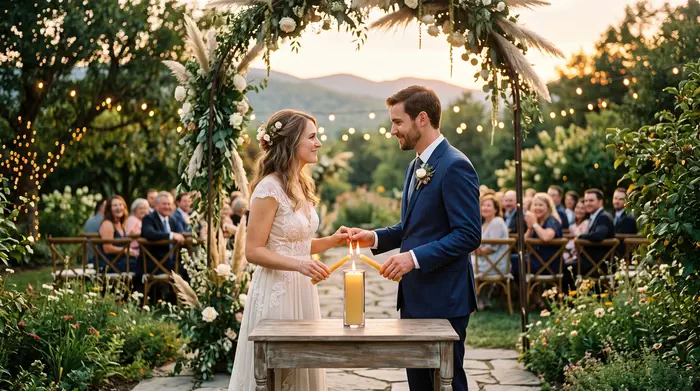
| Candle ceremony | Symbolizes two paths becoming one | 2 to 4 min | Two individual candles and one central candle |
| Lazo, wedding cord | Represents eternal union and mutual protection, a Mexican Catholic tradition | 2 to 3 min | Large cord or rosary, lazo sponsors |
| Handfasting | A Celtic ritual symbolizing a lifelong bond, tied together | 3 to 5 min | Colored ribbons or cords |
| Wine or water ceremony | Symbolizes sharing both the sweet and the bitter moments of marriage | 3 to 4 min | Two glasses or vessels and one main container |
| Time capsule | Holds letters, photos, or objects to open on a future anniversary | 2 to 3 min | Sealed box or capsule, letters written by the couple |
Any of these rituals can be paired with live music, readings, or the participation of sponsors, matching the overall style of the wedding and the space where the ceremony takes place. What matters is not the number of elements, but that each gesture carries a clear meaning for the people at its center.
For couples looking for a setting where these rituals feel natural, a private chapel surrounded by gardens and mountains offers the intimacy and light needed for every symbolic gesture to feel genuine, free of interruptions or outside noise.
Malinalco, in the State of Mexico, 90 minutes from Mexico City, has become one of the favorite destinations for weddings built around a real connection to nature. Its mountains, mild climate, and closeness to Mexico City let the couple and their guests experience the ceremony without the rush of a long trip, while still feeling completely removed from the pace of the city.
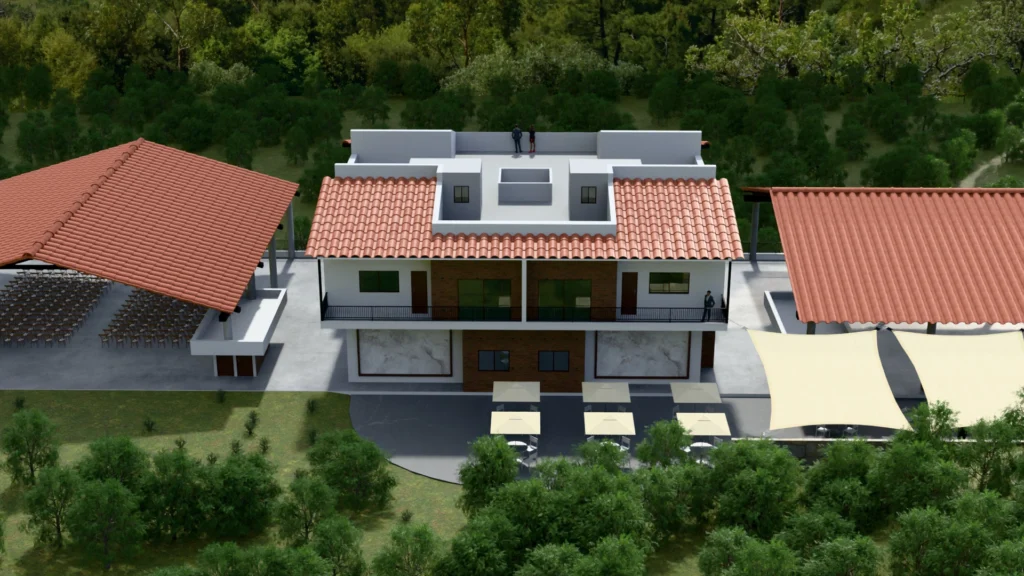
Gran Malinalco is a clear example of this kind of setting, with 9 hectares of gardens and mountain views, a private chapel, an event hall, and lodging for more than 200 guests, all under exclusive use rental. That combination lets a candle, sand, or nature based ritual blend into the landscape without extra decoration, because the setting itself already carries much of the symbolism.
Couples planning their wedding at a venue with these features tend to have more freedom to experiment with their chosen ritual, since the space adapts equally well to intimate ceremonies and to celebrations with more than a hundred guests.
A civil wedding formalizes the marriage under the law by signing the corresponding certificate before a judge or competent authority. A symbolic wedding, on the other hand, carries no legal effect, it is a ceremony designed to represent the couple's commitment in front of their guests, with the freedom to include rituals, personalized vows, and a fully custom format.
Most symbolic rituals last between two and five minutes, depending on how many elements are involved and whether guests take part. Keeping them brief is recommended to hold the audience's attention and avoid making the ceremony feel too long.
Yes, many couples build a symbolic ritual, like the lazo or a candle ceremony, into a mass or religious ceremony, as long as it is coordinated with the officiant beforehand. This kind of combination is common at Mexican Catholic weddings and allows for a personal touch without disrupting the religious protocol.
Malinalco, in the State of Mexico, is one of the most sought after options for its closeness to Mexico City, 90 minutes, and its natural surroundings. Venues like Gran Malinalco offer a private chapel, gardens, and an event hall in one place, which makes it easier to hold both the symbolic ritual and the reception without moving guests between different locations.
A symbolic wedding ritual does not need to be elaborate to carry weight, it needs to mean something to the people at its center. Choosing it based on the couple's story, the space where the wedding will take place, and the number of guests avoids last minute improvising and helps the gesture feel genuine to everyone watching.
Couples looking for a place where nature, privacy, and a chapel of their own come together to bring these rituals to life can request information and schedule a visit to Gran Malinalco to see the space before designing their ceremony.
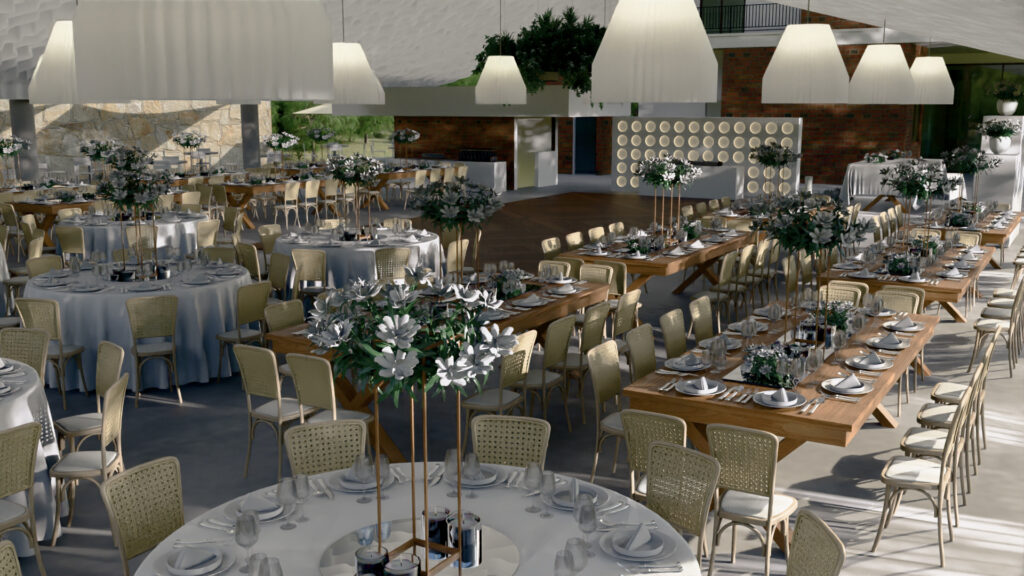
With accommodations for over 200 guests, a chapel, an event hall, and a private estate nestled in the natural surroundings of Malinalco.