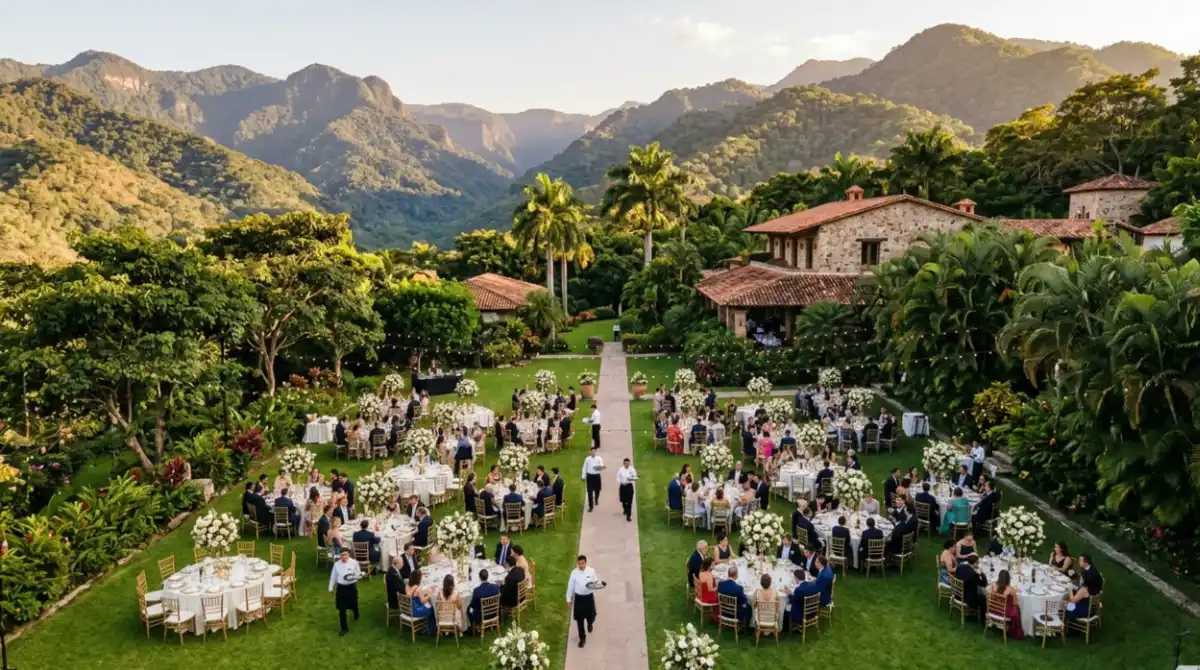
Planning a large wedding involves a lot more than picking a dress or choosing decorations. When the guest list goes over 200 people, the real logistics of the day become the factor that can make or break the whole celebration. Transporting dozens of families, coordinating vendors working at the same time, managing the schedule, and making sure the venue can handle the crowd are variables that need to be planned out well in advance, not figured out on the fly.
In Mexico, big weddings are increasingly being held outside the city, at venues that offer privacy, plenty of space, and the ability to bring everyone together in one place. But that decision comes with its own challenges: coordinating transportation, verifying the actual capacity of the event hall, ensuring food service for hundreds of guests, and anticipating the details that wedding magazines never mention. This article walks through, point by point, everything a couple needs to think through when planning a large-scale wedding.
A wedding with 50 people is manageable with a coordinator and some flexibility. One with 200 or more runs more like a corporate event: it needs structure, clear responsibilities, and generous time buffers. The first mistake many couples make is underestimating how quickly complexity scales. It's not just about adding more tables — every single piece of the operation multiplies.
Catering for 200 people means a kitchen with industrial capacity, enough service staff, and a coordinated food delivery system to make sure everyone gets served within a reasonable window of time. Music or a live band needs a sound system sized for the actual space, not a standard banquet hall. Portable restrooms (if the venue doesn't have enough) need to be calculated based on large, event norms. Even parking becomes a logistics issue that has to be actively managed.
Couples who book a venue with exclusive rental, like some haciendas and ranches in the State of Mexico offer, solve a lot of these problems in one move: the entire space, no sharing with other events, with infrastructure built for large guest counts from the ground up.
If the wedding is being held outside the city, say about 90 minutes from Mexico City, transportation stops being a minor detail and becomes a critical variable. You need concrete answers: How are guests getting there? Where are they parking? What happens at the end of the night, when many people have been drinking and driving home on the highway isn't safe?
The most common solutions for large weddings are group buses hired from pickup points in the city, expanded on-site parking at the venue, and, ideally, lodging available right at the same property so guests don't have to travel at night.
Food service at a large wedding has three critical moments: the welcome cocktail hour, dinner, and late-night service. Each one requires a different approach.
This is the highest-traffic, least-structured moment of the event. Guests arrive in waves, some coming straight from a long drive. The key is having enough food and drink stations spread throughout the space to avoid bottlenecks. For 200 people, you want at least 4 stations running simultaneously.
This is the most delicate service of the night. For all guests to be served within a reasonable window, the number of servers needs to be calculated precisely: the standard ratio is one server per 8 to 10 guests for seated table service. For 200 people, that means 20 to 25 servers for dinner alone, on top of kitchen staff.
A common mistake is booking a catering company without confirming whether the venue's kitchen can actually handle that volume. Not every event hall has professional-grade equipment. This is something that needs to be confirmed during the venue visit, not when signing the contract.
Long weddings that run well into the early morning need a second round of food: tacos, street food, coffee, or snack stations. This moment often gets overlooked, but it's one of the most memorable parts of the night. Planning it with the same care as dinner is a decision guests will appreciate, even if they don't realize it.
The table below summarizes the main logistics factors based on the type of venue chosen for a large wedding:
| Logistics factor | Urban event hall | Hacienda / rural venue | Venue with on-site lodging |
|---|---|---|---|
| Guest transportation | Coordinated externally | Requires hired buses | On-site lodging, no late-night travel |
| External vendors | All external | Most external | Several integrated with the venue |
| Catering and kitchen | Open hiring | In-house or external kitchen | Venue kitchen available |
| Setup time | Limited hours (shift-based) | More flexibility | Access from the day before |
| Space control | Shared with other events | Partial exclusivity | Full exclusive rental |
| Weather contingency plan | No natural alternative | Depends on venue | Covered chapel + backup areas |
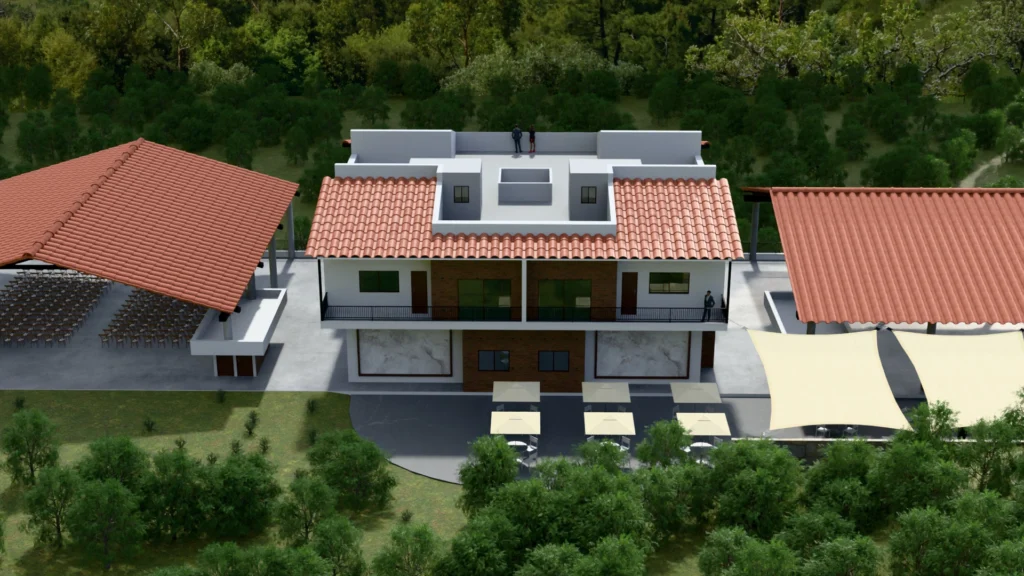
If you're evaluating venues with these features in the State of Mexico, Gran Malinalco operates under full exclusive rental and offers infrastructure designed for large-scale events. More information at granmalinalco.com/en/event-hall.
A wedding with 200 or more guests typically involves between 8 and 15 active vendors on the day itself: photographer, videographer, florist, DJ or band, wedding coordinator, caterer, baker, parking staff, lighting team, audio crew, officiant, and transportation, among others. Coordinating everyone requires a master document, usually called the day-of timeline, which all vendors need to receive at least a week in advance.
Setup timing is one of the most commonly overlooked areas. Many vendors need access to the venue hours before the event begins: a florist may need 4 hours to set up an elaborate arrangement, the audio crew needs sound checks, and the catering team needs to start prepping in the kitchen early on. If the venue has another event the day before or has restricted access hours, the entire plan gets compressed.
An outdoor wedding, especially in the mountain regions of the State of Mexico, is exposed to sudden weather changes. Seasonal rain, dropping temperatures at dusk, or strong winds are real possibilities that need to be factored into the logistics from day one, not as a last-minute backup plan.
The questions to ask the venue before signing are straightforward: Is there a covered backup option? Is the chapel enclosed? Can the event hall accommodate the full event if the garden isn't an option? Has the venue hosted a full wedding in the rain before?
Other common logistical surprises at large weddings include a vendor arriving late, a guest getting into a traffic accident on the way there, a brief power outage, or a guest having a medical emergency. Having a dedicated floor coordinator separate from the main wedding coordinator, focused exclusively on handling issues the day of the event, is an investment that pays for itself the first time something goes sideways.
Key logistics milestones by planning stage:
| ✓ | When | Logistics task |
|---|---|---|
| ☐ | 12-18 months out | Confirm the venue's maximum capacity and exclusive rental date |
| ☐ | 10-12 months out | Book catering and finalize the menu for 200+ guests |
| ☐ | 8-10 months out | Arrange group transportation or define expanded parking area |
| ☐ | 6-8 months out | Confirm audio, lighting, and dance floor vendors sized for a large crowd |
| ☐ | 4-6 months out | Send invitations with maps and lodging options |
| ☐ | 3-4 months out | Test cell phone signal at the venue and confirm communication plan |
| ☐ | 2-3 months out | Do a table layout test run with the final seating arrangement |
| ☐ | 1 month out | Confirm final guest count and update catering accordingly |
| ☐ | 1 week out | Full briefing with all vendors |
| ☐ | Day of the wedding | Floor coordinator on-site at least 4 hours before the event starts |
There's a conceptual mistake many couples make when planning: they think of the venue as just a backdrop, when it's actually the variable that determines whether the logistics are even possible. A venue without its own parking forces you to bring in an external valet service. A venue without a real kitchen limits your catering options. A venue in an area with difficult road access multiplies the risk of guests and vendors not making it on time.
For weddings with 200 or more guests, the infrastructure questions to confirm at the venue include: actual square footage of the hall or garden in banquet setup, number of available restrooms (and whether more can be added), kitchen capacity for professional catering, a backup generator in case of a power outage, and vehicle access for vendor trucks.
A wedding with 200 or more guests isn't just a bigger wedding — it's a different scale of event entirely, one that requires logistics decisions made months in advance. From the type of venue and its actual infrastructure, to the server-to-guest ratio and the weather contingency plan, every variable has a direct impact on the experience for everyone there.
Choosing the right venue is the first and most important step. Gran Malinalco, located 90 minutes from Mexico City in Malinalco, State of Mexico, operates under exclusive rental across all 9 hectares, meaning the entire property, including the private chapel, event hall, gardens, and lodging, is available solely for the couple getting married, with no sharing the space with other events. If you're at that stage of planning, the first step is scheduling a visit.
Schedule a visit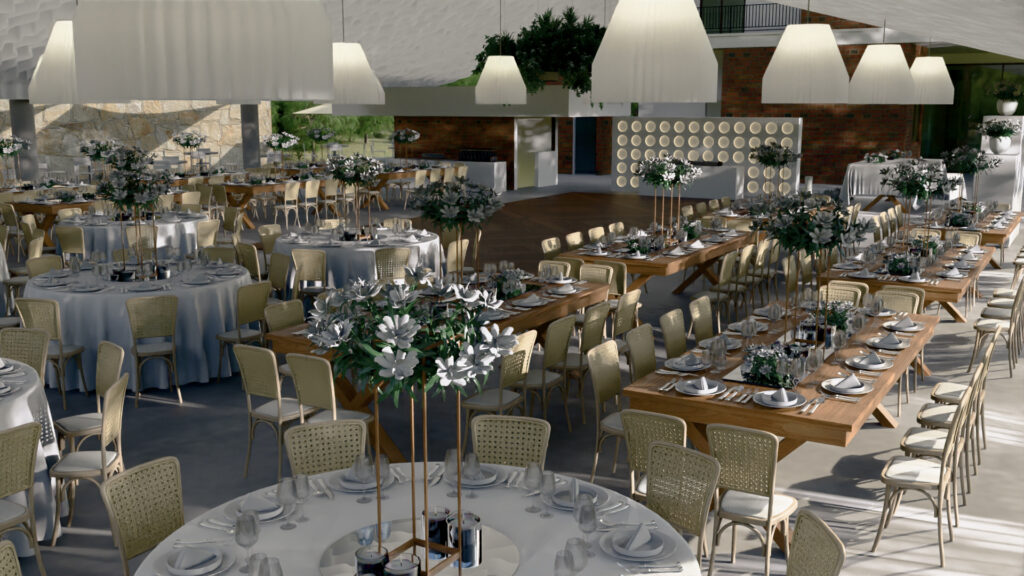
With accommodations for over 200 guests, a chapel, an event hall, and a private estate nestled in the natural surroundings of Malinalco.