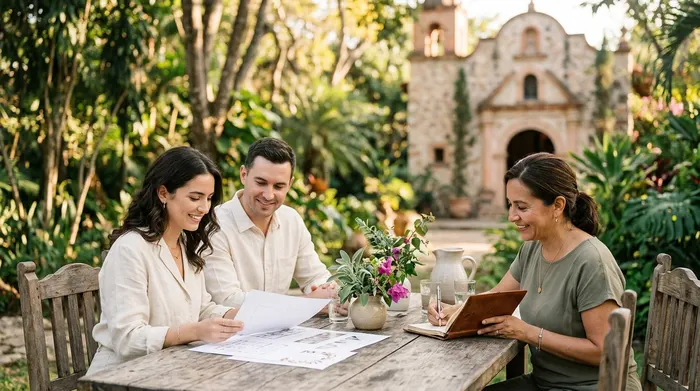
Negotiating with wedding vendors is one of the most consequential skills in the entire planning process, and it's rarely taught. Most couples walk into their first meetings with photographers, caterers, or florists without knowing what to ask, how to compare proposals, or when it's okay to push for changes without feeling awkward about it. The result is that they accept the first price they're quoted or, worse, sign contracts without fully understanding what's included.
The good news is that negotiating doesn't mean being pushy or haggling. It means being prepared, understanding what each service is actually worth, and building conversations that benefit both sides. In Mexico, where the wedding market offers everything from the State of Mexico to the Riviera Maya, couples who plan with clear information get better terms, stronger relationships with their vendors, and, in most cases, more efficient budgets without sacrificing quality.
This guide breaks the negotiation process down stage by stage, with practical tools for each type of vendor and the exact questions worth asking before signing anything.
The most common mistake when reaching out to wedding vendors is doing it without a category-by-category budget in place. When a couple doesn't know how much they're willing to spend on photography, decor, or catering, the vendor sets the reference point instead. That shifts the dynamic in their favor from the very first minute.
The first step is building a line-item budget, assigning a percentage or an estimated amount to each category before requesting quotes. This lets you walk into meetings with clarity and compare proposals on the same footing. It also helps to research market price ranges ahead of time; knowing the average cost of a wedding photographer in Mexico City, for example, makes it easier to tell whether a proposal is in line with the market or whether there's room to negotiate.
A second essential step is having at least two alternatives for every category. Negotiation works better when there's a real option to choose from. This isn't about threatening a vendor with going to a competitor, it's about walking in knowing the decision hasn't already been made.
A wedding quote rarely covers everything a couple actually needs. The base price is usually a starting point, not the real cost. To compare proposals fairly, you need to line up exactly what each vendor includes before comparing numbers.
The table below breaks down what's worth checking in each category to make sure you're comparing like for like:
| Category | Key Questions for the Vendor | What's Often Not Included |
|---|---|---|
| Photography | Who will actually be shooting on the day? How many hours? Are RAW files included? | Second shooter, printed album, digital rights |
| Catering | Is the price per person or per event? Does it include waitstaff and tableware? | Open bar, late-night snack, cake cutting and service |
| Florals | Are the flowers seasonal? Is setup and teardown included? | Extra centerpieces, floral arch, chapel florals |
| Music / DJ | How many hours of service? Is sound equipment included? | Lighting, overtime, ceremony microphone |
| Video | How many videographers? Is drone footage included? What's the delivery time? | Highlight edit, full-length version, subtitles |
Once that information is aligned, comparing proposals stops being about the sticker price and becomes about the real value of each offer. Sometimes the pricier vendor ends up cheaper overall once you add in what the budget option charges separately.
Negotiating in the wedding industry has its own rules. Wedding vendors are professionals who protect their reputation and rely heavily on referrals. That means aggressive price tactics tend to backfire. What works is empathy, clarity, and agreements where both sides feel like they got something out of it.
Instead of saying "your proposal is too expensive, can you lower the price?", it works better to say "we have a budget of X for this category, what could we adjust in the package to get there without losing the elements that matter most to us?" This framing opens a conversation instead of shutting it down.
Vendors tend to have more flexibility when they get something in return. Paying a larger deposit, confirming during off-peak season, or committing to leave a detailed review after the event are all things that can open the door to better terms. This applies especially to photographers and caterers who want to build their portfolio at certain types of venues.
If the wedding takes place somewhere like Gran Malinalco, an exclusive-use venue on 9 hectares in Malinalco, State of Mexico, outside vendors often value the chance to shoot in a setting surrounded by nature and mountains. That appeal can be a genuine point of leverage in a negotiation. Explore the venue →
Many vendors are restricted from lowering their list prices, but they can often add services at no extra cost. Instead of negotiating the price of the standard package, it's worth asking, "what could you add to the base package at this price?" That lets them keep their official rate while the couple gets more value.
Some vendors offer both photo and video, or decor and florals together. When one vendor covers two categories well, booking the combined package is usually more affordable than hiring two separate vendors. It also cuts down on coordination on the wedding day.
If you're still deciding on a venue, Gran Malinalco offers exclusive-use rental of the entire property with lodging included for more than 200 guests, which considerably simplifies negotiations with every other vendor since there's a single space for the whole celebration. Learn more →
Negotiation doesn't just depend on how you negotiate, it also depends on when you start the process. The best wedding vendors in Mexico book up months in advance, especially during peak season (October through December and spring). Starting late reduces your negotiating power, because your alternative becomes whoever's still available, not necessarily whoever offers the best service.
Booking outside these windows isn't impossible, but it does limit your options and, with them, your ability to negotiate. The more time you have, the more alternatives exist, and the easier the conversation about terms becomes.
A successful negotiation doesn't end with a handshake or a text message confirming a price. It ends with a signed contract that documents everything agreed on. This document is the single most important protection a couple has, and it's also the one that gets the least careful review.
There are several elements that should always appear in any contract with a wedding vendor:
If the venue you've chosen has a private chapel and event hall, as is the case at Gran Malinalco in Malinalco, State of Mexico, it's also worth reviewing outside vendor access policies. Some venues maintain preferred vendor lists or setup restrictions that should be spelled out clearly in the contract. See the event hall details →
Not everything that looks good on Instagram is what it seems. Spotting red flags before you sign can save you from serious problems on the wedding day. Here are the most common ones:
Yes, as long as it's done respectfully and with context. Instead of asking for a straight discount, it works better to frame the conversation around your available budget and ask what options exist to adjust the package to that number. Wedding vendors tend to have more flexibility than they show in a first conversation, especially when they see that a couple is serious, organized, and clear about what they need.
For most categories, three comparable options is a reasonable number. Fewer than two doesn't leave much to compare; more than five can lead to decision fatigue from too much information. What matters isn't collecting quotes, it's evaluating quality, track record, and personal chemistry with each vendor. For categories where the relationship is closer, like a photographer or wedding planner, personal connection matters just as much as price.
The supply in and around Mexico City is very broad, but the most in-demand vendors, well-known photographers, caterers with signature menus, live musicians, tend to book up months in advance. For weddings in destinations like Malinalco, Cuernavaca, or Valle de Bravo, it's also worth checking whether vendors charge travel fees or prefer working with local professionals. Venues like Gran Malinalco, about 90 minutes from Mexico City, often have existing relationships with local vendors who know the space and can make logistics easier.
With a well-written contract in place, a couple has legal grounds to address a breach. The first step is documenting everything: messages, emails, screenshots. If the issue can't be resolved directly with the vendor, couples in Mexico can file a complaint with Profeco, the consumer protection agency that handles cases involving services not delivered or delivered differently than agreed. This is one more reason to always work with formally established businesses and to require a contract with complete tax information from the start.
Negotiating with wedding vendors doesn't require sales tactics or a confrontational attitude. It requires preparation: knowing how much you want to spend, what each service actually includes, when the right moment is to lock in each contract, and how to protect every agreement in writing. Couples who show up informed to their vendor meetings get better outcomes, build stronger relationships, and reach their wedding day knowing every detail is covered.
If you're still in the process of choosing a venue, it's worth considering a space that simplifies vendor coordination from the start. Gran Malinalco, with exclusive-use rental of its 9 hectares in Malinalco, a private chapel, and lodging included, is a starting point that cuts down on logistics and leaves more room for what actually matters: celebrating.

With accommodations for over 200 guests, a chapel, an event hall, and a private estate nestled in the natural surroundings of Malinalco.