A mountain wedding with breathtaking views isn't just an aesthetic choice, it's a statement about the kind of celebration a couple wants to live. When the landscape does the visual work on its own, hills, open sky, an endless horizon, every photograph becomes a lasting memory, and every moment gains a dimension no indoor ballroom can replicate. Still, choosing this format means answering real questions: how do you keep guests comfortable through wind or temperature swings?, what style of decor pairs well with nature instead of fighting it?, what kind of venue guarantees the logistics never steal the spotlight from the day itself? This article gathers practical ideas and key decisions for couples planning a mountain wedding that's as enjoyable as it is visually stunning, in a country like Mexico, where the geography delivers world-class scenery just a few hours from the capital.
Mexico is one of the most topographically diverse countries in Latin America. From the volcanoes of the central highlands to the mountain ranges of Oaxaca and Jalisco, couples planning a wedding have access to extraordinary mountain scenery within a reasonable distance from major cities. The State of Mexico, in particular, is home to some of the most sought-after options for couples departing from Mexico City: Malinalco, Valle de Bravo, Temascaltepec, and Tejupilco form a corridor of pristine nature less than two hours away by car.
The trend also reflects a deeper cultural shift. According to data from the Mexican wedding industry, destination and outdoor weddings keep growing, with couples prioritizing unique experiences over conventional formats. A mountain setting offers three advantages that are hard to find in the city: natural privacy, unmatched photographic light, especially during the golden hour, and a calming atmosphere that puts guests in celebration mode the moment they arrive.
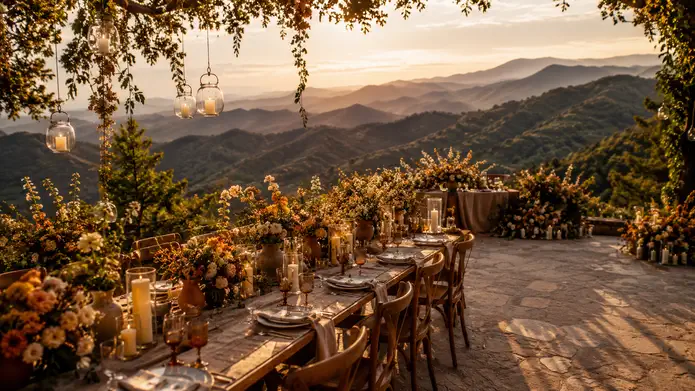
Rustic-chic is the most popular style for weddings in natural settings, for one simple reason: it treats the landscape as an extension of the decor. Bare wood tables or natural linen runners, regional wildflowers, wrought-iron candelabras, and lanterns strung between the trees create a sophisticated atmosphere without competing with the setting. For 2025, Mexican wedding trends point squarely to this profile: terracotta, olive green, and cream palettes, natural materials like stone and wood, and asymmetric floral arrangements using local species.
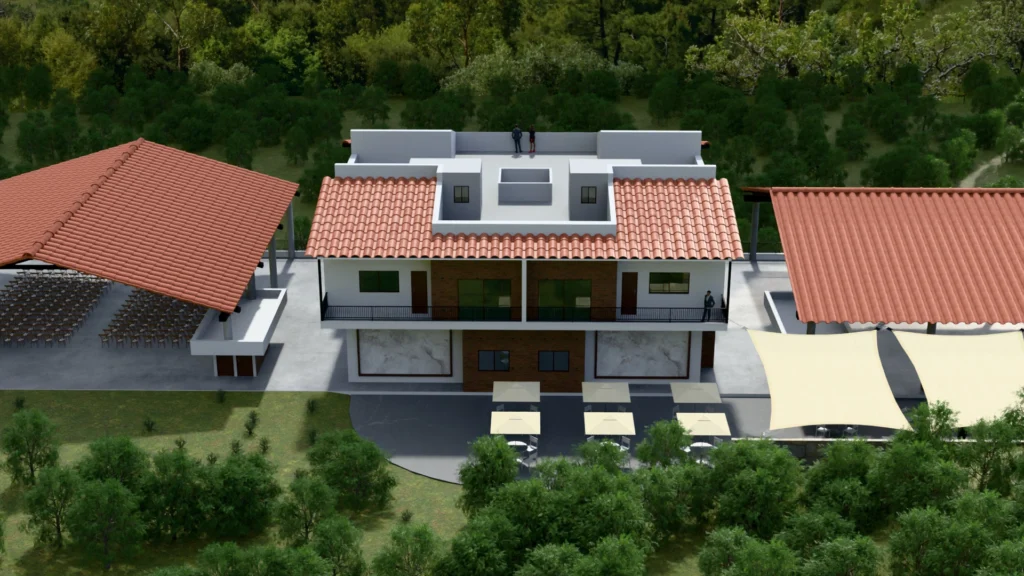
At an estate like Gran Malinalco, set on the slopes of the Malinalco hill in the State of Mexico, this style flows completely naturally. Its nine hectares of gardens and nature offer the perfect canvas for a rustic-chic wedding to unfold at the scale it deserves, spreading the cocktail hour, ceremony, and reception across different corners of the property instead of cramming everything into one small space.
The bohemian style makes the mountain's diffuse light its best ally. Draped veils, macrame structures, woven rugs, and natural flower crowns give the space a lightness that contrasts beautifully with the solidity of the landscape. It's ideal for morning ceremonies, when the fog or the clarity of sunrise bathes everything in a warm tone no camera filter can match.
The bridal bouquet in this style trades the perfectly round shape for wild, asymmetric compositions: lavender, bellflowers, thistles, and woven fern. Regional flowers take center stage here, cutting costs while adding genuine local character.
Couples who prefer a cleaner format can lean into architectural minimalism: white geometric structures, plain neutral-toned linens, centerpieces built around a single long-stemmed flower, and very little additional decor. The guiding principle is that the view speaks for itself. This style demands a venue with visible construction quality, natural stone, worked wood, coherent architecture, so the overall effect doesn't feel bare.
The private chapel at Gran Malinalco, with its colonial architecture woven into the natural surroundings, is exactly the kind of space where contemporary minimalism works: the building's form does the decorative work without the need to pile on extra elements.
| Style | Color palette | Key elements | Best for |
|---|---|---|---|
| Rustic-chic | Terracotta, cream, olive green | Wood, wildflowers, lanterns | Medium to large weddings |
| Bohemian | Off-white, mustard, soft lilac | Macrame, textiles, natural light | Intimate outdoor ceremonies |
| Contemporary-elegant | White, black, gray, gold | Clean lines, minimal florals | Design-minded couples |
| Rustic-Mexican | Fuchsia, orange, deep green | Papel picado, clay, dahlias | Couples embracing cultural roots |
Keeping these points in check from the start prevents logistical surprises that can overshadow even the most beautiful venue:
If this checklist is already raising questions about logistics, lodging, or how to lay out the space, the team at Gran Malinalco can walk through every point during an in-person tour of its nine hectares in Malinalco, State of Mexico, just 90 minutes from Mexico City.
Beyond the decor, a mountain wedding engages all five senses in a way few settings can match. The scent of damp vegetation at dawn, the sound of wind moving through the trees during the ceremony, the texture of a heavy linen tablecloth under your fingers, the view across a range of hills at the moment of the toast: these are sensory memories no video can fully capture, and ones guests carry with them for years.
The food can lean into this same sense of place. A menu built around regional ingredients, wild mushrooms, native greens, heirloom corn, artisanal cheeses, turns dinner into an extension of the landscape. The State of Mexico and its surrounding areas have a rich culinary tradition that makes it possible to build a fine, locally rooted menu without ever leaving the spirit of the natural setting.
Wedding photographers agree that mountain light during the golden hour, the 45 minutes before sunset, is hard to beat. The elevation filters dust particles out of the air and casts a warm, soft, side-angled light that makes any scene look cinematic. Scheduling the first dance, the toast, or the couple's portrait session within that window turns everyday moments of the wedding timeline into images with genuine emotional weight.
To take advantage of this, it's worth coordinating with the venue on the exact orientation of each space. A hall or garden that faces west maximizes the effect, if the event hall opens toward the west or toward an unobstructed panoramic view, that should be the wedding's signature photo location.
Sound in a controlled indoor space behaves completely differently from sound in an open mountain setting. Wind can affect microphone audio quality during the ceremony, and how music reverberates changes with humidity and temperature. Audio providers experienced in outdoor weddings use distributed coverage systems, several lower-powered speakers instead of one large one, ensuring every guest hears the same sound level without disturbing the landscape or nearby communities.
The recommended season for mountain weddings in Mexico runs from November through April. During these months, most areas of the central highlands, State of Mexico, Morelos, Hidalgo, stay dry, with sunny days, cool nights, and clear skies that favor panoramic views. If your ideal date falls during the rainy season, May through October, it's smart to book a venue with covered backup areas and experience handling last-minute weather changes.
The main difference is logistics. At a city venue, the infrastructure, power, catering, access, is already sorted out. In the mountains, each of those elements has to be confirmed with the venue: generator availability, vehicle access for vendors, municipal permits for music, and closing hours. The advantage is that mountain venues that specialize in weddings, like Gran Malinalco in the State of Mexico, already have all of this handled, so the process isn't more complicated, it just calls for planning ahead.
It depends on the venue's format. There are options for intimate weddings of 30 to 50 people, as well as large estates or properties that can host more than 200 guests with lodging included. The key is that a venue's capacity isn't just measured in seats, it's also about how many rooms are available for guests traveling from far away, and how much land there is to spread out the different moments of the celebration instead of crowding everything into one space.
Rustic-chic and natural-bohemian are the styles that work best, both built around palettes that blend into the setting: terracotta, olive green, cream, and mustard. Regional wildflowers, candles in wind-protected glass holders, lanterns, and LED garlands strung between trees add atmosphere without competing with the landscape. It's best to avoid overly bulky decor or highly saturated colors that clash visually with the mountain's natural palette.
A mountain wedding with breathtaking views is one of the formats with the greatest power to surprise guests and create lasting memories. The key lies in choosing a venue that handles the logistics without stealing the spotlight from the landscape, and in making style decisions that work with the setting instead of ignoring it. Mexico offers world-class scenery for this kind of celebration, much of it less than two hours from Mexico City.
For couples still exploring their options, Gran Malinalco in Malinalco, State of Mexico, brings together everything a mountain wedding needs: a private chapel, sprawling gardens, a covered event hall, lodging for every guest, and natural views that speak for themselves. The next step is a visit, to see if the place matches the vision they have for their day.
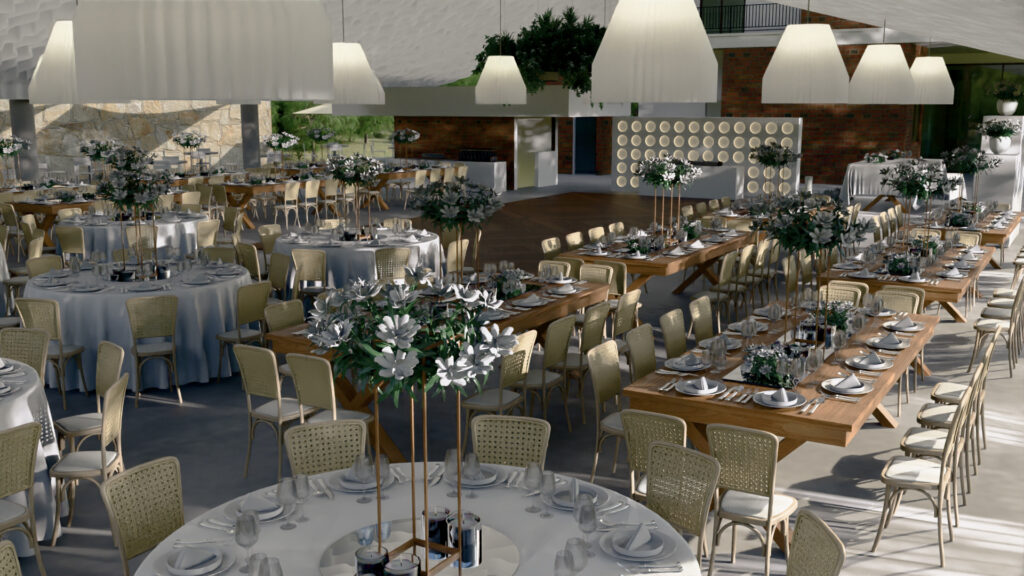
With accommodations for over 200 guests, a chapel, an event hall, and a private estate nestled in the natural surroundings of Malinalco.