Coordinating the religious ceremony and the reception comes down to one question, how much real time is there between "I do" and the first toast, and who is actually managing that time. A full mass typically runs 45 to 75 minutes, and the transfer or photo session adds another 45 minutes to an hour and a half on top of that, which is exactly where most couples lose control of the schedule. It is not a matter of taste or style, it is pure logistics, and it gets solved with a written timeline, confirmed vendor call times and, whenever possible, cutting travel between locations down to almost nothing.
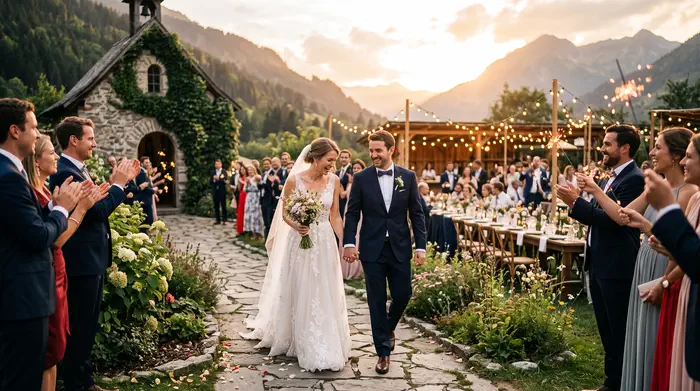
The ceremony and the reception are not two separate events that happen to share a date, they are one single day with a flow that guests notice the moment it breaks. When the mass ends and 45 minutes pass with nobody quite sure what to do next, guests start hunting for a seat, catering misses its ideal serving window, and the couple shows up late to their own party. When that same stretch of time is designed on purpose, like a welcome cocktail hour while the couple takes photos, the day feels continuous instead of choppy.
The starting point is always the same, set the ceremony time by working backward from when you want to open the dance floor, and forward from when the priest or officiant is available. Everything else, hair and makeup, getting dressed, moving the wedding party, gets fitted between those two fixed points.
A full Catholic mass with communion typically runs 60 to 75 minutes, while a religious ceremony without communion can wrap up in about 45 minutes. On top of that, add the time almost nobody accounts for, 10 to 15 minutes of buffer for late arrivals, plus another 20 to 30 minutes after the ceremony for hugs, congratulations and candid photos outside the church or chapel, according to a wedding day scheduling guide.
This math shifts if the couple chooses a symbolic ceremony instead of a traditional religious one, or combines rituals inside the same chapel, either way, it is worth confirming the exact length with whoever is officiating, since a guest priest can run noticeably longer than the couple's regular parish priest.
The most underestimated stretch of the day is the one between the end of the ceremony and the formal start of the reception. That is when most of the photography happens, guests get moved, and, if weather or logistics call for it, the location change takes place. Leaving this block without a fixed schedule is the single most common reason a wedding ends up running two or three hours behind plan.
The couple's portrait session after the ceremony should not run longer than 30 to 40 minutes, that is plenty of time for the photographer and it keeps the couple from arriving exhausted to greet their guests. A growing alternative is moving part of the formal photos earlier, with a private first look before the ceremony, and saving only the couple and family portraits for after.
If the chapel and the reception venue are in different locations, the transfer needs to be calculated using real traffic, not the ideal time Google Maps shows, and it is always worth adding a buffer of 15 to 20 minutes. Booking private transportation for guests lowers the risk of anyone showing up late or getting lost, especially outside the city. This is one of the main reasons more couples are choosing a wedding venue in Mexico where the chapel and the reception space share the same property, removing this leg of the timeline entirely.
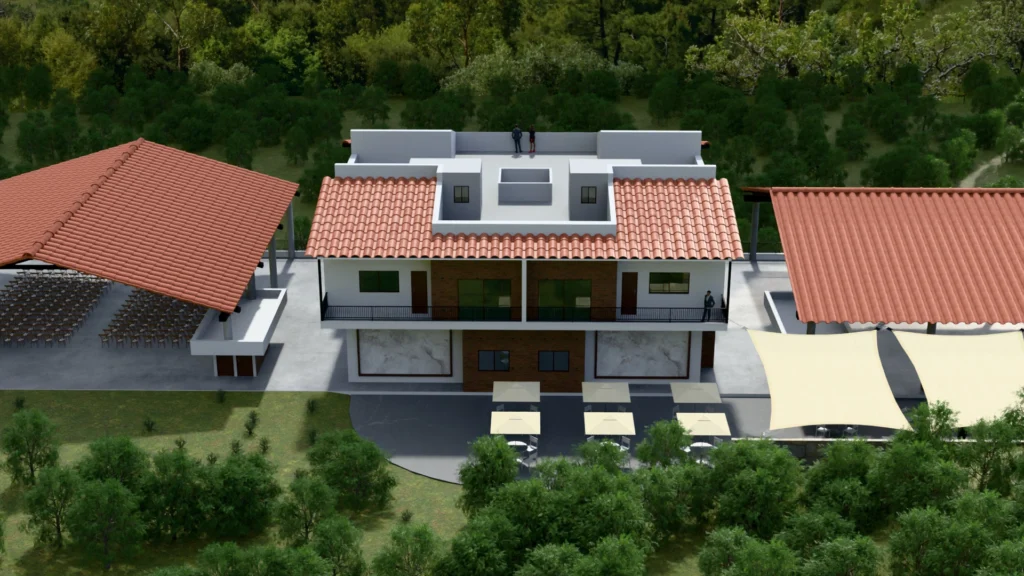
Couples looking to avoid this kind of back and forth usually start by checking venues with their own on-site chapel, at the chapel at Gran Malinalco, for example, the ceremony and the reception hall are just steps apart, so that whole transfer block practically disappears from the schedule.
This timeline works as a base for a wedding with a 1:00 p.m. religious ceremony, and it can be shifted to any start time as long as the proportions between blocks stay the same.
| Time | Activity | Estimated length |
|---|---|---|
| 12:30 p.m. | Guests arrive at the church or chapel | 30 min |
| 1:00 p.m. | Religious ceremony | 60-75 min |
| 2:15 p.m. | Recessional, greetings and group photos | 20-30 min |
| 2:45 p.m. | Couple's portraits | 30-40 min |
| 2:45 p.m. | Welcome cocktail hour for guests | 60-90 min |
| 4:15 p.m. | Couple's entrance and dinner | 90-120 min |
| 6:00 p.m. | Dancing and party | Rest of the night |
This kind of sequence lines up with what wedding day timeline research documents, where an afternoon ceremony followed by a reception that runs into the early morning calls for extra coordination between the officiant and the catering team so the contracted hours do not fall out of sync.
When the chapel and the event hall share the same grounds, the timeline simplifies itself automatically, the transfer disappears, the photographer never loses light moving between locations, and vendors only have to set up once, something confirmed by a recent look at pairing the ceremony and reception at a single venue. At Gran Malinalco, the 9 hectares of gardens let the ceremony take place in the private chapel and, minutes later, guests simply walk over to the event hall or the outdoor gardens without ever getting into a car.
On top of that, the venue rental is exclusive, meaning no other event shares the property that day, and lodging for more than 200 guests lets the celebration stretch into a full weekend without anyone having to drive back to Mexico City. Couples who have already looked into this option for their civil ceremony may also want to review what a venue-based civil wedding involves, since it follows the same logic of cutting down on travel.
A good target is 60 to 90 minutes, enough for couple's portraits and for guests to enjoy a welcome cocktail hour. Under 45 minutes tends to feel rushed, while more than two hours can cause guests to lose the momentum of the celebration.
In most cases, yes, because it removes the transfer, tightens the margin for schedule slippage, and lets the photographer and vendors work without breaking down and resetting equipment. That is why so many venues with a private chapel and an event hall on the same property have become the go-to choice for weddings with guests traveling from out of town.
A 15 to 20 minute delay is usually absorbed by slightly trimming the couple's portrait session, without touching the dinner schedule. If the delay runs longer, the point person handling logistics should notify catering and the music team so the couple's entrance can be adjusted without anyone noticing the change.
The State of Mexico has several options less than two hours from Mexico City with a private chapel and event hall on the same property. For couples who also want on-site lodging, it is worth reviewing what to consider in a wedding venue with hotel-style lodging beforehand, since that factor changes the logistics of the whole weekend.
Coordinating the religious ceremony and the reception does not come down to luck or winging it on the day, it comes down to a written timeline, realistic time blocks, and, whenever possible, choosing a venue where both moments happen without any travel in between. That is exactly the logic behind a wedding venue in Mexico with a private chapel and event hall on the same property, built so the couple can live their day without watching the clock.
Couples still deciding where to hold their religious ceremony and reception in one place can contact Gran Malinalco to check date availability and schedule a visit to the chapel and gardens.
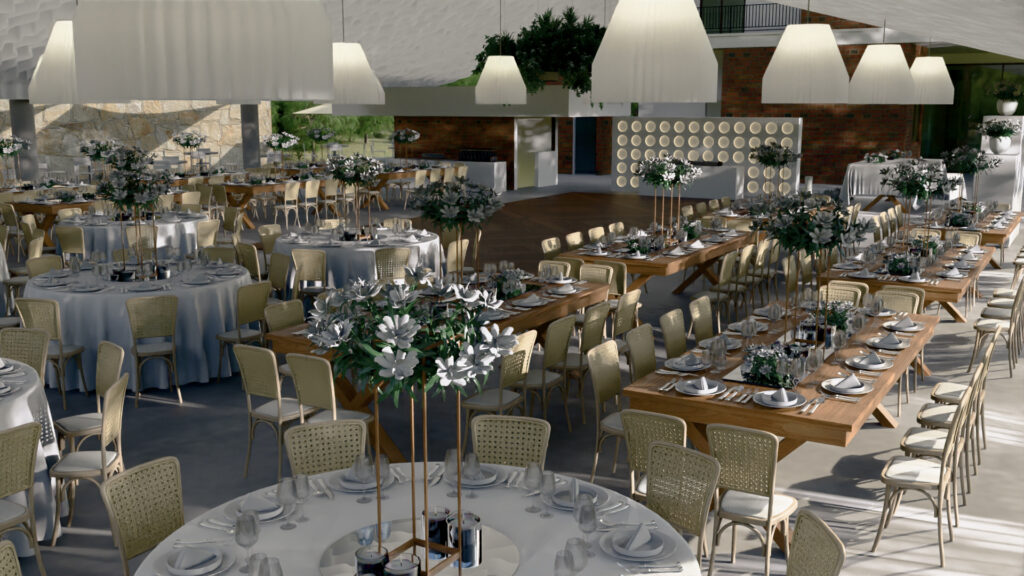
With accommodations for over 200 guests, a chapel, an event hall, and a private estate nestled in the natural surroundings of Malinalco.