Planning a civil wedding with a foreign fiance in Mexico comes with an extra layer of paperwork that many couples discover too late. The ring is already given, the venue is booked, guests are on their way, and then the question shows up, what documents does the non Mexican partner actually need? The answer is not complicated, but it does take time and attention to detail. Apostilled certificates, certified translations, single status certificates issued abroad and medical certificates with short validity windows are just the beginning of a list worth knowing months in advance.
The good news is that Mexico has simplified much of the paperwork in recent years, the National Immigration Institute no longer requires the special authorization that used to be needed for a foreigner to marry a Mexican citizen. Even so, the process still requires coordinating documents from two countries, and any error in the apostille or the translation can push back the date. This guide walks through everything the couple needs to know, from documents to timelines, so the only thing that matters on the wedding day is the yes.
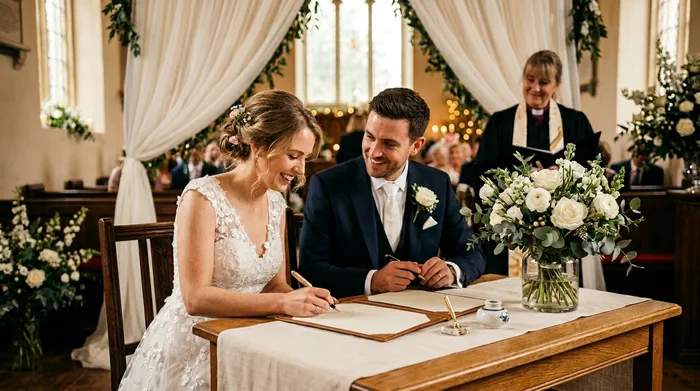
In Mexico, civil marriage is the only one with legal validity. The religious ceremony in a chapel, garden or church can take place on the same day or on a different date, but it does not replace the civil act. This applies equally when one of the partners is a foreigner, signing before the Civil Registry is the essential requirement for the union to have legal effect in the country and, later, to be recognized abroad.
Many couples choose to hold the civil ceremony first at a Civil Registry office and then organize the celebration at their venue of choice. Others prefer to bring the judge directly to the wedding location, which involves an additional fee for travel outside regular hours that varies by state and distance. In the State of Mexico, for example, the judge can attend a private venue on a weekend if the paperwork is complete and the fees have been agreed upon.
The first hurdle for the couple is gathering the foreign partner's documentation, which is usually spread between the home country and Mexico. Below is a breakdown of each document, what it involves and how long it can take to obtain.
Any document issued abroad must be apostilled by the competent authority in the country of origin, generally the Ministry of Foreign Affairs or its equivalent, to be recognized in Mexico. If the birth certificate is in a language other than Spanish, it also requires a certified translation done by a translator authorized by the Superior Court of Justice of the state where the wedding will take place.
Apostille processing time varies by country, some resolve it the same day, while others can take weeks. It is recommended to start this process at least three months ahead of the wedding date.
This document certifies that the foreign partner has no active marriage in their home country. Depending on the country, it may be called a certificate of no impediment, a certificate of civil status or a single status certificate. Like the birth certificate, it must be apostilled and translated into Spanish if issued in another language.
In Mexico, the equivalent document requested by some states such as the State of Mexico and Mexico City is called a Certificate of Non Existence of Marriage, issued by the Civil Registry. For the foreign partner, the equivalent document must come from the authorities of their home country and arrive properly apostilled before it can be presented to the Mexican Civil Registry where the wedding will take place.
The foreign partner's passport is the primary identification document before the Civil Registry. It must be valid on the wedding date and is presented in original form along with a copy of the data pages, photo page and entry stamp. In some states, the immigration document, FMM or proof of legal stay, is also requested to confirm lawful presence in Mexico.
Every state in the country requires a medical certificate with lab results confirming that neither partner has a serious chronic, contagious or hereditary condition without viable treatment. This document has a very short validity, generally 15 days, so it must be arranged in the days immediately before the wedding, not weeks in advance.
Some municipalities accept a certificate issued abroad if it is apostilled and translated, others require it to be validated by a Mexican doctor. It is essential to check with the specific Civil Registry office where the marriage will be performed, since rules can vary between municipalities within the same state.
| Document | Additional requirement | Approximate validity |
|---|---|---|
| Birth certificate | Apostilled and translated into Spanish | No expiration, request a recent copy |
| Single status / no marriage certificate | Apostilled and translated into Spanish | Verify with the Civil Registry in home country |
| Valid passport | Original plus copy of relevant pages | Must be valid on the wedding day |
| Prenuptial medical certificate | Validated by a Mexican doctor in some states | Maximum 15 days before the wedding |
| Divorce decree, if applicable | Apostilled, translated and at least 1 year old | No expiration, request a recent copy |
| Civil Registry application form | Filled out at the office where the wedding will take place | Valid for the wedding date |
If the couple is looking for a place where the civil ceremony and the celebration can happen in the same space, Gran Malinalco offers exclusive rental of its 9 hectares in the mountains of the State of Mexico, just 90 minutes from Mexico City, with all the time needed to coordinate the judge's arrival and the celebration for more than 200 guests.
For years, one of the most dreaded steps was the authorization from the National Immigration Institute, which used to be required before a foreigner could marry a Mexican citizen or a resident of Mexico. Following the latest immigration reform, this requirement was eliminated. Today, the INM no longer needs to issue that authorization, which considerably simplifies the process.
However, a foreigner holding temporary or permanent resident status is still required to notify the INM of the change in marital status within 90 days of the wedding. Failing to do so can result in unnecessary fines. If the foreign partner entered the country as a tourist, keep in mind that the maximum allowed stay is 180 days from the date of entry into the country.
The key to a smooth civil wedding when one partner is a foreigner is to plan with at least four months of lead time. The following order helps avoid bottlenecks.
When either partner, foreign or Mexican, has a previously dissolved marriage, the process adds one more step. Mexican law establishes that to remarry through the civil process, the divorce must be at least one year old. If the divorce ruling was issued by a foreign judge and the previous marriage took place outside Mexico, that document must also be presented apostilled and translated into Spanish.
If the foreign divorce ruling corresponds to a marriage that was registered in Mexico, it may need to be validated before Mexican courts before the Civil Registry accepts it. This process can take several months and is worth checking well in advance, ideally with legal guidance, to avoid surprises weeks before the wedding.
Once the civil marriage has taken place in Mexico and the certificate has been issued by the Civil Registry, the couple should consider whether that marriage needs legal effect in the foreign partner's home country. To achieve this, the Mexican marriage certificate must be apostilled at the General Secretariat of Government of the state where the wedding took place.
If the official language of the destination country is not Spanish, the apostilled certificate will also need to be sent for translation by a certified translator in that country. The apostille process for Mexican documents in the State of Mexico is handled at the General Secretariat of Government of that state, and in Mexico City at the General Archive of Notaries. It is a process that can be resolved the same day or within a few business days, but international shipping times need to be factored into the timeline.
When one partner is a foreigner, choosing the venue also carries logistical weight. The couple needs a space that can host the Civil Registry judge outside regular business hours and days, most commonly needed when the wedding falls on a weekend, that offers flexibility around the timing of the civil ceremony and that, ideally, provides lodging for guests traveling from abroad.
Gran Malinalco, located in the State of Mexico 90 minutes from Mexico City, is an example of a venue built on the exclusive buyout model, the couple has full access to the 9 hectares during the event, giving complete freedom to coordinate the judge's arrival, the exchange of vows and the party without outside scheduling constraints. Its private chapel can serve as the setting for the ceremony, and on site lodging allows family and friends traveling from abroad to arrive a day early and leave at their own pace the next day, without worrying about late night travel.
Between the paperwork, planning the ceremony and coordinating with the Civil Registry, choosing the right outfit is also part of the process. If you are looking for elegant options without stretching the budget, check out our guide on a budget wedding dress with style, with practical ideas for looking stunning without overspending.
The essential documents the foreign partner must present are, an apostilled and translated birth certificate, a single status certificate or civil status certificate from the home country also apostilled and translated, a valid passport, and a prenuptial medical certificate issued or validated by a Mexican doctor no more than 15 days before the wedding. The marriage application form is provided by the Civil Registry office in the municipality where the wedding will take place. Exact requirements can vary slightly between states, so it is always worth confirming directly with the local office.
No. Following the latest immigration reform, the National Immigration Institute eliminated the requirement to obtain the special authorization that used to be needed for a foreigner to marry a Mexican citizen or a resident of the country. However, if the foreign partner already holds temporary or permanent resident status, they must notify the INM of the change in marital status within 90 days of the wedding, to avoid penalties.
Yes. The Civil Registry judge can travel to the venue where the wedding will take place, including weekends and non business days. This involves an additional cost for travel expenses and fees that varies by distance and municipality. The complete paperwork must be reviewed and approved by the office in advance, and the judge's arrival date and time must be coordinated directly with the local Civil Registry. In municipalities in the State of Mexico near Malinalco, this service is common for weddings held at private venues.
Once the marriage certificate issued by the Mexican Civil Registry is obtained, it must be apostilled at the General Secretariat of Government of the state where the wedding took place. With the apostille, the document is valid in all countries that are signatories to the Hague Convention. If the foreign partner's home country does not speak Spanish, the apostilled certificate will need to be translated by a certified translator in that country. If the country is not part of the Hague Convention, the process is consular legalization, which involves additional steps before the Ministry of the Interior and the Ministry of Foreign Affairs.
Getting married through the civil process when one partner is a foreigner in Mexico is entirely doable, it just takes advance planning and attention to each document's timeline. With four months of lead time, the couple can put together the complete file without rushing and without putting the wedding date at risk. The key is communicating early with the Civil Registry office in the chosen municipality and starting with the longest step, apostilling the birth certificate in the home country.
If the plan is to celebrate in a space that combines the civil ceremony, gardens for the party and lodging for guests traveling from far away, Gran Malinalco is ready to support the couple from the planning stage onward. With exclusive rental of its facilities in the State of Mexico and capacity for more than 200 guests, the venue adapts to the logistics of an international wedding without the couple having to split their attention between paperwork and celebration.

With accommodations for over 200 guests, a chapel, an event hall, and a private estate nestled in the natural surroundings of Malinalco.