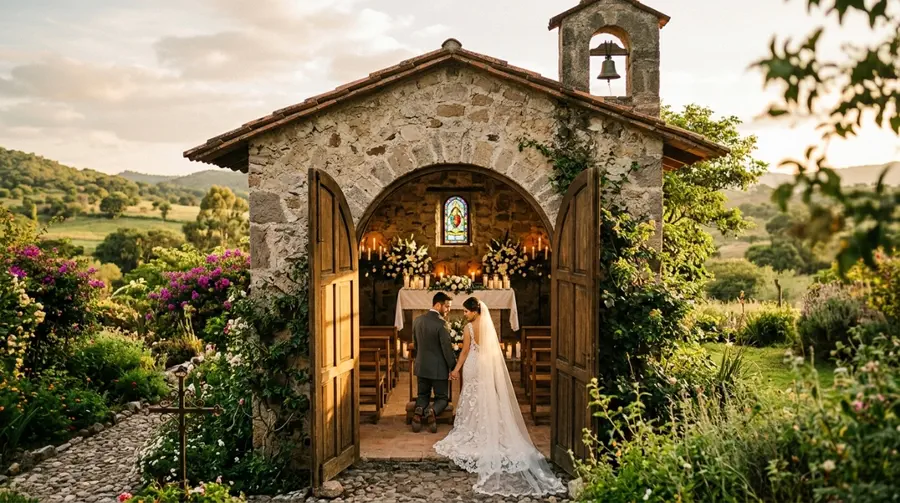
Some couples know it from the very start: their wedding won't be in the neighborhood church or a downtown banquet hall. Their dream has trees, fresh air, open sky, and a chapel surrounded by nature. Planning a Catholic wedding at a venue outside the city is one of the most meaningful decisions a couple can make today, turning the most important day of their lives into a complete, immersive, and deeply personal experience.
But this kind of celebration also comes with questions. Can a Catholic ceremony be held outside of a church? What paperwork is involved? How do you coordinate everything from another city? The answers are out there, and they're more encouraging than most people think. According to Catholic canon law, a religious marriage can take place outside the parish church, as long as the priest is authorized to administer the sacrament and the location is considered a dignified setting. If you've been putting off this dream because the process seemed overwhelming, this article is for you.
The first question nearly every couple asks when they picture getting married in the countryside is whether the Church allows it. The answer is yes, with some clear conditions.
Canon 1118 states that a marriage between Catholics should be celebrated in a parish church, but that with the permission of the local Ordinary or the pastor it may be celebrated in another church or oratory. The local Ordinary may also allow the celebration in another suitable location.
This means that a chapel on a private venue's grounds, surrounded by gardens or overlooking a natural landscape, can be the perfect setting for your religious ceremony, as long as the local diocese approves the space.
Both spouses-to-be must provide their birth certificates, proof of address, an up-to-date baptismal certificate, a confirmation certificate, and in some cases a first communion certificate.
Also, if the couple wants to get married in a church or chapel outside their home parish, the assigned church must submit a transfer request to the new parish or chapel selected for the ceremony.
For a Catholic religious marriage, the couple must register at the location where the wedding will be held and complete the required pre-marriage courses well in advance. Don't put these off; many venues in rural areas work with local parishes that run their own schedules, and spots fill up fast.
Not every space outside the city is set up to host a Catholic wedding. When evaluating your options, keep these key factors in mind:
If your dream is to hold the ceremony somewhere other than a traditional church, bring it up with your pastor, because there are many venues that have their own small chapels. As long as the officiant is authorized and the space is equipped to celebrate Mass, the marriage is valid.
A venue with its own chapel takes care of most of the paperwork and creates an authentic liturgical experience without giving up the natural setting you've always imagined.
Beyond the chapel, the venue needs to comfortably accommodate your entire group: on-site lodging for out-of-town guests, space for the reception and dancing, and convenient access from your home city. A Catholic wedding venue outside the city that includes overnight accommodations eliminates one of the biggest logistical headaches couples face.
This is probably the most delicate part of the process. The priest who celebrates the Mass needs to be properly authorized, either by the diocese where the venue is located or through a letter of delegation issued by the home parish.
Make sure your pastor, the venue's priest (if there is one), and the local diocese are all in direct communication. Start this process at least eight months in advance. Venues outside the city book up quickly, and ecclesiastical permits don't get issued overnight.
A Catholic wedding at a venue outside the city isn't just a ceremony, it's a full experience. Guests travel together, stay under the same roof, share morning coffee and late-night goodbyes. It creates a sense of closeness and intimacy that city weddings rarely achieve. Can you picture your whole family together for two full days, celebrating with you in a setting that feels like a dream?
That experience has a name: a destination wedding. And when it brings together faith, nature, and genuine hospitality all in one place, it becomes something truly unforgettable.
Before signing any contracts, make sure you have these bases covered:
Yes. Canon 1118 of the Code of Canon Law allows marriage to be celebrated outside the parish church with the permission of the local Ordinary. A chapel on a private venue's property can be a valid location as long as the corresponding diocese approves it.
The basic documents include: birth certificates for both spouses, proof of address, an up-to-date baptismal certificate, a confirmation certificate, and in some cases a first communion certificate. If the wedding is outside your home parish, you'll also need a parish transfer request.
We recommend getting started at least eight months before the wedding date. Ecclesiastical permits, the priest's availability, and pre-marriage course schedules at rural parishes tend to fill up well in advance.
It's not a strict requirement, but having an on-site chapel makes the whole process significantly easier. A venue with a chapel that's already recognized by the local diocese simplifies the permitting process and ensures the space meets the liturgical standards required for a valid Catholic marriage.
Yes, but he'll need a letter of delegation from his home diocese and, in some cases, additional authorization from the diocese where the venue is located. This coordination needs to happen directly between both dioceses and should be started well in advance.
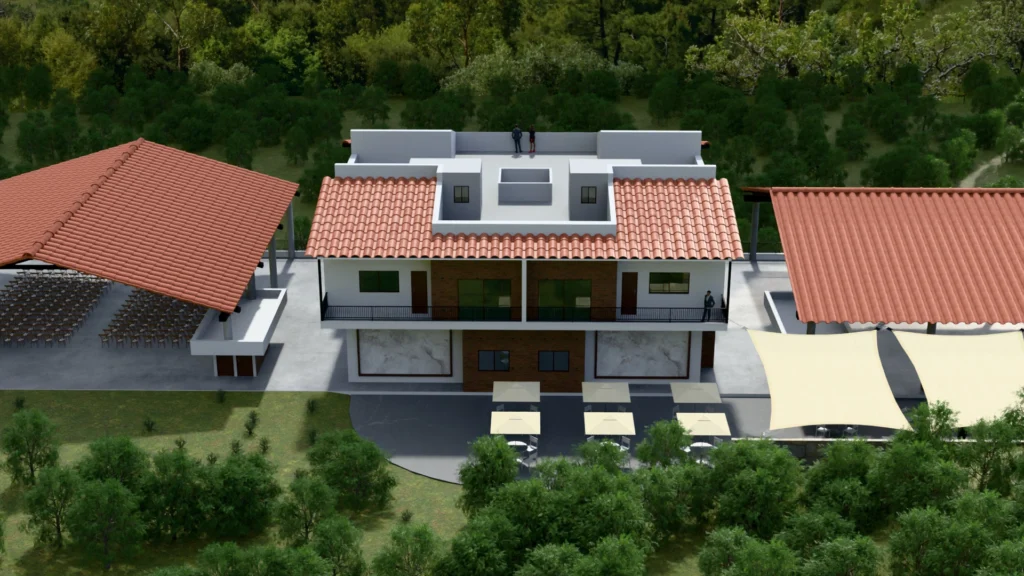
Gran Malinalco is a private venue with its own chapel, surrounded by nature just outside Mexico City, designed for couples who want to celebrate their love with faith, elegance, and no compromises. Exclusive lodging, one-of-a-kind ceremony spaces, and a team that specializes in destination weddings are all waiting for you.
Discover everything Gran Malinalco can do for your wedding →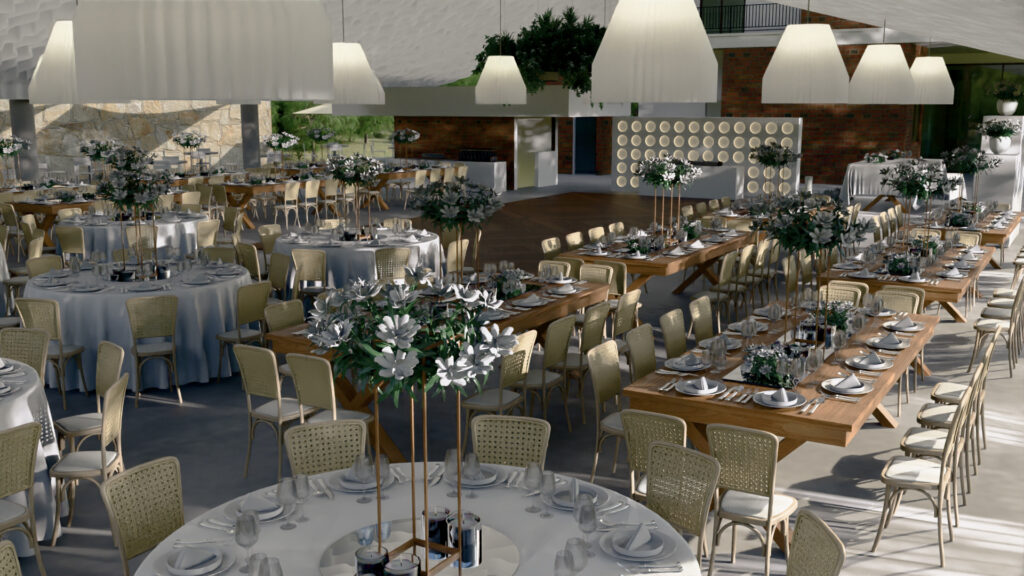
With accommodations for over 200 guests, a chapel, an event hall, and a private estate nestled in the natural surroundings of Malinalco.