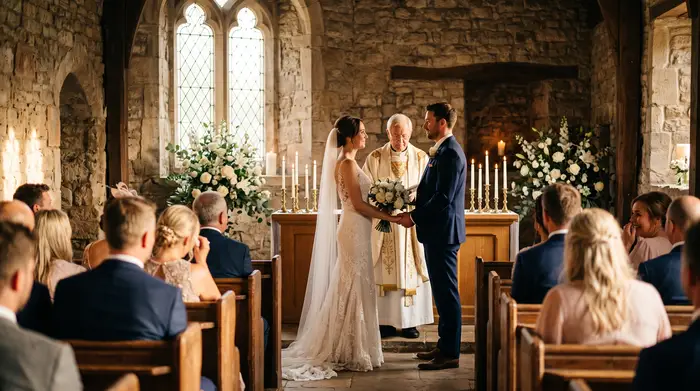
A Catholic wedding mass is organized into five parts: the introductory rites, the Liturgy of the Word, the rite of Marriage, the Liturgy of the Eucharist, and the concluding rites. Understanding this order helps a couple coordinate with the priest, get a realistic sense of how long the ceremony will actually run, and plan the logistics for the rest of the day, from guest arrival to the start of the reception. Many couples show up to their first premarital counseling session without knowing what to expect, and end up improvising decisions about readings, music, or symbols that actually have a precise place within the ritual. This guide walks through every part of the nuptial mass in enough detail to plan calmly, keeping in mind that the exact protocol can vary slightly depending on the parish, the diocese, and the priest presiding over the ceremony.
A Catholic wedding mass typically runs between 45 and 75 minutes, though the final length depends on several factors a couple can plan around ahead of time. The number of sponsors and attendants taking part in the procession, the number of readings and hymns chosen, and how punctual guests are all directly affect the total duration. Whether the couple includes the full Eucharist also matters, since a ceremony without mass tends to run shorter than one with the complete Eucharistic liturgy. It is worth reviewing these timelines with the priest during premarital counseling, especially if the day's schedule includes travel to the reception venue.
The Catholic wedding ritual is grouped into four major liturgical blocks that, for planning purposes, are best broken down into five clear moments. Each one serves a specific function within the celebration and has a fixed place in the order of the mass, though certain elements, such as the unity coins or the lasso, are optional and can be adjusted according to family tradition or parish practice. The official structure of a Catholic wedding mass, as outlined by Catholic marriage preparation resources, serves as a useful reference for discussing with the priest which parts are fixed and which allow for personalization.
The ceremony opens with guests entering the church, traditionally seating the bride's family on the left side and the groom's family on the right. The wedding procession then enters in an order that usually begins with the groom accompanied by his mother, followed by the groom's parents and the bride's mother, and then the sponsor couples according to their role in the ceremony. The bride closes the procession on the arm of her father or whomever she has chosen to walk her to the altar, and her arrival formally marks the start of the rite.
This section includes a first biblical reading, generally taken from the Old Testament, followed by a responsorial psalm that is sung or recited. A second reading follows, usually from the New Testament, and the priest or deacon proclaims the Gospel before delivering the homily. At this point the celebrant typically explains the meaning of the sacrament of marriage in a personal way, connecting the chosen readings to the couple's own story, which is why it is worth selecting readings early and, if desired, asking a close family member or friend to proclaim them.
This is the sacramental core of the ceremony. The priest asks a series of questions to confirm that the couple is marrying freely, without impediment, and with the intention of remaining faithful for life, then comes the consent, where the bride and groom exchange their vows at the altar. The blessing and exchange of rings follows as a sign of fidelity, and the couple may optionally include the giving of unity coins, thirteen coins symbolizing the willingness to share the household's resources. The meaning behind the rings and unity coins helps explain why no optional symbol invalidates the sacrament if a couple chooses to skip it. The questioning and marital consent are, along with the nuptial blessing, the three elements that are actually required for the marriage to be valid.
If the ceremony includes a full mass, this is the most solemn moment of the entire celebration and unfolds in three stages. First the offertory, where the bread and wine are presented, then the Eucharistic prayer, which includes the Sanctus and the consecration, and finally the communion rite, which covers the Lord's Prayer, the sign of peace, and communion itself. Couples who choose a ceremony without a full mass skip this part and move directly to the final blessing after the rite of marriage.
The mass ends with the priest's final blessing and the dismissal of the assembly. Right after, the bride, groom, sponsors, and witnesses sign the marriage register, a step that usually takes place at the altar or in the sacristy depending on parish custom. Couples often use this moment to take photos inside the church with sponsors and immediate family, while the rest of the guests begin filing out ahead of the couple's recessional.
| Part of the mass | Approximate duration | Main elements |
|---|---|---|
| Introductory rites | 5 to 10 minutes | Guest entrance, wedding procession, bride's entrance |
| Liturgy of the Word | 10 to 15 minutes | First reading, psalm, second reading, Gospel and homily |
| Rite of Marriage | 10 to 15 minutes | Questioning, consent, rings, and optional unity coins |
| Liturgy of the Eucharist | 15 to 25 minutes | Offertory, consecration, Lord's Prayer, and communion |
| Concluding rites | 5 to 10 minutes | Final blessing, signing the register, and recessional |
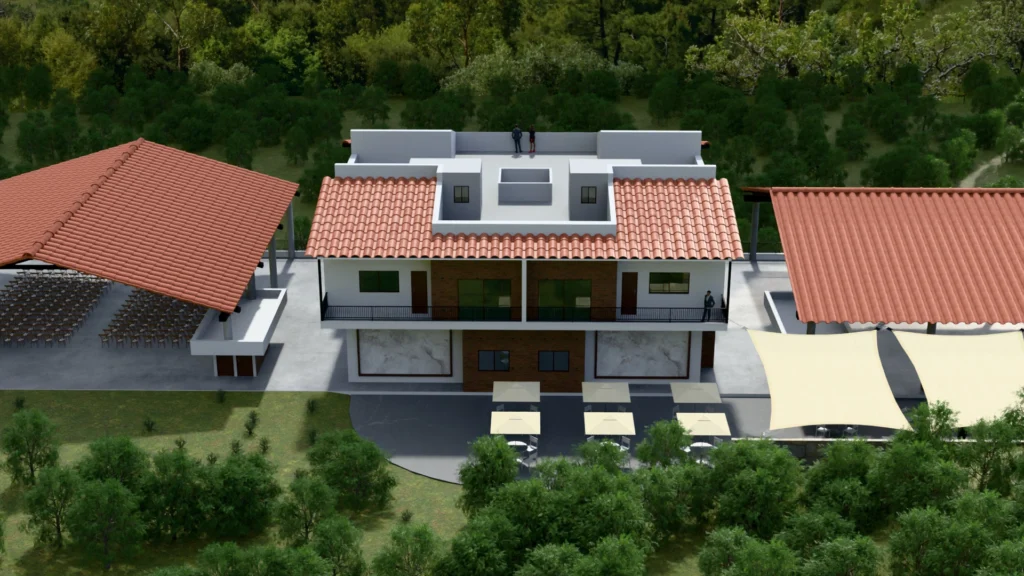
Choosing where the mass will take place directly affects the pace of the rest of the celebration. When the religious ceremony and the reception happen in different locations, guests have to travel between the two, which usually adds 30 to 60 minutes to the day's schedule and carries the risk of traffic delays. Venues with a private chapel on the same property, such as the private chapel at Gran Malinalco, solve this problem because they allow the mass to be celebrated and the celebration to continue directly toward the event hall or the gardens without guests ever leaving the property.
For couples deciding between a standalone chapel and a venue that combines the religious ceremony with the reception, it is worth reviewing available private chapel options before locking in a date with the parish, since many parish churches have fully booked weekend schedules.
Not every couple chooses the full mass. A religious ceremony without the Eucharist keeps the rite of marriage, the exchange of rings, and the blessing, but leaves out the Liturgy of the Eucharist, which usually makes it 20 to 30 minutes shorter. This option works well when many of the guests are not practicing Catholics, or when the day's itinerary already includes a civil wedding at the same venue, a format that is becoming increasingly common among couples who want to formalize their marriage under the law and before the Church on separate dates.
Music accompanies each part of the mass with a distinct tone: the entrance hymn welcomes guests, the psalm is recited or sung between readings, and communion is usually paired with more reflective pieces. Knowing exactly what music is allowed during the mass keeps the choir or musicians from playing something out of place during a solemn rite. After the final blessing, the transition into cocktail hour or the reception feels more natural when the venue allows guests to walk directly into a garden surrounded event hall, designed to host both the ceremony and the party on the same property.
A venue built for religious weddings solves more than the aesthetic side of the event, it also keeps the timing in order. Properties like Gran Malinalco, a venue 90 minutes from Mexico City, located in the State of Mexico, combine a private chapel, an event hall, and nine hectares of gardens within a single exclusive use rental, allowing the couple and their guests to stay on the property between the mass, the cocktail hour, and the banquet. Having lodging for more than 200 guests also makes it easy for people traveling from Mexico City or other states to stay overnight in the same place, without worrying about traveling back after a long celebration.
On average, a Catholic wedding mass lasts between 45 and 75 minutes, though the time can vary depending on the number of sponsors, the number of readings and hymns chosen, and whether the full Liturgy of the Eucharist is celebrated. Ceremonies without a mass tend to be shorter because they skip the offertory, the consecration, and communion.
No, unity coins are an optional symbolic element and skipping them does not invalidate the marriage in the eyes of the Church. What is actually required for the sacrament to be valid is the free consent of both spouses, the blessing and exchange of rings, and the priest's nuptial blessing.
Yes, some venues have a private chapel on the same property where the reception also takes place. This setup cuts down on travel time and lets the couple and their guests stay in one place for the entire celebration.
Most parishes ask for a recent baptismal certificate, a confirmation certificate, a civil birth certificate, and a certificate of freedom to marry, in addition to completing the marriage file at least three to six months in advance. It is worth confirming the exact requirements with the chosen parish, since they can vary slightly from diocese to diocese.
Knowing the order of a Catholic wedding mass, introductory rites, Liturgy of the Word, rite of Marriage, Liturgy of the Eucharist, and concluding rites, lets a couple plan the day's timing with precision, coordinate the music and symbols they want to include, and decide calmly whether to go with a full mass or a shorter ceremony. The logistics get even simpler when the mass and the reception happen on the same property, with no travel and no dead time between one part of the celebration and the next. Couples looking for a venue in the State of Mexico with a private chapel, an event hall, gardens, and lodging for their guests can schedule a visit to Gran Malinalco and see firsthand how both moments come together in a single experience.
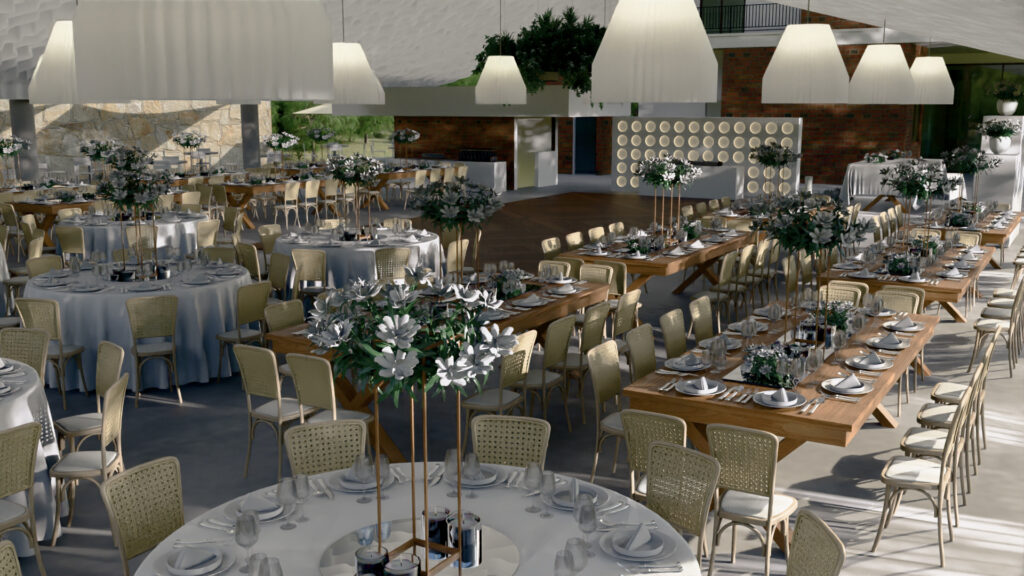
With accommodations for over 200 guests, a chapel, an event hall, and a private estate nestled in the natural surroundings of Malinalco.