Choosing a wedding package based on your budget starts with understanding what a couple actually gets for each amount, not just how much money is available. In Mexico, there were 486,645 marriages in 2024, according to INEGI, and behind each one was a similar decision: book everything separately, or let a single venue handle most of the celebration. That decision changes the final cost, the planning time and the stress of the months leading up to the day.
The problem is that two quotes with the same price can include very different things. One may cover the banquet, bar and furniture, while another covers only the rental of the space. Without an organized way to compare them, couples end up choosing the lowest price and discover, weeks later, charges that were not in the proposal.
What follows puts the process in order: how to read a wedding package, what percentage of the budget to set aside for each category, which costs tend to appear later, and how to decide between an all-in-one package and a custom-built event.
A wedding package is a proposal that bundles several event services into one price, such as venue rental, banquet, furniture, setup or day-of coordination. What changes from one venue to another is not the word “package,” but the exact list of what it covers. That is why a couple’s first task is to turn every quote into a comparable list, item by item.
In an all-in-one package, the venue offers the banquet, drinks and setup through its own vendors. That simplifies logistics and makes spending more predictable, because almost everything is negotiated with a single party.
With a venue rental where you bring your own vendors, the couple chooses each service separately. They gain creative control, but coordination hours also increase, along with the risk that the total grows with charges nobody anticipated. Neither format is better in the abstract, the decision depends on the time available and how much customization is wanted.
There is no single figure for getting married in the country. According to Cronoshare, the average cost of a wedding in Mexico is around 180,000 MXN for about 100 guests, and a single category can vary enormously: a wedding dress, for example, ranges from 2,500 to 40,000 MXN. Those ranges explain why two couples with the same guest count can end up with very different budgets.
That average works as a starting point, not a goal. The most useful step is to divide the total budget by the number of guests to get a cost per person, because the guest list is the factor that moves any wedding package the most. With 180,000 MXN and 100 guests, the cost per person is 1,800 MXN, but with 150 guests at that same cost per person, the total rises to 270,000 MXN.
Working reference for splitting the budget (editorial criteria, not an official statistic)
| Category | Reference | Comment |
|---|---|---|
| Venue and banquet | 50 to 60% | It is the largest category and the one most worth negotiating as a package. |
| Decor and flowers | 8 to 12% | It shrinks when you choose a venue with its own scenery that needs less styling. |
| Photo and video | 8 to 10% | Booked separately in almost every case. |
| Attire and beauty | 8 to 10% | Varies by designer, type of ceremony and size of the wedding party. |
| Music and entertainment | 5 to 8% | Depends on whether you choose a DJ, a band or live music for the ceremony. |
| Unexpected costs | 5 to 10% | A reserve for charges that did not appear in the quote. |
The ranges are independent of each other, so they must be adjusted until they add up to 100%.
The same couple can make very different decisions depending on the amount available. The table summarizes three approaches, and the sections that follow explain why they work.
| Budget | Recommended approach | What to prioritize | Risk to watch |
|---|---|---|---|
| Tight | All-in-one package, fewer guests, weekday or low season | Banquet and venue included | Extras that were not in the proposal |
| Medium | Venue with ceremony, reception and lodging in the same place | Fewer vendors and fewer transfers | Paying for services that will not be used |
| Generous | Exclusive-use venue with a multi-day experience | Guest experience | Adding extras without a cap per category |
With a limited budget, the most effective lever is the guest list. Each additional person multiplies the banquet, drinks, furniture and service, so cutting 20 guests usually saves more than negotiating the price of the decor.
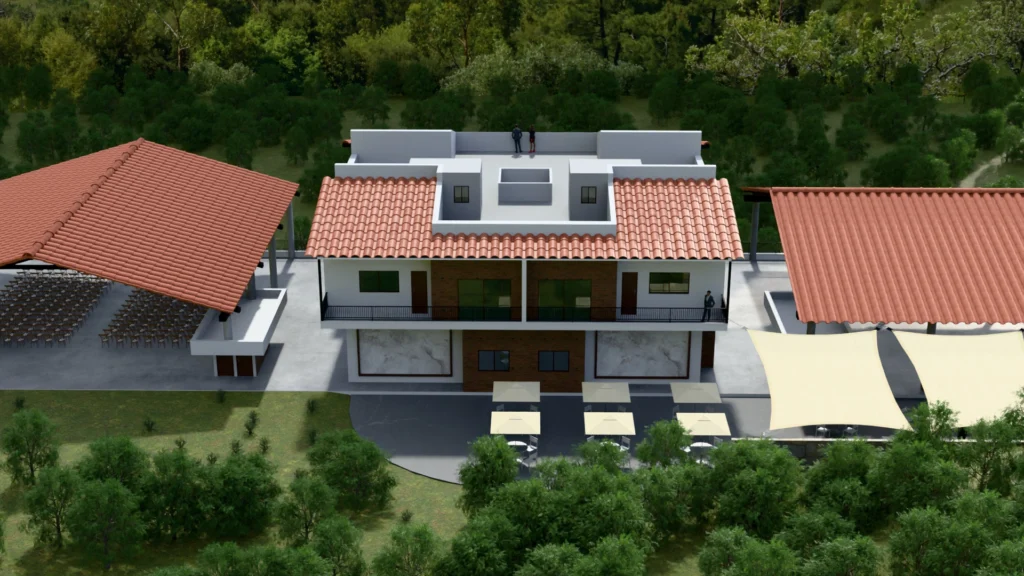
When the budget allows more room to choose, a venue that brings together ceremony, reception and lodging reduces vendors, transfers and decisions. One example of this format is Gran Malinalco, a venue in Malinalco, State of Mexico, about 90 minutes from Mexico City, rented exclusively for a single wedding on 9 hectares (about 22 acres) surrounded by mountains.
Because everything happens in the same place, the couple avoids paying for moves between venues, and guests do not depend on transportation at night. That continuity has real value that does not appear as a line item in the quote, but it does show up in the total.
With more room in the budget, the wedding package stops being just a one-night party and becomes a weekend. A welcome dinner, a farewell brunch and activities in the natural surroundings extend the celebration and justify the trip for those coming from another city.
The risk at this level is piling up extras without limit. A practical rule is to set a cap for each category before requesting quotes and review it every time something is added.
For couples who want a ceremony and reception without transfers, it is worth learning how the private chapel at Gran Malinalco works, designed so that the religious ceremony and the party happen in the same place.
This checklist helps you review each proposal before comparing it with another:
According to Profeco, Mexico’s federal consumer protection agency, under NOM-174-SCFI-2007 providers of services for social events that include venue rental, banquet, music or decor must register their contract with the authority. Couples can verify this in the Public Registry of Adhesion Contracts and check Profeco’s own Commercial Bureau to see whether there are complaints against the provider.
It is also wise to keep quotes, messages and receipts for every payment, and to confirm cancellation terms in writing. That file is the evidence that protects the couple if the service does not match what was offered.
This is a hypothetical example, with round figures, to show how the outcome changes. Two couples plan a wedding for 120 guests with the same total budget.
The first books the hall, banquet, furniture, decor and transportation separately. Each individual quote seems reasonable, but the couple ends up coordinating nine vendors, paying for transfers between venues and discovering overtime fees one week before the event.
The second chooses a wedding package at an exclusive-use venue with space for ceremony, reception and lodging, such as the event hall at Gran Malinalco. They cut vendors to three or four, know the cost per guest from the first meeting and put the unexpected-costs reserve toward improving the guest experience.
The budget is the same, and what changes is predictability. That difference usually matters more than any one-time discount.
There is no single price, because the cost depends on the guest count, the city, the season and what the proposal includes. As a reference, an average wedding for 100 guests is around 180,000 MXN according to Cronoshare, counting all categories. The most practical approach is to request quotes per guest and compare the cost per person between options.
It almost always covers venue rental, basic furniture, setup and service staff. Many add a banquet, open bar and day-of coordination, while photography, video, music, makeup and attire usually stay out. Each proposal should be reviewed item by item, because the phrase “all-inclusive” has no standard definition.
An all-in-one package is the better fit when the priority is peace of mind, cost control and saving time. Building it separately gives more creative freedom, but it requires coordinating several vendors and watching for more additional charges. For couples with little planning time or guests who travel, the package is usually the most predictable option.
Compare the real distance from the city, the lodging available and whether the venue has covered space for rain. A venue about 90 minutes from Mexico City, like those in the Malinalco area, lets guests arrive the same day and sleep on site. Visiting the venue before signing helps confirm access, travel times and capacity.
The best wedding package is not the cheapest or the most complete one, but the one that covers what the couple will actually use without leaving charges pending. Setting a cost per guest, requiring a written breakdown and reviewing the contract before the first payment turns an emotional decision into an informed purchase.
Couples who already have their guest list defined can take the next step with a visit. Seeing the chapel, the gardens and the lodging at Gran Malinalco in person, 90 minutes from Mexico City, helps you compare with concrete data and not just photographs. To request a date and a quote, couples can reach out to the Gran Malinalco team.
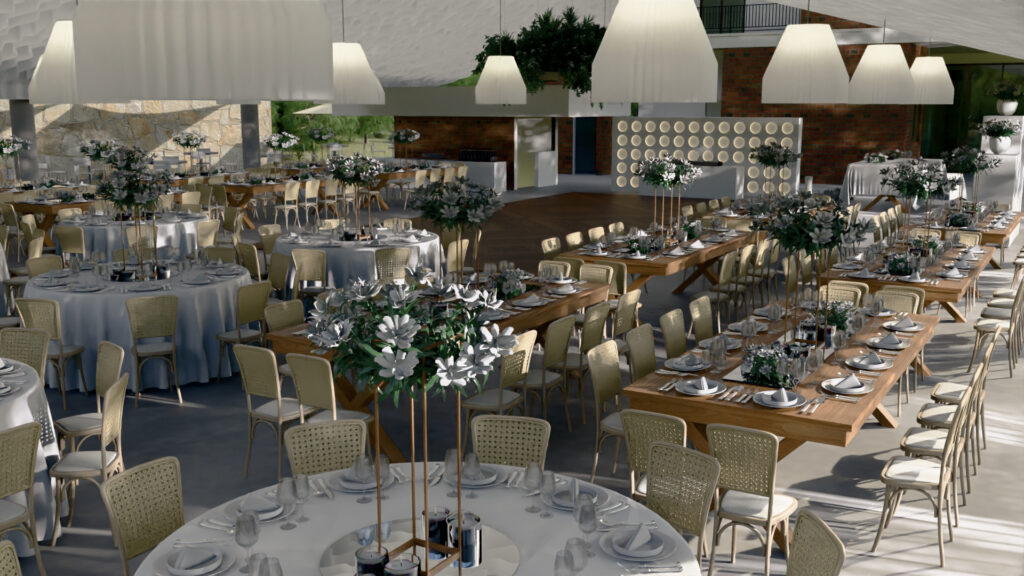
With accommodations for over 200 guests, a chapel, an event hall, and a private estate nestled in the natural surroundings of Malinalco.