A modern Mexican style wedding takes the symbols that carry identity, papel picado, the lazo, mariachi, bold colors, and reinterprets them through a current aesthetic: curated palettes, natural textures, and a menu that moves away from the generic banquet. The result is not a party that feels forced, nor a celebration that copies a European look without meaning, it is a middle ground where the couple keeps what gives them cultural roots while presenting it in a visual language that feels contemporary.
The usual challenge is that "Mexican style" gets associated right away with paper sombreros, checkered tablecloths, and centerpieces saturated with color, an image that says little about the real richness of the culture and that many couples would rather avoid. The good news is that there is a middle path: keep the elements that carry real symbolic weight and leave behind the ones that only add visual noise.
It is not about erasing tradition, it is about selecting it with intention. A wedding with this approach keeps the rituals that carry deep meaning for the couple and their family, the lazo, the arras, the padrinos' blessing, and presents them within a carefully produced visual experience: warm lighting, contemporary typography on the stationery, a tight color palette, and natural materials like wood, clay, and handwoven textiles instead of plastic or glitter.
The key is curation. Instead of adding every typical element available, the couple chooses two or three that genuinely represent them and executes them at a higher design level than what usually shows up in a generic themed wedding. That deliberate selection is what sets apart a celebration with real identity from one that simply decorated with Mexican motifs.
The lazo and the arras remain among the most requested rituals in Mexican weddings because they carry meaning that goes beyond decoration: the lazo represents the couple's union throughout the ceremony, and the arras symbolize the commitment to share and support each other. These elements can stay almost intact in their traditional form, and what changes is the material of the lazo (raw silk, dried flowers, or braided cord instead of the classic rosary) or the design of the arras box, which today comes in minimalist versions in wood or brushed metal.
Traditional music does not have to play through the entire party to have a presence. Many couples book a trio or a small mariachi group only for the ceremony, the toast, or a specific moment during the reception, then let a DJ or a band carry the rest of the night. That format lets the cultural element shine without letting it take over the whole musical atmosphere the couple wants for their celebration.
Instead of combining Mexican pink, green, and orange on the same table, a modern palette usually picks a single iconic color, terracotta, bougainvillea, or a deep Mexican pink, and pairs it with neutral tones like sand, cream, or sage green. That reduced color range lets the traditional color breathe and look intentional, instead of competing with ten other tones in the same scene.
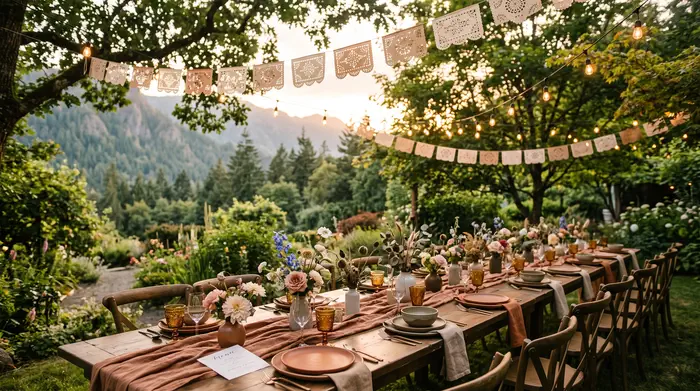
Papel picado is a Mexican craft with centuries of history: it originated in Puebla, where artisans still use chisels to cut figures through several layers of tissue paper, and it has become a symbol of identity present at weddings and national holidays too, not only on Day of the Dead, according to Wikipedia. A modern version of this craft keeps the technique but changes the motif: instead of skulls or traditional flowers, artisans cut geometric silhouettes, the couple's initials, or patterns inspired by the wedding venue's landscape, and hang it in monochromatic tones instead of the classic multicolor palette.
Swapping the imported flower bouquet for seasonal wildflowers, dahlias (Mexico's national flower), cempasúchil outside of October, eucalyptus branches, or dried foliage, gives a more organic result and, as a side benefit, lowers logistics costs. This choice also connects the decor with the natural setting of the chosen venue, something that stands out especially in gardens or mountain venues like Gran Malinalco, where the local vegetation already contributes most of the landscape without adding outside elements.
The banquet is one of the areas where the difference between a conventional Mexican wedding and a current version shows the most. Themed food stations, gourmet tacos, fresh seafood, live carving stations, have become some of the most requested options among Mexican couples because they keep familiar flavors while raising the presentation above the traditional plated banquet. Cocktail service has also evolved: bars with live mixologists craft signature drinks based on mezcal or local spirits, named after moments from the couple's story.
| Element | Typical version | Modern version |
|---|---|---|
| Centerpiece | Multicolor imported flowers and artificial foliage | Seasonal wildflowers in a tight color range |
| Papel picado | Generic multicolor motifs across the whole area | Custom design in a monochromatic palette, placed at key points |
| Music | Mariachi through the entire party | Trio or mariachi at specific moments plus DJ or band |
| Banquet | One plated menu for every guest | Gourmet food stations and multi course menus |
| Drinks | Generic open bar | Signature cocktails with mezcal and local spirits |
| Invitations | Printed, with no digital follow up | Interactive digital invitation with RSVP and event logistics |
The modern Mexican aesthetic leans heavily on natural materials, and that gives the chosen venue more weight than it usually gets. A venue surrounded by mountains, with real vegetation and open air spaces, means much of the styling work is already handled by the setting itself, with no need to fill every corner with decor.
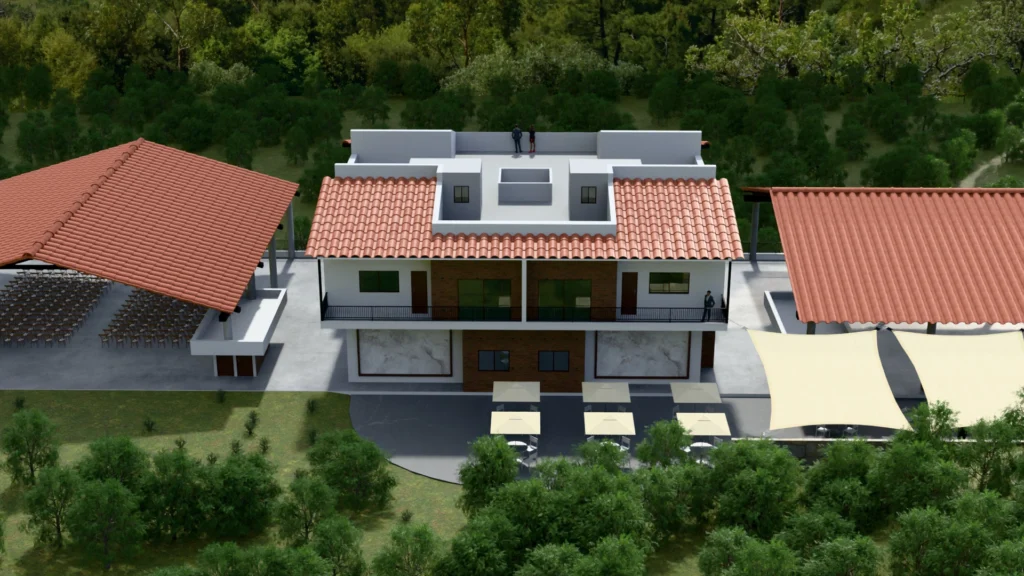
Gran Malinalco is a good example of that kind of setting: a 9 hectare property in Malinalco, State of Mexico, about 90 minutes from Mexico City, with a private chapel, an event hall, and lodging for more than 200 guests. The rental is exclusive, meaning the couple has the entire property for their celebration, which makes it easier to add elements like papel picado hung between the trees or an outdoor mezcal station without competing with another event happening at the same time. Couples looking for a wedding venue in Mexico with these features can review the property details and availability.
It is also worth checking out the private chapel for couples planning a religious ceremony with the lazo and the arras, and the event hall for the reception, since both spaces allow the decor to be adapted to whatever palette and materials the couple chooses, without relying on a tent or an additional structure.
If a couple is still choosing the venue before moving forward with decor, checking out the wedding venue in Mexico first helps them see which natural elements are already in place and which ones are worth adding.
Before booking vendors, it helps to clearly define which traditional elements make sense for the couple and which ones to leave out. This order keeps design decisions from being made on the fly.
The most common mistake is swinging to the opposite extreme: dropping every cultural reference out of fear it will look "typical," which ends up producing a wedding with no identity that is hard to tell apart from any other celebration. The second mistake goes the other way: piling on so many traditional elements at once that the decor loses visual order and competes with itself. The third has to do with execution: using generic Mexican party goods bought online instead of working with local artisans, which shows immediately in the quality of the materials and finishing.
Yes. Mariachi is one of the most recognized traditions, but it is not mandatory. Many couples choose a trio for specific moments, live music from another genre with Mexican instrumentation (like a harp or a guitar), or simply a DJ who works some traditional songs into their set. What matters is that the choice reflects what the couple genuinely likes, not the expectation that "every Mexican wedding must have mariachi."
Earth tones (terracotta, sand, ochre) paired with a single bold color, bougainvillea, Mexican pink, or indigo blue, tend to give the best result because they keep the cultural warmth without overloading the palette. White and sage green work well as transition neutrals between the main color and the natural elements of the venue.
It depends on the level of customization. An arras box and a handcrafted lazo can range from an affordable option to more elevated custom versions, while made to measure papel picado varies based on how many meters are needed and how complex the design is. In general, choosing a few well executed elements is more cost effective than buying large quantities of generic decor.
Yes, and it is often the option that works best. Venues surrounded by nature, like the ones found in Malinalco or other forested areas of the State of Mexico, let traditional elements, papel picado, local flora, warm lighting, blend into the real landscape instead of simulating it inside a closed ballroom.
A modern Mexican style wedding does not depend on how many traditional elements are included, but on how well they are chosen and executed. The lazo, the arras, papel picado, or live music still carry the same symbolic weight they always have, and what changes is how they are presented: with a curated palette, natural materials, and a venue that supports that aesthetic with little extra effort. For couples still working out these details, getting to know the space first makes it easier to make good design decisions.
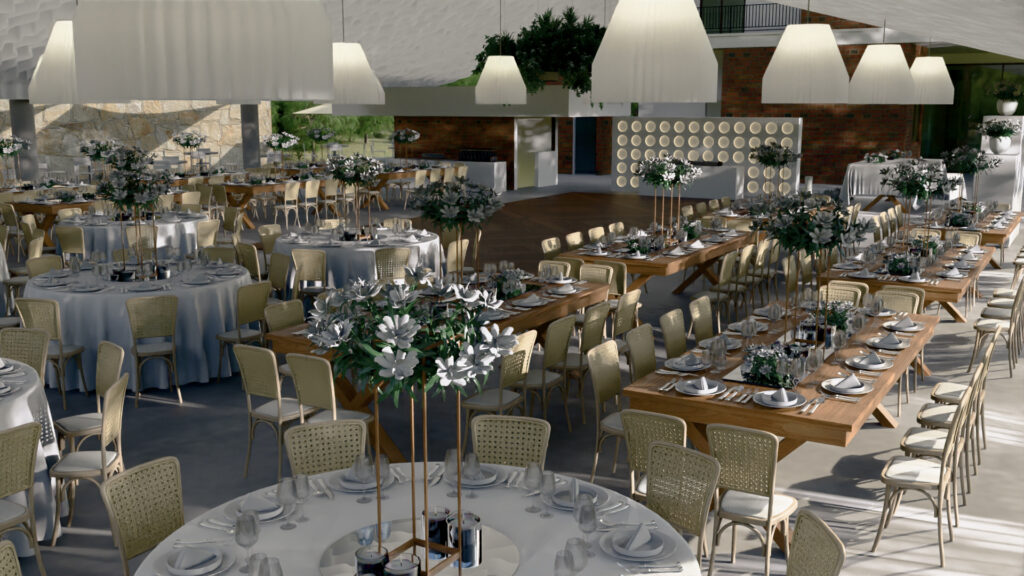
With accommodations for over 200 guests, a chapel, an event hall, and a private estate nestled in the natural surroundings of Malinalco.