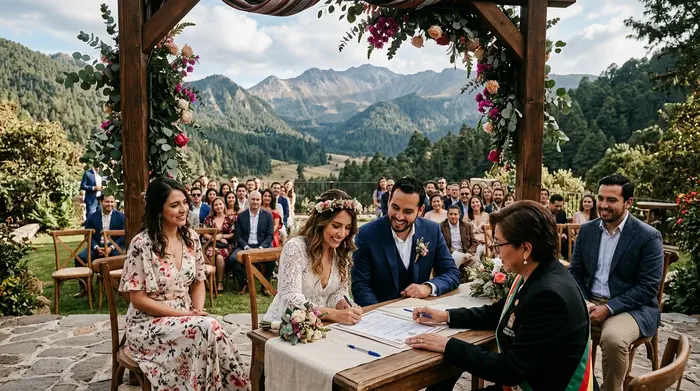
Yes, it is possible to hold your civil ceremony at the same place where you celebrate your wedding, most municipalities in Mexico, including the State of Mexico, allow a judge from the Civil Registry to travel to the venue to perform the legal ceremony, as long as the service is requested in advance and an additional fee is covered. This option spares your guests a trip to a government office and turns the legal paperwork into part of the celebration itself.
Couples who want to fold the civil ceremony into their main celebration need to sort out three things first, confirm whether their municipality's Civil Registry offers a traveling judge service, gather the required documents with enough lead time, and coordinate the timing with the rest of the day's schedule. This guide walks through how to do it, what it costs, and which mistakes to avoid.
When couples talk about having the civil ceremony at the venue, they mean that a judge or official from the Civil Registry comes to the garden, hall, or chapel chosen for the celebration and, right there in front of witnesses, reads the vows, records both parties' consent, and formalizes the marriage under the law. The legal outcome is exactly the same as signing at the Civil Registry offices, it produces a valid marriage certificate for identification, social security, banking, and inheritance purposes.
The difference is in the experience. Instead of pausing the celebration to travel to a government office, the legal ceremony becomes just another moment in the day, surrounded by the decor, the music, and the guests already in place. Many couples use that same moment to read personal vows before or after the legal portion, though the judge's remarks and the signing of the certificate follow a format set by law.
Choosing the traveling judge option comes with practical benefits beyond the aesthetic. The couple gains control over the timing of the ceremony, avoids coordinating two separate trips for guests, and reduces the risk of delays that often happen when several weddings are scheduled back to back at the same registry office.
| Aspect | Ceremony at the Civil Registry | Ceremony with a Judge at the Venue |
|---|---|---|
| Cost of the process | Roughly $1,000 to $2,500 MXN | An additional $2,000 to $8,000 MXN, depending on municipality and distance |
| Schedule | Limited to office hours, Monday through Friday | Flexible, including weekends, subject to the judge's availability |
| Atmosphere | Institutional office, back to back and brief ceremonies | Garden, chapel, or hall chosen by the couple, with dedicated time |
| Guests | Capacity limited by the size of the office | Can be part of the full celebration with all guests present |
| Recommended lead time | Three to four weeks before the date | Two to three months, to secure judge and venue availability |
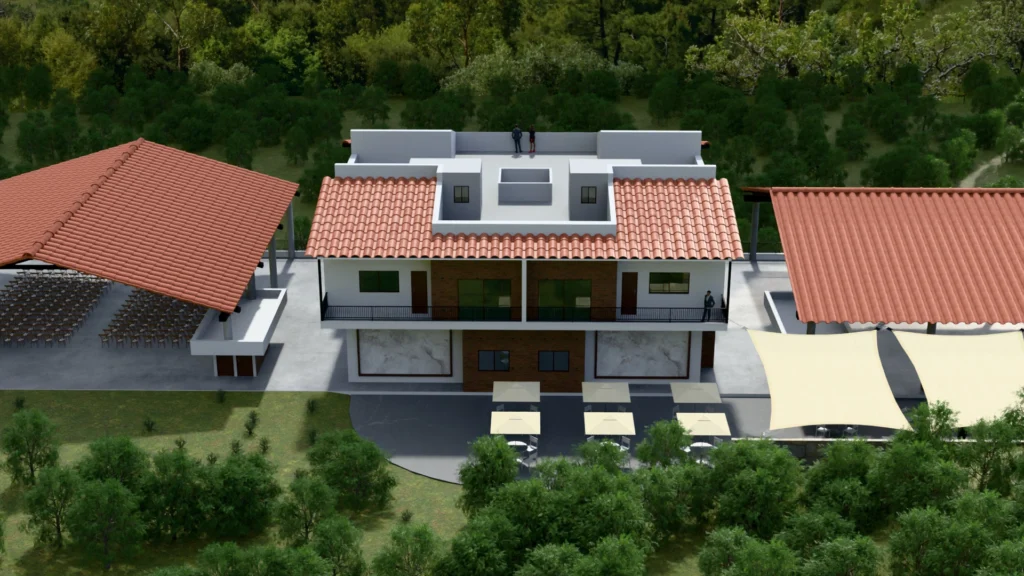
A venue like Gran Malinalco, designed for exclusive rental of its 9 hectares, lets the judge come directly to the private chapel or the main garden without sharing the space with another event, which makes it easier to line up the exact timing of the civil ceremony with the rest of the day.
The documents the Civil Registry asks for are essentially the same as for a ceremony held at the office, what changes is that you need to request the traveling judge service ahead of time and, in some municipalities, list the exact address of the venue on the application.
If either partner is a foreign national, divorced, or widowed, the Civil Registry requires additional documentation, such as apostilled certificates or divorce decrees. It is worth planning several months ahead for the translation and legalization of these documents, and our wedding planning blog covers additional guidance for couples navigating cross border paperwork.
The base cost of the civil marriage process runs roughly $1,000 to $2,500 MXN depending on the municipality. The traveling judge service is quoted separately and varies based on the distance between the corresponding registry office and the venue, in the State of Mexico the usual range is an additional $2,000 to $5,500 MXN, though it can run higher if the trip crosses into a jurisdiction different from the couple's home address. Requesting a judge from the registry office closest to the venue, rather than the one tied to the couple's home address, tends to lower this cost considerably.
The most frequent mistake is leaving the request for the traveling judge until everything else about the celebration has already been arranged, many registry offices have limited capacity for ceremonies held outside their facilities, and peak season dates fill up weeks in advance.
Another common issue is not coordinating the judge's schedule with the rest of the itinerary. If the judge arrives before guests are seated, or in the middle of the toast, the ceremony loses its flow. It helps to block off a dedicated slot for the legal portion, communicate it clearly to the venue's coordination team, and leave a cushion of fifteen to twenty minutes for possible delays on the judge's end.
Venues that manage weddings regularly usually already have contacts at nearby registry offices and can help coordinate the judge's schedule within the overall itinerary, take a look at the wedding venue near Mexico City to see how this type of ceremony fits into the rest of a full day event.
Malinalco, in the State of Mexico, sits about 90 minutes from Mexico City and blends mountain scenery with traditional architecture, which has made it a go to destination for couples seeking a wedding outside the city without an excessive commute for guests. Its proximity to the capital also makes it easier to bring in a judge from a local office, rather than from a distant jurisdiction.
At Gran Malinalco, for example, exclusive rental of the property lets the couple reserve the private chapel for the signing and then move guests to the garden or the event hall without ever leaving the property, which simplifies the day's logistics when the civil ceremony, the religious ceremony, and the reception happen on different dates or at different times but at the same venue.
If you are also working out the rest of your bridal look while sorting out the legal side of the wedding, it is worth checking out how to find an elegant dress without overspending, our guide on a budget wedding dress with style gathers practical tips for finding beautiful pieces within a reasonable budget.
Yes. Most municipalities in Mexico, including those in the State of Mexico, allow a judge to travel to the location chosen by the couple through what is known as a traveling judge or house call judge service. It must be requested in advance and comes with an added cost on top of the base process, which varies depending on the distance between the registry office and the venue.
The additional cost to bring the judge typically runs $2,000 to $5,500 MXN in the State of Mexico, on top of the base process fee, which is roughly $1,000 to $2,500 MXN. The final amount depends on the municipality, the distance traveled, and whether the ceremony takes place on a weekend or outside regular office hours.
It is best to start the process two to three months before the event date, especially during peak wedding season, when registry offices handle several off site ceremonies the same weekend and availability fills up quickly.
Yes, as long as it is performed by an authorized judge or official from the Civil Registry corresponding to the municipality. The certificate that results carries the same legal validity as one signed at the government offices and works for identification, social security, and banking purposes.
Holding the civil ceremony at the same place as your celebration is a routine process in most municipalities in Mexico, as long as it is requested with enough lead time and the full set of documents is gathered. The key is confirming the availability of the corresponding registry office, budgeting for the judge's travel fee, and coordinating the timing within the overall schedule for the day. Couples looking for a venue where the legal ceremony, the religious celebration, and the reception can all come together in one place can explore date availability and logistics with the venue's team.

With accommodations for over 200 guests, a chapel, an event hall, and a private estate nestled in the natural surroundings of Malinalco.