A complete destination wedding experience goes far beyond picking a pretty place to say "I do." When people talk about a well planned destination wedding, they mean a full weekend, sometimes three days, where guests travel in, settle down, spend time together, and celebrate in one place, without the back and forth driving that fragments most traditional weddings. The difference between an ordinary wedding and a great destination wedding comes down to how every moment is designed, before the ceremony, during it, and after.
In Mexico, this format has taken off because the country offers exceptional natural settings, private venues with lodging built in, and a celebration culture that lends itself to stretching the party out. Couples planning this kind of wedding, especially those coming from Mexico City or the greater metro area, want one thing above all: for their guests to arrive, stay, and experience the whole thing as one continuous story, with no interruptions. This article walks through, piece by piece, what that experience actually needs to include to work.
The idea of a destination wedding isn't defined only by the distance between the couple's home and the venue. What defines it is the logic of the experience itself: guests travel to a specific place, settle in, and share several moments with the couple over more than one day. Unlike a city wedding, where everyone shows up for the event and heads home that same night, a destination wedding turns the celebration into an extended stay together.
This format has an advantage that few couples anticipate going in: the quality of the connections that form. When guests arrive Friday afternoon, share a welcome dinner, sleep under the same roof, wake up for Saturday's ceremony, and still spend Sunday together at a farewell brunch, the wedding stops being a five hour event and becomes a shared experience that gets remembered in a completely different way.
In Mexico, this model works especially well at private venues located one to two hours from major cities. An exclusive use venue, like the ones found in the mountains around the State of Mexico, lets the couple and their guests live the entire experience inside the same property, without ever leaving it for the whole weekend.
The table below breaks down the main differences between choosing an exclusive use private venue and holding the wedding at a hotel, which is the most common format but not always the best fit for a true destination experience.
| Element | Destination wedding at a private venue | Wedding at a shared hotel |
|---|---|---|
| Lodging | Exclusive to the group | Shared with other guests |
| Privacy | Total, no strangers at the event | Limited by common areas |
| Length | Full weekend (2 to 3 days) | Usually a single day |
| Coordination | One team for the whole stay | Hotel coordinators |
| Atmosphere | Intimate and consistent throughout | Varies with hotel occupancy |
| Pre and post events | Scheduled within the same property | Require transportation |
| Guest access | No time or area restrictions | Subject to hotel policy |
None of this means one format beats the other in every case. But it does show that a private venue offers more favorable conditions for an experience that feels coherent from start to finish, without depending on a hotel's general policies.
A well designed destination wedding isn't simply a wedding with lodging tacked on. It's a sequence of moments built so guests move through the celebration smoothly, comfortably, and in a way they'll actually remember. Here are the essential pieces that need to be in place.
Guests' first contact with the experience happens at check in. A thoughtful welcome kit, anything from a personal note and local snacks to a printed weekend itinerary, signals that the couple cared about every detail. The welcome cocktail, usually held the evening before the ceremony, plays an important social role: it lets guests get to know each other in a relaxed setting before the wedding day demands their full attention and emotion.
This first event doesn't need to be elaborate. The key is that it feels warm and happens somewhere guests can move around freely. At exclusive use venues, this comes naturally, since everyone is already in the same place from the very start.
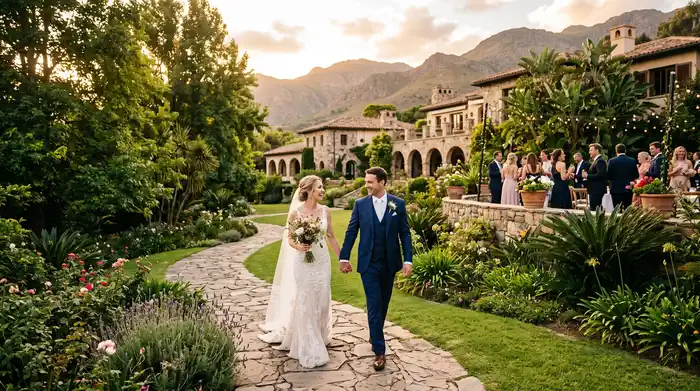
The main day of a destination wedding should flow at a different pace than a city wedding. Since guests are already settled in and don't need to arrive from different corners of town, the schedule can breathe. The ceremony, whether held in a private chapel, a garden, or another natural spot on the property, can be timed more generously, working with the light and the surroundings.
Between the ceremony and the reception, it helps to leave a bit of breathing room: a transition cocktail hour, a photo session in the gardens, or simply free time. Those unstructured moments are, somewhat paradoxically, the ones guests tend to remember most fondly. A destination wedding wins in those in between spaces.
The reception hall is where dinner, toasts, and dancing come together. This is where food and music take center stage. Many couples planning a destination wedding in Mexico choose to include a menu with local influences, regional ingredients, interactive food stations, mezcal, or Mexican wine, as a way to tie the celebration to the place they chose.
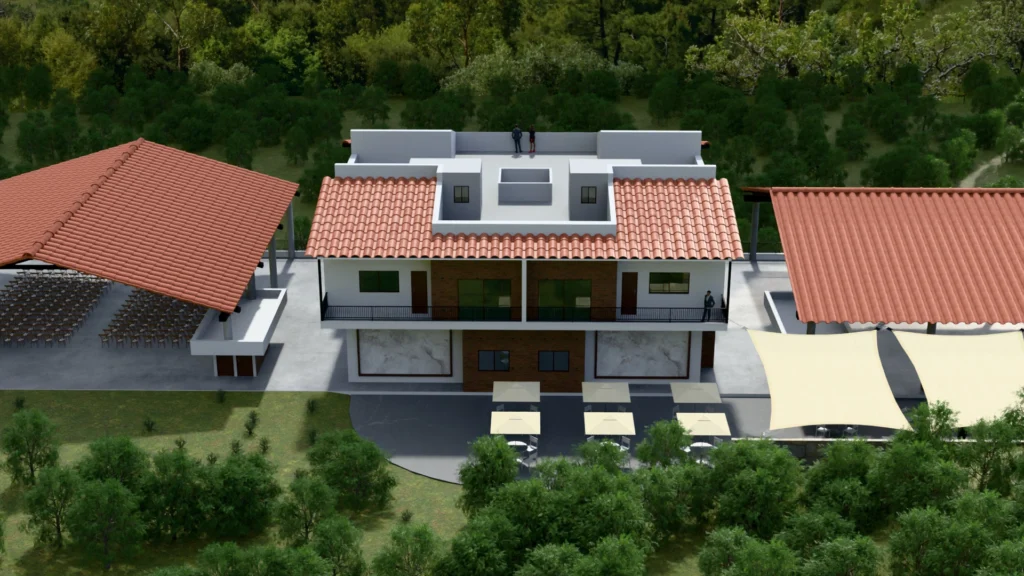
Thinking about a destination wedding near Mexico City? Gran Malinalco, ninety minutes from Mexico City, offers exclusive use of a private mountain estate with a chapel, event hall, gardens, and lodging for more than 200 guests, so the entire experience happens in one place. See the venue here.
On-site lodging is, for many couples, the single biggest differentiator of a destination wedding. When guests sleep in the same place where the wedding is happening, late-night transportation disappears, logistics get simpler, and time together starts to feel natural. There's no need to figure out how many cars are needed or when the last shuttle leaves.
Gran Malinalco, ninety minutes from Mexico City in the mountains of the State of Mexico, works exactly this way: exclusive use of the entire property, with lodging for guests within the same nine hectare estate. The result is that guests wake up the next morning in the same setting where they celebrated, with no late-night drive back home.
For couples planning a wedding with more than 100 guests, having lodging on site also solves one of the biggest planning headaches: making sure everyone can get there and get home safely.
One of the most appealing, and most underused, features of a destination wedding is the chance to build in activities for guests during the hours that aren't taken up by the ceremony or reception. That can mean anything from a tour of the property, a morning yoga session, or outdoor games in the gardens, to a short excursion to a nearby point of interest.
In and around the State of Mexico, towns like Malinalco offer natural and cultural attractions that add real value: archaeological sites, artisan markets, mountain trails, and a distinctive regional food scene. When a couple takes the time to build one or two optional activities into the itinerary, guests notice that the wedding was planned with them in mind, not just around the ceremony.
The farewell brunch, usually held Sunday morning after a weekend wedding, serves a very specific emotional purpose: it gives the experience a real close. It's the moment when guests say goodbye at an easy pace, trade stories from the days before, and leave with a genuine sense of closure, instead of ending the weekend on Saturday night with the feeling that everything just stopped.
A well run brunch doesn't need to be fancy. An informal buffet, outdoors if weather allows, with good coffee, fruit, pastries, and light dishes, is enough to make that last moment feel warm and memorable. What matters is that it's there and that it's planned for from the start.
A successful destination wedding depends as much on the visible moments, the ceremony, the reception, the brunch, as on the invisible logistics that support them. These are the pieces that, if they fail, can undo even the most beautiful venue.
Transportation from the guests' home city to the venue is one of the first details that needs to be locked down. For a destination wedding near Mexico City, the standard approach is one or two buses leaving Friday afternoon from a central pickup point. This removes the uncertainty of guests trickling in at different times and makes sure everyone gets to enjoy the welcome event together.
The return trip, usually Sunday around midday after brunch, needs the same level of precision. Nothing dulls the memory of a perfect weekend faster than a poorly organized ride home.
A wedding website with the full weekend itinerary, arrival instructions, dress code for each event, and transportation schedules is close to non-negotiable for a destination wedding. Since guests need to plan their travel well in advance, and many will be coming from other parts of the country or from abroad, having this information available and kept up to date cuts down dramatically on last minute questions.
For weddings in Mexico with international guests, it's worth adding a section with practical destination information: weather, what to pack, flight options to the nearest airport, and any relevant travel requirements.
Having a coordinator on site for the entire stay, not just the wedding day, is what actually lets the couple enjoy the weekend instead of troubleshooting it. In a destination wedding, problems can't be solved over the phone: someone needs to be there who knows the venue, the vendors, and the itinerary, and who can make operational calls without pulling the couple away from their own celebration.
Venues with real destination wedding experience tend to have established protocols for all three days of the celebration. When a couple chooses a property that has done this many times before, the learning curve shrinks and operational risk drops significantly.
The list below sums up the components that should be in place before calling the experience fully designed:
For couples in the middle of planning a destination wedding in Mexico, these resources offer additional insight on logistics, itineraries, and format trends:
Most destination weddings are structured over three days: Friday for arrival and welcome, Saturday for ceremony and reception, and Sunday for brunch and farewells. Some couples stretch the experience to four days to include sightseeing or spa time on Thursday. The long weekend format, three nights and four days, tends to strike the best balance for guests, without asking them to give up too many days away from their normal routines.
At a destination wedding held at an exclusive use venue, lodging usually covers accommodations for all guests within the property for the days of the celebration. At venues offering full rental of a private estate or hacienda in Mexico, that typically means the rooms, common areas, and garden access are available only to the group. Meals outside the main events, breakfasts, snacks, may or may not be included, depending on the venue's specific package.
Yes, and this is exactly the format many couples in the greater Mexico City area are choosing. Within a 90 to 120 minute radius of Mexico City, there are destinations with beautiful natural settings and private venues that make a complete destination wedding experience possible without anyone needing to fly. The State of Mexico, Morelos, Querétaro, and Puebla all offer options like this. The advantage of staying close is that guests arrive with more energy, without the wear of air travel, and the couple's overall logistics costs drop considerably.
It depends on the destination, but the most well received options generally include tours of the venue's gardens or grounds, morning yoga or wellness sessions, visits to nearby cultural or natural sites, archaeological zones, artisan markets, hiking trails, tastings of local products like mezcal, wine, or coffee, and outdoor games in the gardens. The general recommendation is to offer one or two optional activities, never mandatory, so guests who'd rather rest have the freedom to do that instead.
A truly complete destination wedding experience isn't something you can throw together at the last minute. It takes a venue that understands the logic of a full weekend, an itinerary built so every moment has its place, and the certainty that guests will have everything they need without ever leaving the property. When all of these pieces line up, the wedding stops being a few hours long and becomes something the couple and their guests remember as a full weekend, not just a single night.
If you're considering this format and looking for a place near Mexico City that can make it happen, Gran Malinalco offers exclusive use of a private nine hectare estate in Malinalco, State of Mexico, ninety minutes from the city, with a chapel, event hall, gardens, and lodging for more than 200 guests. The entire weekend can unfold without ever leaving the property.
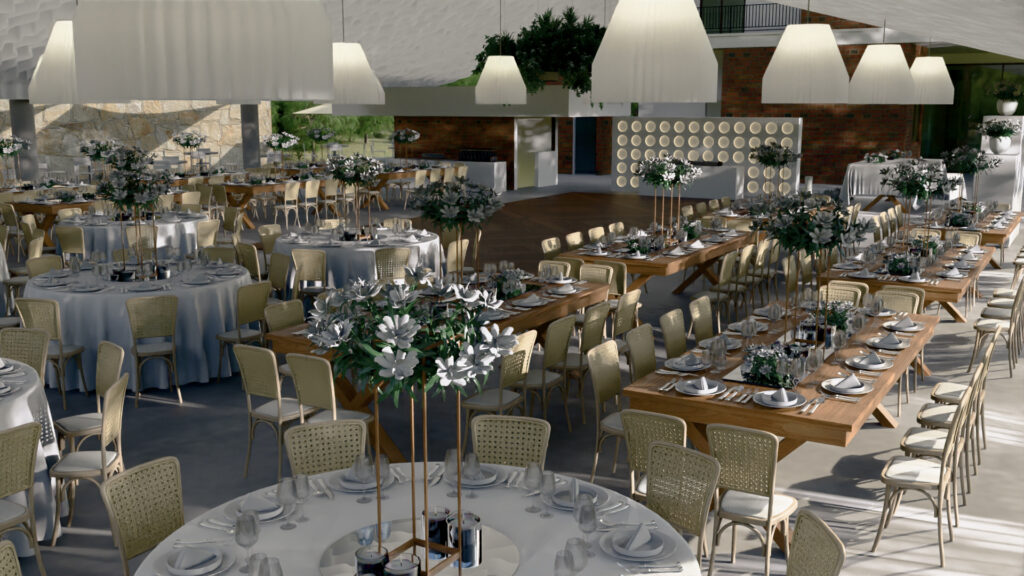
With accommodations for over 200 guests, a chapel, an event hall, and a private estate nestled in the natural surroundings of Malinalco.