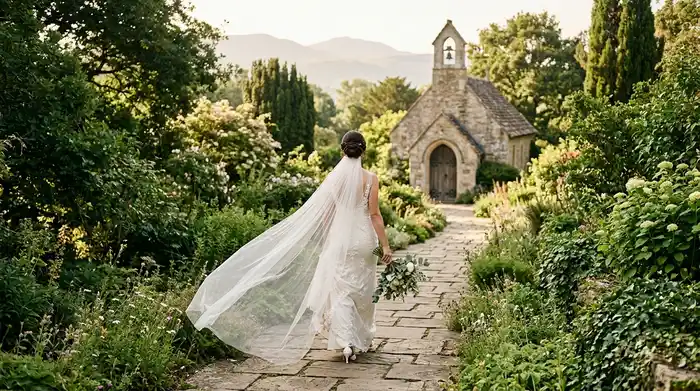
Couples planning a wedding often reach the final dress fitting without having given the veil much thought, and end up choosing it in a rush, without considering the length, the fabric, or the hairstyle they will wear that day. This guide walks through the types of bridal veils available, the factors worth checking before buying or renting one, and how to pair it with the dress, the hairstyle, and the venue where the ceremony will take place, so the decision can be made with time and intention, not at the last minute.
Although some brides choose to skip it, the veil remains one of the most photographed elements of a wedding. It works as a visual transition between the arrival and the ceremony, and in entrance photos it is often the element that marks the most emotional moment of the day. A well chosen veil also balances the dress visually, it can elongate the silhouette, soften a deep neckline, or add volume to a minimalist design without needing extra detail on the gown itself.
The most common mistake is treating the veil as an isolated accessory. In reality, it should be decided together with the dress, the hairstyle, the type of ceremony, and even the venue where the couple will marry, since a garden with uneven terrain or a chapel with a narrow aisle does not behave the same way as a closed hall with a flat floor.
Length is the first decision, and the one that changes the overall visual effect the most. Each length serves a different function within the ceremony and the photo session.
This veil barely covers the face or falls to chin length, and is associated with a vintage or retro style. It is often paired with headpieces, combs, or hair accessories, and works especially well for civil ceremonies or weddings with a more relaxed style, where the bride wants a light, practical look for moving around during the celebration.
Falling to the elbows, this is one of the most versatile lengths because it suits almost any dress style, from mermaid to A line. It is a frequent choice for daytime weddings or civil ceremonies, since it adds elegance without the extreme formality of a long veil, and lets the bride move comfortably during the cocktail hour or reception.
This veil falls to the floor, generally one to two meters beyond the waist, and is associated with more formal religious or symbolic ceremonies. It is a common choice for weddings with a long train, since the chapel veil can match or visually accompany the length of the train without competing with it.
The longest and most dramatic option, it can extend more than three meters from the waist. It is reserved almost exclusively for formal religious ceremonies, especially in venues with long aisles such as a chapel or a temple, where the veil has enough space to unfold fully during the entrance without dragging awkwardly in smaller spaces.
This is the most widely used material because it is light, sheer, and does not compete visually with the embroidery or beading on the dress. It works well in warm climates or outdoor ceremonies, since it moves easily and does not create the heavier feel that denser materials can have.
This option includes crystal, pearl, or sparkle applications arranged in different patterns, from a delicate edge to a full scattered coverage. It is worth checking carefully when the dress already has embroidery or beading, since two shiny textures competing with each other can visually overwhelm the overall look in photographs.
Lace is typically placed along the bottom edge of the veil and usually pairs with dresses that also feature lace on the skirt or sleeves, creating visual continuity between both pieces. This option works particularly well for ceremonies with a more classic or traditional style.
The cut of the dress largely determines which veil looks best. A mermaid or trumpet dress usually benefits from a longer veil, such as chapel or cathedral length, because it visually balances the volume concentrated at the bottom of the skirt. A dress with a lot of volume, such as a princess cut, can feel overwhelming when paired with an equally voluminous veil, so simpler plain tulle options tend to work better.
The hairstyle also affects the choice. An updo allows the veil to be placed closer to the crown of the head, which favors longer veils since they fall more naturally from that point. Loose hair, on the other hand, usually pairs better with short or medium length veils, since a very long veil can visually compete with the movement of the hair during the ceremony and the dance.
Another factor that is often overlooked is the venue itself. A ceremony in open gardens, with grass, stone, or uneven ground, behaves differently from a flat ballroom floor. In a setting like the nine hectares of gardens at Gran Malinalco, for example, it is worth considering a veil that will not drag excessively over uneven surfaces, especially if the ceremony takes place in the venue's private chapel before moving to the gardens for photographs.
| Veil type | Approximate length | Ideal occasion | Recommended dress |
|---|---|---|---|
| Birdcage / blusher | Covers the face or falls to the chin | Civil, brunch, or retro style | Short dresses or statement headpieces |
| Elbow length | Falls to the elbows | Civil or daytime religious | Mermaid, A line, or sheath cut |
| Chapel length | Falls to the floor, with a short train | Formal religious or symbolic | Dresses with a medium or long train |
| Cathedral | More than three meters from the waist | Formal religious in large venues | Structured dresses with an extended train |
Couples who have already chosen their venue often resolve these questions earlier, since knowing the floor type, the chapel ceiling height, or the walk to the gardens beforehand makes it easier to decide on the right veil length, it is worth reviewing options for a wedding venue in Mexico before finalizing the veil purchase.
Before the final dress fitting, it is worth reviewing a few points calmly, so the veil is not decided impulsively on the same day.
One of the most frequent mistakes is deciding on the veil without trying it with the complete dress beforehand, including shoes and hairstyle, which causes the proportions to look different on the wedding day compared to the fitting. Another common mistake is choosing a veil that is too long for a small space or one with many guests moving near the aisle, which can cause tripping or get the veil caught on chairs or decor.
It is also common to forget about the weather and wind at the venue. In settings surrounded by mountains and vegetation, such as Gran Malinalco, located 90 minutes from Mexico City, the wind during an outdoor ceremony can move a light veil in a way that looks beautiful in photographs, but it is worth anticipating this rather than being surprised on the day itself. Learning about the features of the event hall and the gardens helps anticipate these details before making a final decision on the veil.
The dress and the veil should be thought of as a single look, not as separate decisions. If you are still defining your dress style, it is worth reviewing some elegant, accessible alternatives first, such as how to put together a budget wedding dress with style without sacrificing the visual effect you want for your wedding day.
It is best to choose it between four and six months before the wedding, ideally at the same appointment as the first dress fitting. This allows time for adjustments, for comparing tulle or lace options, and for deciding calmly whether to buy it new, rent it, or pass it down from a family member. Leaving it for the last few weeks tends to limit the available options, especially when looking for a specific color or shade that matches the dress.
Yes, the veil is not reserved only for religious ceremonies. At civil weddings, a short veil or an elbow length one works well, adding formality without the solemnity of a cathedral veil. The final choice depends more on the overall style of the wedding and the bride's preferences than on the type of ceremony itself.
For outdoor ceremonies, like those held in gardens in central Mexico or at venues a short distance from Mexico City, it is best to prioritize plain tulle and medium lengths, since they move more easily in the wind and do not get as dirty on grass or stone terrain. If the ceremony is in a chapel followed by a move to the gardens, it is worth confirming with the venue how that walk works before deciding on the final length.
It does not need to be identical, but the shade should be compatible to avoid noticeable contrast in photographs, especially with dresses in ivory or champagne tones. The most practical approach is to bring a fabric swatch from the dress when choosing the veil, or to try them on together at the boutique, to confirm that both tones look harmonious under different lighting.
Choosing a bridal veil should not be a last minute decision. The length, the material, and the finish directly affect how the complete dress looks, how comfortable the bride feels during the ceremony, and the final result in the photographs. Considering the type of ceremony, the hairstyle, and the venue's characteristics, from the floor type to the distance between the chapel and the gardens, helps make a decision with time and without surprises.
Couples still choosing their venue can explore what Gran Malinalco offers, a wedding venue 90 minutes from Mexico City with a private chapel, nine hectares of gardens, and lodging included for guests. To check available dates and schedule a visit, get in touch with us.
Schedule a visit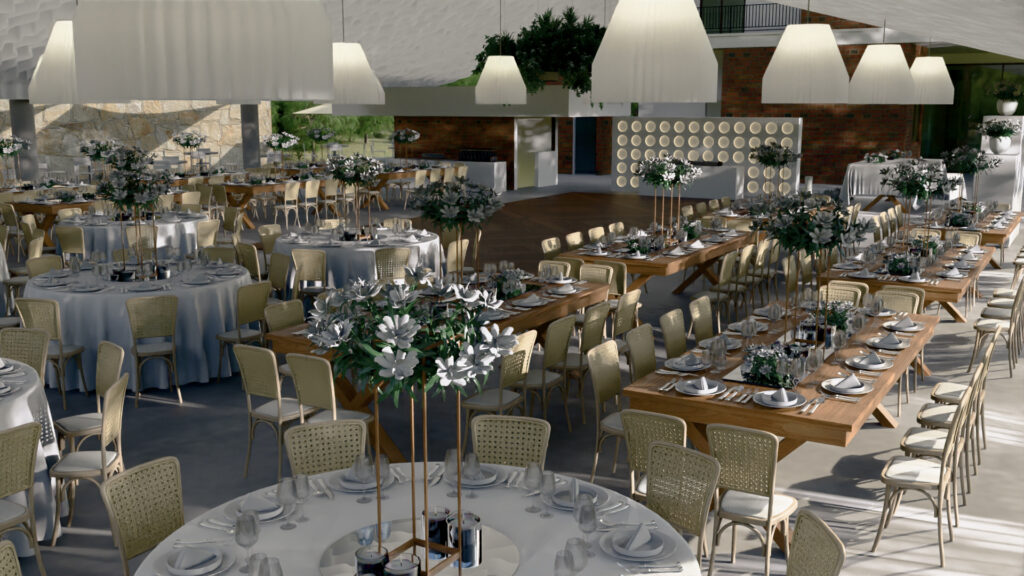
With accommodations for over 200 guests, a chapel, an event hall, and a private estate nestled in the natural surroundings of Malinalco.