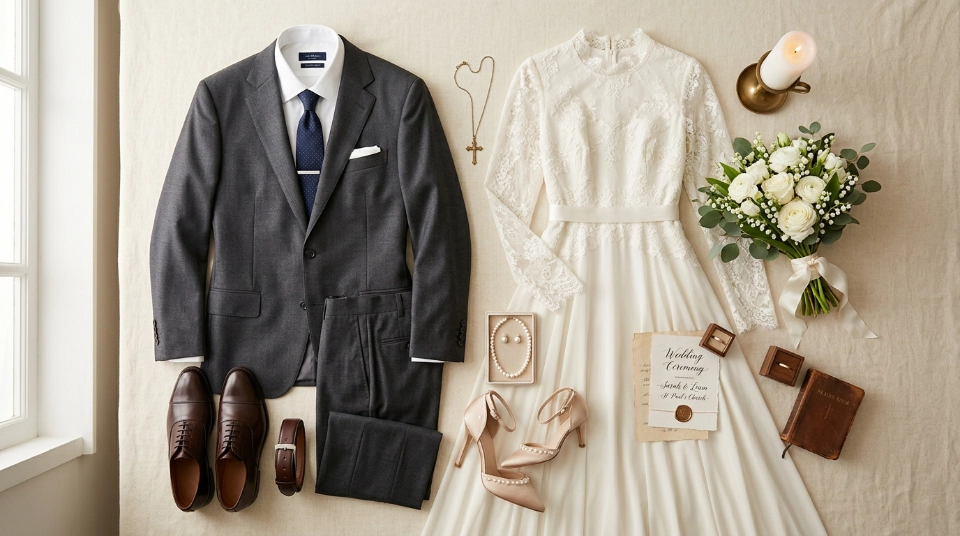
A personalized wedding is not achieved by adding more details, but by choosing better among the ones that already exist. Many couples in Mexico start planning with a board full of references and, by the third month, discover that their celebration looks too much like someone else’s album: the same floral arch, the same playlist, the same toast. The problem is not a lack of ideas, but a lack of criteria for deciding what to keep and what to let go.
Designing an authentic wedding starts with understanding what makes the couple different and turning that into concrete decisions: the venue, the schedule, the music, the menu, and the way guests are welcomed. Each of those decisions tells part of the story without spending more, just by thinking with intention.
This seven-step method brings together examples that work for weddings in Mexico City, the State of Mexico, and nearby destinations like Malinalco, so the celebration feels like your own from the very first minute.
An authentic wedding is one where guests recognize the couple just from the music, the food, and the way they were treated. It does not depend on a specific style or a big budget: a minimalist celebration can be just as personal as a three-day event, as long as every decision has a reason of its own and does not simply follow a trend.
The trend confirms this direction. According to Publimetro, Vogue Mexico identifies personalization, purpose, and durability as the pillars of 2026 weddings, while single-use items lose ground. A personalized wedding is no longer a luxury, it becomes the standard by which the entire celebration is judged.
Adding a sign with your names, a photo booth, and a signature cocktail can be fun, but none of it makes a wedding authentic on its own. Real personalization shows up in the structural decisions: what time the ceremony starts, who speaks, what is served, and how long the party lasts. Those choices change the entire experience, while decor only changes the photos.
Before approving any element, put it through three questions. Does it say something true about the couple? Will guests enjoy it, or will it only look good in photos? Would it have existed anyway if no one posted about it online? An element that passes all three stays; one that only passes the second is kept if the budget allows, and one that passes none is dropped without guilt.
Hiring vendors before defining the wedding's identity leads to poorly distributed budgets. A preliminary exercise, one or two afternoons long, saves weeks of indecision and makes every later conversation simpler.
Each partner writes down, separately, five moments that define the relationship: the first trip, an argument that ended in laughter, a place they always return to. When the lists are compared, overlaps and differences appear that work as raw material. For example, a couple who share three moments lived on the road has a clear clue for the arrival procession, the music, or the table names.
With the lists in hand, the couple chooses three words that describe how the day should feel, for example intimate, festive, and natural. Every vendor receives those words along with the proposal, and if a suggestion does not fit them, it is set aside. This approach keeps the design from falling apart when different florists, photographers, caterers, and musicians are involved.
Not all decisions carry the same weight. The table compares six key areas of a personalized wedding and shows how each one changes when it moves from a generic version to one designed for the couple, along with the effort involved.
| Decision | Generic version | Personalized version | Effort |
|---|---|---|---|
| Ceremony | Standard script read by the officiant | Vows written by the couple and a true anecdote about them | Low |
| Music | A playlist of hits for every audience | Entrance, first dance, and closing with songs tied to real memories | Low |
| Menu | A catalog three-course menu | A family dish reinterpreted by the chef and a regional drink | Medium |
| Schedule | An itinerary copied from other weddings | Timing designed around the style, like a sunset dinner | Low |
| Venue | Whatever hall is open on the chosen date | A space whose character matches the wedding's three words | High |
| Guests | Tables arranged by family relationship | Tables built around shared interests, with a short story for each group | Medium |
Vows written by the couple are the most affordable way to personalize a wedding and also the one people remember most. All it takes is asking the officiant to include a true anecdote, like the day the couple got lost on the highway and ended up eating tacos in an unfamiliar town, for the ceremony to stop sounding like a template. Stories like that make guests laugh and tear up at the same time.
A grandmother's recipe reinterpreted by the chef, or a regional drink served during cocktail hour, communicates identity without any need for staging. When it comes to music, the rule is simple: three key moments, the entrance, the first dance, and the closing, with songs that have a story behind them. The rest of the playlist can be festive and open so that no one stays seated.
The following order keeps decisions from contradicting each other and preserves the wedding's identity from the first quote to the last dance.
DIY ideas let you adjust the budget and personalize every detail, as Azteca UNO explains when it talks about homemade invitations and photo corners designed by the couple. They work best when limited to one or two meaningful projects, because the schedule in the final weeks rarely leaves time for more.
To see how a personalized wedding feels when the space supports the couple's story, it is worth visiting the Gran Malinalco event hall, designed for celebrations with a character of their own.
The venue shapes more than it seems, because it defines the light, the sounds, the travel times, and even the tone of the photographs. A personalized wedding needs a space that does not compete with the story but supports it. In Malinalco, State of Mexico, about 90 minutes from Mexico City, Gran Malinalco covers 9 hectares (about 22 acres) of gardens and mountains with exclusive rental, which means no other celebration shares the property with the couple. That exclusivity lets you set the pace of the day without adjusting to anyone else's schedule.
The private chapel eliminates travel between the ceremony and the reception, and lodging for more than 200 guests makes it possible to stretch the celebration into a full weekend. In practice, that extended time together is one of the best ways to get guests involved and make the wedding feel different from a four-hour reception.
A couple from Mexico City who share a love of hiking could organize a morning walk through the gardens on Saturday, a sunset ceremony in the chapel, and a farewell brunch on Sunday. None of these elements is expensive, but together they make a wedding that could only belong to that couple. This is a planning example, not a client case.
Keepsakes are a common opportunity for personalization and also a weak spot. Publimetro notes that 2026 souvenirs are moving away from the generic and aim to fit into guests' everyday lives. An analysis shared by Crónica reports that more than 80% of attendees prefer designer, functional pieces with their own aesthetic. The figure comes from an industry study tied to a brand in the field, so it is best taken as a reference and not as an absolute number.
The cost depends more on the decisions than on the style. Personal vows, music with a story, and a schedule designed around the couple do not add much expense, while custom design and designer pieces do raise the budget. The most effective approach is to set a cap for each category and save your investment for one or two star elements.
The key is to start from a clear criterion, like the three words that describe the day, and apply it to every vendor. When there is a common thread, even the most original ideas feel cohesive. Walking through the whole day a month ahead helps you catch dead time and details that do not fit.
Look for a venue with exclusive rental, which lets you decide the schedule and pace without sharing the space with other events. Destinations one or two hours from the city, like Malinalco, offer nature and lodging so guests can spend more time together. It also helps to book early, because peak-season weekends fill up fast.
In general, the style is defined at the start of planning, before signing with the first vendor and, ideally, ten to fourteen months before the event. Defining it early keeps you from hiring services that later do not match the vision. If the date is close, simply shorten the exercise and prioritize the venue, the music, and the ceremony.
What sets a memorable celebration apart is not the number of ideas, but the coherence between them. When the couple defines their three words, organizes the budget by priorities, and lets the venue support the story, every decision feels lighter and the result feels like their own. Authenticity is not improvised on the day of the event, it is built in the earlier conversations, in the small decisions, and in the couple's willingness to let go of what does not sound like them.
Those looking for a space where that story has room to unfold can explore the gardens, chapel, and event hall before making a decision.
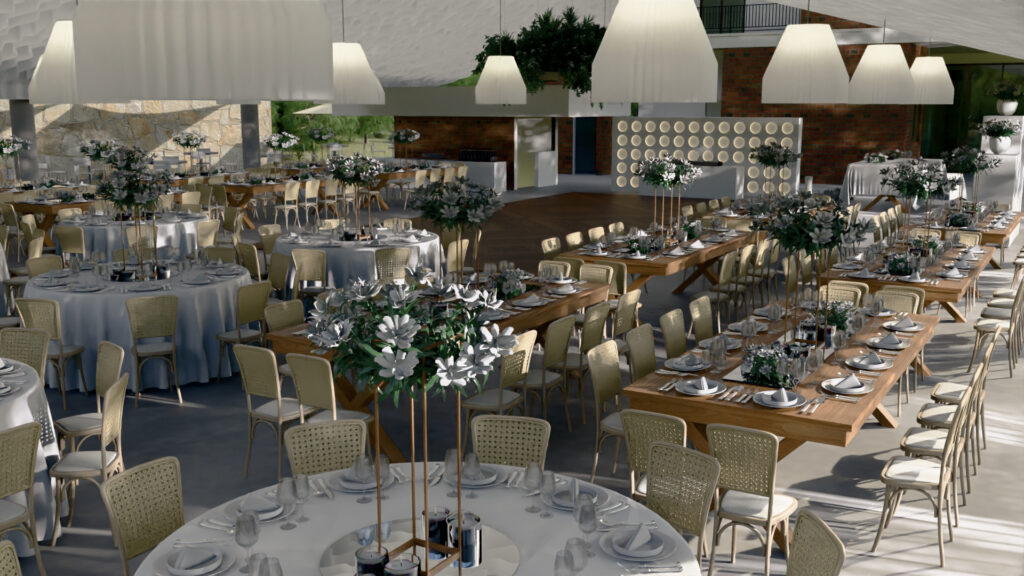
With accommodations for over 200 guests, a chapel, an event hall, and a private estate nestled in the natural surroundings of Malinalco.
Realistic and varied looks for a church wedding, for both women and men