The wedding banquet is one of the biggest expenses of the celebration and the decision that weighs most in how guests remember the wedding. Choosing well means settling three things before tasting a single dish: the type of service, the budget per person, and the conditions of the venue where it will be served. Once those three variables are clear, the menu almost falls into place on its own.
Couples planning a wedding in Mexico often start with the menu and leave logistics for later, and that is where the problems show up: plates that reach the table cold, long lines at the buffet, or recipes that do not hold up at an outdoor dinner. According to INEGI, Mexico's national statistics agency, 491,640 marriages were registered in the country in 2025, so reputable catering providers often have their calendars booked months in advance.
This guide walks through the decision step by step, with examples for weddings of 100 to 200 guests: how to compare service styles, how to calculate the budget, what to ask at the tasting, and what to check in the contract.
A wedding banquet works when the menu responds to the real conditions of the event and not to a list of favorite dishes. Three factors shape everything else.
With 100 guests, almost any format works. With 200, plated service requires more staff and tighter kitchen coordination, and a buffet needs several serving lines to avoid long waits. The final headcount also sets the cost, so ask your caterer for the deadline to confirm the final number.
A garden dinner at sunset calls for dishes that can sit on the table for a few minutes without losing quality, and for hot drinks when the temperature drops. At countryside venues in the State of Mexico, where nights are cooler than in the city, this detail makes a real difference in guest comfort. Mayonnaise-based dressings, delicate sauces, and cream desserts are the first to suffer in the heat.
A wedding with many older adults, children, or vegetarian guests needs a more flexible menu than a celebration among friends of the same age. When a good share of your guests travel from Mexico City and arrive after a 90-minute drive, it also helps if the welcome cocktail hour offers something substantial and not just canapés.
How the food is served shapes the pace of the party, the amount of staff needed, and even the conversation between tables. The three most common formats in Mexico are plated, buffet, and food stations, and each one solves a different problem.
| Service | Main advantage | Limitation | Best for |
|---|---|---|---|
| Plated | Order and uniform presentation, no lines | Fewer choices per person and more staff | Formal weddings of 80 to 200 guests with a multi-course dinner |
| Buffet | Variety and a self-paced meal for each guest | Lines if there are too few stations and a risk of cold dishes | Relaxed weddings with guests of very different tastes |
| Food stations | A roaming atmosphere and interaction with chefs | Needs a large space and more logistics | Gardens and large halls with a long reception |
In this format, each plate arrives already assembled at the table and guests do not have to handle anything. It is one of the most widespread options because it speeds up service and delivers an identical presentation to everyone, as explained in this guide on restaurant service types. Its weak point is rigidity: dish selections are set before the event, and dietary restrictions must be reported well in advance.
A buffet lets each guest eat at their own pace and choose how much to take, which is useful at long weddings with large families. The key is the number of serving lines: assuming a minute and a half per person, a single line for 150 guests would take almost four hours, while four lines cut that to under one hour. Ask your caterer to calculate the number of lines for your guest count to avoid this problem.
Stations spread the food across themed points, such as tacos al pastor, charcoal-grilled cuts, or a seafood bar, and turn the banquet into part of the entertainment. They work well in large spaces, where guests can move around without crowding. Each station needs its own staff and equipment, so the cost can rise if you want real variety.
Many couples mix formats: a cocktail hour with stations for the welcome, a plated three-course dinner, and a late-night buffet-style snack with chilaquiles or tacos. This combination keeps things formal at the center of the wedding and adds energy once the party is in full swing.
To picture how a dinner in a hall and a cocktail hour in the garden can coexist on a single 9-hectare property, the Gran Malinalco event hall is a useful reference when comparing spaces.
A wedding banquet budget is built from the per-person figure up, not the other way around. An illustrative calculation shows why: a difference of 150 pesos per person between two proposals adds up to 22,500 pesos with 150 guests, and that amount can decide whether or not there is a late-night snack.
When comparing quotes, each proposal should detail the courses of the menu, service staff, dishware, glassware, linens, and whether drinks are part of the package. Two quotes with the same price per person may not be comparable if one includes waiters and the other charges for them separately.
Drinks, cake, and the late-night food are usually quoted as separate items. Ask for an estimated consumption per person and find out whether corkage, ice, and bartending are included. At a reception that lasts several hours, the late-night snack is the detail most appreciated by those who stay until the end.
Setting aside 5 to 10 percent of the banquet budget for last-minute guests, menu changes, or extra service time avoids emergency adjustments. This cushion also protects quality when the guest list grows close to the date.
A good menu balances flavors, textures, and colors, and considers how each dish will look once served. Logistics weigh as much as the recipe: what looks great at a tasting may not hold up through 150 simultaneous servings.
A realistic example for a wedding in the State of Mexico: cream of corn soup with fresh cheese and poblano chile as a starter, beef tenderloin in guajillo chile sauce with rustic mashed potatoes and roasted vegetables as the main course, and a light mixed berry mousse for dessert. This combination uses ingredients that are easy to source in central Mexico and techniques that stay stable during service.
Allergies, celiac disease, vegetarian diets, and children's menus should be recorded from the guest list stage and not on the day of the event. A simple form on the digital invitation lets you collect this information and hand it to your caterer along with the final confirmation. Allergies require explicit notice to the kitchen team to prevent cross-contamination.
The tasting is your only chance to verify the quality of the wedding banquet before signing. These five steps help you make the most of it.
Serving a wedding banquet far from the city changes the logistics. In Malinalco, about 90 minutes from Mexico City, food and equipment travel before the event, so the caterer must ensure a cold chain, transport timing, and an on-site prep area.
Venues with exclusive rental simplify part of the work: since they do not share areas with other events, the catering team can set up the kitchen and service zones ahead of time. That is the case at Gran Malinalco, a 9-hectare property with a private chapel, an event hall, gardens, and on-site lodging, where the entire wedding takes place in one location. To weigh that advantage, ask any wedding venue near Mexico City whether it works with its own caterer or allows outside catering.
With lodging on the same property, guests also do not have to drive back after dinner, which makes it easier to offer a more generous open bar without transportation worries.
Profeco, Mexico's consumer protection agency, recommends reading the entire contract, avoiding closing deals in public places, and checking the Buró Comercial to learn the provider's track record. For social event services, NOM-174-SCFI-2007 also requires providers to register their standard contract with the authority when it includes a hall, banquet, or music.
It depends on the size of the wedding and the atmosphere the couple wants. Plated service offers formality, order, and no lines, while a buffet gives variety and the freedom to choose portions. At weddings of more than 150 guests, a buffet needs several serving lines and plated service needs more staff, so it is best to compare both with your caterer before deciding.
It is best to book it 9 to 12 months before the date, especially in peak season, when caterers close their calendars months ahead. If the venue includes or recommends a caterer, it is wise to settle this when you reserve the venue so you can coordinate the tasting, setup, and transport timing.
The usual package covers the multi-course menu, service staff, dishware, glassware, and linens. Drinks, cake, the late-night snack, and extra time are often quoted separately depending on the provider, so each proposal should be reviewed item by item before comparing it with another.
It depends on each venue's policy. Some venues work with their own kitchen and caterer, and others allow outside catering with requirements for access, setup times, and kitchen use. The best approach is to ask in writing before booking; at Gran Malinalco, you can send your question through the contact page.
The best decision about your wedding banquet is the one made with data: how many guests there will be, how much you can invest per person, and which format holds up under the conditions of the venue. With the service style defined, a budget with a cushion, and a contract that describes every detail, the tasting stops being a flavor test and becomes the confirmation of a solid plan.
Couples looking for a setting where the ceremony, the reception, and the lodging all happen on the same property can get to know Gran Malinalco, an exclusive-rental venue with a private chapel, an event hall, and gardens just 90 minutes from Mexico City. To check dates and talk through the banquet format that fits best, the next step is our contact page.
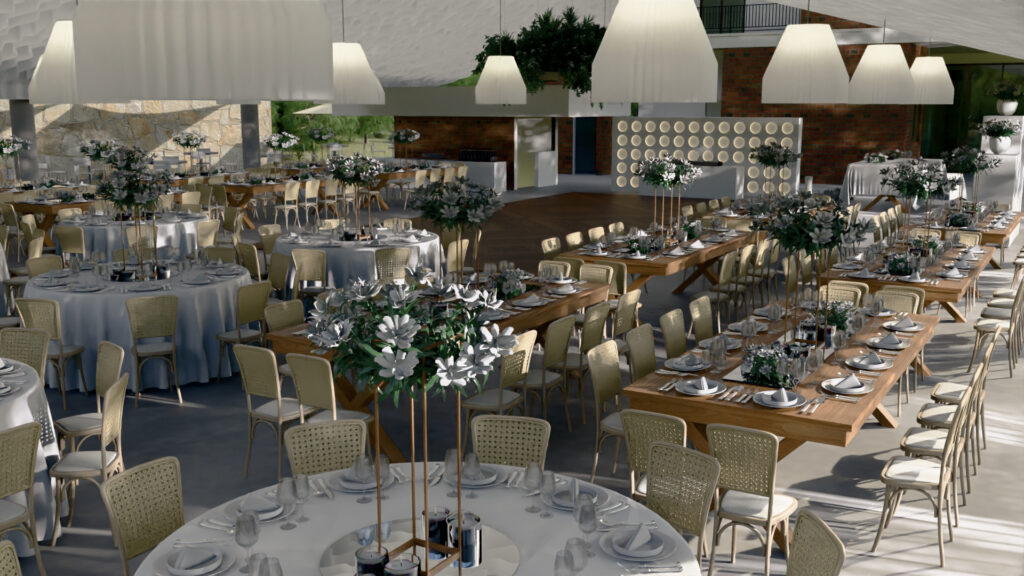
With accommodations for over 200 guests, a chapel, an event hall, and a private estate nestled in the natural surroundings of Malinalco.
Realistic and varied looks for a church wedding, for both women and men