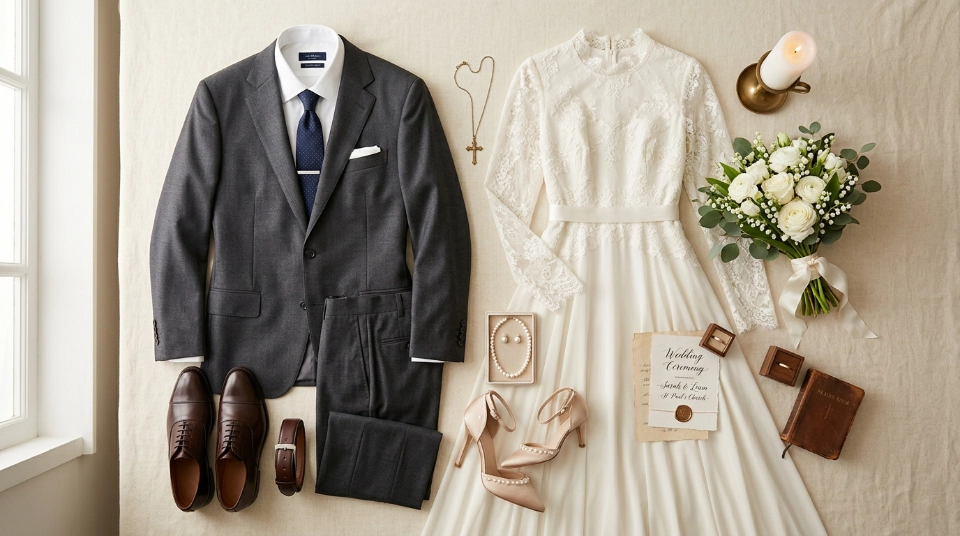
Catholic wedding readings are the scripture passages the couple hears during the Liturgy of the Word, and the ones they choose set the spiritual tone of the entire ceremony. In practice, the couple selects a first reading from the Old Testament, a psalm, a second reading from the New Testament and a Gospel, always with the guidance of the priest who will officiate.
The difficulty is not a lack of options, but an abundance of them. The marriage lectionary offers dozens of passages, and many look alike at first glance. Couples planning a wedding in Mexico, whether in a parish in Mexico City or at a countryside venue in the State of Mexico, often reach this decision with little time and without knowing what each text really says. Choosing well means understanding what each passage is about, who can read it and how the readings fit together so the liturgy has a common thread. This guide gathers the most popular readings, explains their meaning in plain language and suggests combinations that are ready to present to your priest.
The Liturgy of the Word at a nuptial Mass includes three readings and a psalm. According to the Catholic.net guide to wedding readings, the couple chooses one text from the Old Testament, one from the New Testament and a Gospel, and reading them together before deciding gives them a chance to reflect on their future marriage. Reading them together is the best starting point, because it shows which passages truly reflect what the couple wants to promise each other.
Relatives or close friends of the couple usually proclaim the first and second readings, and it is a good idea for them to prepare ahead of time so they read clearly and without rushing. The Gospel is read only by the priest or deacon who officiates. In addition, marriage is a sacrament in itself, so it is also possible to celebrate it without a Mass, with a shorter Liturgy of the Word. Many parishes give couples a selection of texts to make the decision easier, so the first step is to ask your priest what material he offers.
The first reading opens the Liturgy of the Word and sets the theme of the celebration. The Catechism of the Catholic Church presents marriage as a covenant of life established by God, an idea Opus Dei summarizes in its guide to Christian marriage, referring to paragraphs 1603 to 1605 of the Catechism. That is why the Old Testament readings revolve around creation, covenant and faithfulness.
| Citation | Central idea | Ideal for couples looking for |
|---|---|---|
| Genesis 1:26-28, 31a | Man and woman created in the image of God | A ceremony centered on the origin of love and family |
| Genesis 2:18-24 | Two people who become one flesh | Uniting two families with a clear and familiar text |
| Song of Songs 8:6-7 | A love as strong as death that nothing can extinguish | A poetic reading with great emotional power |
| Ruth 1:16 | A promise to go wherever the other person goes | A simple commitment, very fitting if you are moving to a new city |
| Tobit 8:4b-8 | The prayer of two young people as they begin their life together | Making their first shared words a prayer |
| Jeremiah 31:31-34a | A new covenant written on the heart | A more reflective and theological approach |
| Sirach 26:1-4, 16-21 | The beauty of a well-kept home | Honoring everyday life and the home |
Genesis 1 presents man and woman created in the image of God and called to care for the world together. Genesis 2 shows two people who leave their families of origin to become one flesh, an image many couples choose when they are uniting two different families. Both passages fit a ceremony that wants to emphasize family over spectacle.
Song of Songs 8:6-7 describes a love as strong as death that not even raging waters can quench. It is a poetic text, ideal for those who want a reading with emotional force. Ruth 1:16 is different in tone but the same in substance, since it expresses a simple promise to accompany the other person unconditionally, a perfect fit for couples who move to another city or country after the wedding.
Tobit 8:4b-8 recounts the prayer of two young people who begin married life by asking for God's blessing, a model for those who want to open their life together with a prayer. Proverbs 31 praises the character and work of the strong woman, while Jeremiah 31 speaks of a covenant written on the heart, ideal for couples who prefer a more contemplative tone.
The second reading must come from the New Testament and is usually an apostolic letter. Its role is to bring down to earth what the first reading announced, which is why it connects most closely with the couple's daily experience.
This is the best known text for a religious wedding. It describes a love that is patient and kind, without envy or pride, that does not seek its own interest and that remains when everything else passes away. It works very well in ceremonies where you want guests, Catholic or not, to recognize the message right away.
Romans 8:31b-35, 37-39 affirms that nothing can separate believers from the love of Christ, a message that resonates with couples who have overcome distance or difficult times before getting married. Romans 12:1-2, 9-18 brings that love into daily practice: sincere affection, hospitality, shared joy and mutual help.
Ephesians 5 proposes living marriage as mutual self-giving after the model of Christ and the Church, and since the passage is long, it is wise to ask the priest whether a shorter form exists. Colossians 3:12-17 invites us to clothe ourselves with compassion, kindness, humility and patience, qualities that sustain life together. The texts from 1 John 4 remind us that love comes from God, which gives the reading a luminous ending.
For couples who want these readings to be heard calmly and without rushing, the private chapel at Gran Malinalco offers a natural setting among the mountains of Malinalco, about 90 minutes from Mexico City.
Among the most commonly used psalms are Psalm 128 (127 in the Vulgate numbering), which blesses the family that lives in the fear of the Lord; Psalm 103 (102), which celebrates the Lord's mercy and tenderness; and Psalm 33 (32), a song of praise that lends itself well to a musical setting. It is a good idea to coordinate with whoever leads the music so the psalm you choose has a melody your guests already know.
The following proposals are guiding examples. Each keeps a single theme so the liturgy sounds coherent from start to finish, and all of them should be approved by the priest who will officiate.
1. Origin and Joy
Genesis 2:18-24, Psalm 128, 1 Corinthians 13 and John 2:1-11
It starts with the creation of the couple and ends at the feast of Cana, so it works very well in celebrations with a festive atmosphere.
2. Faithfulness
Ruth 1:16, Psalm 103, Romans 8:31b-35, 37-39 and John 15:9-12
Its axis is the promise to remain, and it is often the choice of couples who have already traveled a long road together.
3. The Simple Home
Tobit 8:4b-8, Psalm 33, Colossians 3:12-17 and Matthew 7:21, 24-29
It combines prayer, everyday virtues and the image of the house on rock, ideal for those who put the home at the center.
Many couples from Mexico City and the State of Mexico celebrate outside the city, and that adds a layer of logistics to the liturgy. A venue like Gran Malinalco, with 9 hectares, a private chapel and exclusive use, lets you rehearse with your readers and organize the timing without the pressure of another event using the space. On-site lodging also makes it easier for relatives who travel from other states to rest before the ceremony and arrive without rushing to proclaim their reading. To see the full set of spaces, the page about our wedding venue near Mexico City explains how the chapel, gardens and event hall come together.
As with any location outside a parish, it is wise to confirm the permits and requirements for the religious ceremony with the priest before setting a date. It is also worth remembering the advice of Catholic wedding planners cited by ACI Prensa: do not center everything on the party, and keep the sacrament and love as the essentials. Well chosen readings are precisely the part of the ceremony that supports that approach.
Three scripture texts are read: a first reading from the Old Testament, a second reading from the New Testament and a Gospel. Between the first and the second, a responsorial psalm is sung or recited. Relatives or friends can proclaim the first two, and the Gospel is read by the priest or deacon.
The couple proposes the texts that represent them best, and the officiating priest reviews and approves them. Some parishes provide a list of available passages to make the choice easier. The best approach is to talk with your priest from the very first preparation meetings.
The Liturgy of the Word is reserved for texts from Sacred Scripture, so poems or personal messages usually do not replace the official readings. Many couples include them at other moments, such as the reception or a toast, and some parishes allow a brief personal reflection. The final decision rests with the priest of each community.
Among the most frequently chosen are 1 Corinthians 13 as the second reading, Genesis 2:18-24 as the first reading and John 2:1-11 as the Gospel. They are popular because they are clear, recognizable and close to the language of everyday love. Even so, the best reading is the one the couple understands and feels is their own.
Choosing your Catholic wedding readings well is not about finding the most famous passage, but about putting together a sequence that tells the couple's story coherently: an origin, a promise and a way of living it out. With the priest's guidance, a clear theme and prepared readers, the Liturgy of the Word becomes the most serene moment of the celebration.
For couples who want to experience that ceremony among the mountains, with time to rehearse and without interruptions, Gran Malinalco offers a private chapel and an exclusive-use property 90 minutes from Mexico City. If you would like to see the spaces and available dates, you can reach out through our contact page.
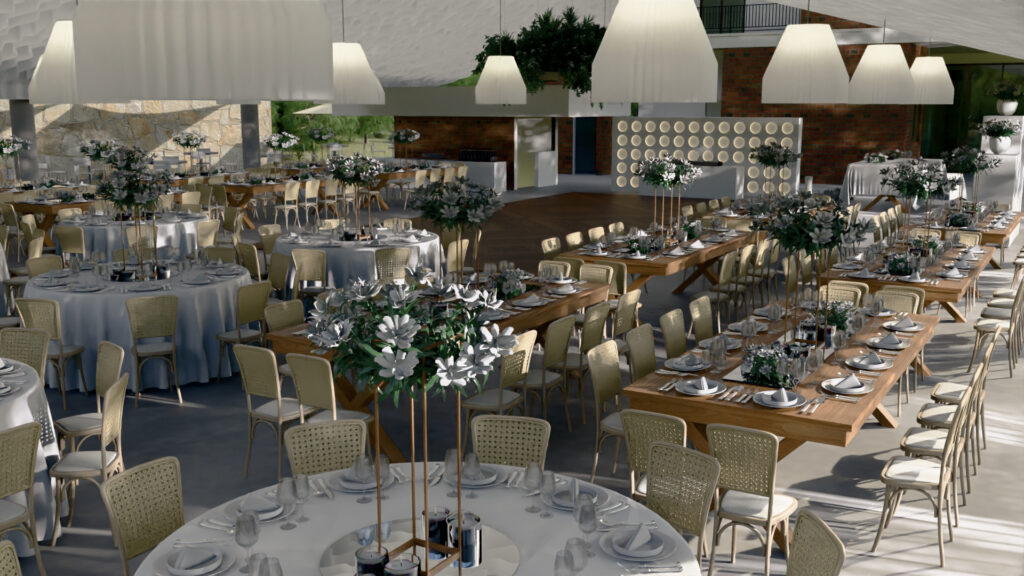
With accommodations for over 200 guests, a chapel, an event hall, and a private estate nestled in the natural surroundings of Malinalco.
Realistic and varied looks for a church wedding, for both women and men