The most practical way to handle a religious ceremony and wedding reception is to hold both at the same location, with a timeline that accounts for travel, photo time, and realistic buffers between each moment. When the church or chapel and the reception hall are miles apart, the risk of delays, lost guests, and dead time at the party grows considerably. Solving this logistics puzzle at the start of your planning keeps you from spending your wedding watching the clock instead of enjoying it.
Couples planning a wedding in Mexico often face the same dilemma: civil ceremony, religious ceremony, and reception on the same day, or spread across different dates? The right answer depends on the size of the celebration, the number of out-of-town guests, and how much family tradition weighs on the final decision. This article breaks down the options, a sample timeline, and the most common mistakes when coordinating a religious ceremony and wedding reception.
In Mexico, the most common combination follows a specific order: the civil ceremony first, either weeks earlier in private or that same morning, then the religious ceremony in the afternoon and, finally, the reception with dinner and dancing. This sequence exists because only the civil marriage has legal validity before the state, while the religious and symbolic ceremonies are acts of spiritual or emotional commitment with no legal effect on their own.
Bringing the religious ceremony and wedding reception together on a single date reduces the number of times your family has to travel, get ready, and arrange lodging, which matters especially when guests are coming from another city or from abroad. It also simplifies communication with vendors, because the photographer, florist, and coordinator all work from a single itinerary instead of two events separated by weeks.
A growing number of couples prefer to take care of the civil ceremony weeks earlier, with just witnesses and immediate family, so the big day focuses exclusively on the religious ceremony and the party. This approach takes pressure off the main day's timeline, because you no longer have to add the judge's time, the signing of the marriage certificate, and the administrative paperwork to a schedule that already includes Mass, cocktail hour, dinner, and dancing.
A realistic timeline for a religious ceremony and wedding reception includes buffers of 15 to 30 minutes between each block, especially if there is travel between the church and the reception hall. The table below shows a sample timeline for a Catholic wedding with the reception on the same property, a format that is increasingly in demand precisely because it eliminates travel time.
| Time | Activity | Practical Notes |
|---|---|---|
| 12:00 PM | Bride's hair and makeup | Allow extra time if a dress fitting is still pending |
| 3:30 PM | Guests arrive at the venue | Assign someone to guide guests to their seats |
| 4:00 PM | Religious ceremony | Average length of 45 to 60 minutes for a Catholic Mass |
| 5:15 PM | Couple's photos and welcome cocktail hour | Take advantage of the golden light if the setting is outdoors |
| 7:00 PM | Couple's entrance to the dinner reception | Confirm the music cue with your audio vendor |
| 8:00 PM | Dinner and toasts | Coordinate speech times with the wedding sponsors |
| 9:30 PM | Dancing and party | Set the bar closing time and the last transportation |
When the chapel and the event hall share the same property, the timeline for the religious ceremony and wedding reception becomes much simpler: there is no traffic to calculate, no guests get lost along the way, and the photography team makes the most of every minute instead of losing it in the car. Gran Malinalco, in Malinalco, State of Mexico, solves this logistics challenge because its private chapel and event hall sit within the same 9 hectares (about 22 acres) of gardens and mountainside, just 90 minutes from Mexico City.
Exclusive rental of the property means the couple has the whole space to themselves, without sharing it with another event on the same day, which leaves room to adjust the schedule without friction from third parties. If you would like to see the design of this space, take a look at the details of the Gran Malinalco private chapel, designed specifically for religious weddings surrounded by nature.
Before you confirm your date and vendors, it helps to go through a list of specific tasks. This checklist helps keep your religious ceremony and wedding reception aligned from the very first planning meeting.
These are the missteps that come up most often among couples who organize their religious ceremony and wedding reception without professional help, and they tend to cost time, money, or both.
The choice of venue is usually what simplifies, or complicates, the entire logistics of the religious ceremony and wedding reception. Places like Gran Malinalco, with lodging for more than 200 guests on the same property, let the party carry on late into the night without worrying those coming from Mexico City or other states, since they do not have to drive back the same night.
For couples looking for a destination close to Mexico City but with the feeling of being far from the city, among gardens and mountains, it is worth reviewing the full offering of Gran Malinalco as a wedding venue near Mexico City, where the chapel, event hall, and lodging are all part of one seamless experience.
If you are still deciding between a religious, civil, or symbolic ceremony, it is best to review the legal and emotional differences between them first, before booking a date with the church.
Holding the religious ceremony and wedding reception in the same place, with a shared timeline and realistic buffers, is what separates a relaxed wedding from a race against the clock. Having the chapel and event hall so close together reduces the margin for error, and a clear checklist keeps administrative details from becoming a source of stress on the day of the event.
If you are looking for that balance of nature, closeness to Mexico City, and simplified logistics, you can schedule a visit to see the space before confirming your date.
Yes, more and more venues in Mexico have a chapel or ceremony space on the same property as the reception hall. This eliminates travel time, reduces the chance of delays, and makes it easier for the photographer and coordinator to work from a single itinerary. Be sure to confirm with the venue that the ceremony space can hold your actual guest count.
A Catholic wedding Mass lasts an average of 45 to 60 minutes, while a Christian ceremony or one from another denomination can vary depending on the church. It is a good idea to confirm the exact length with the priest or pastor, since some parishes include additional elements, such as general communion, that extend the time.
Most Catholic churches in Mexico require that the civil marriage be settled before the religious wedding, or at least scheduled for the same day with the marriage certificate in process. Each parish has its own requirements, so it is best to confirm directly with your chosen church several months in advance.
There is no set distance, but you should add 20 to 30 extra minutes to the travel time estimated by the map when the drive goes through heavy traffic areas like Mexico City. That is why many couples choose venues where the chapel and the hall share the same property, removing this variable entirely.
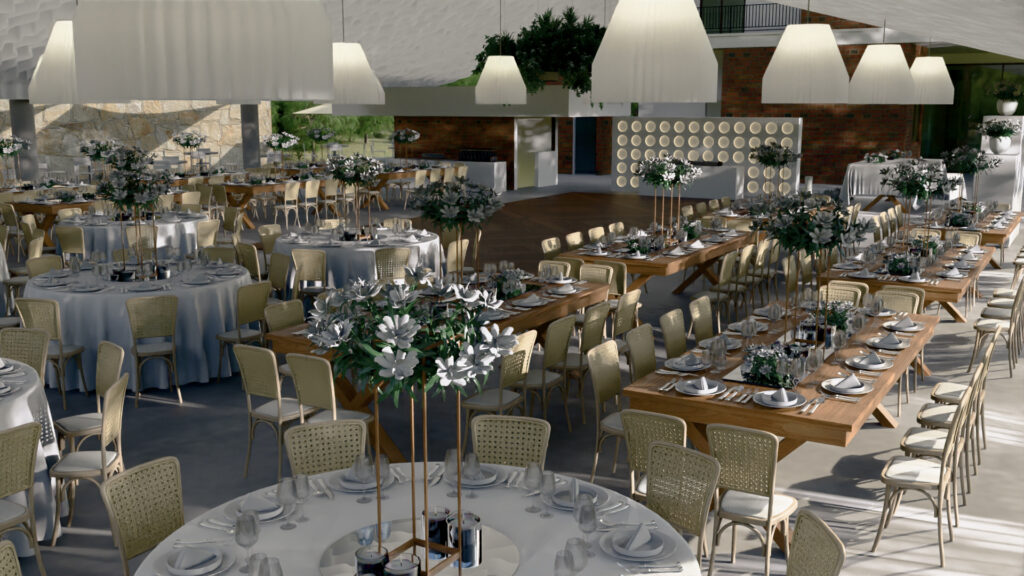
With accommodations for over 200 guests, a chapel, an event hall, and a private estate nestled in the natural surroundings of Malinalco.
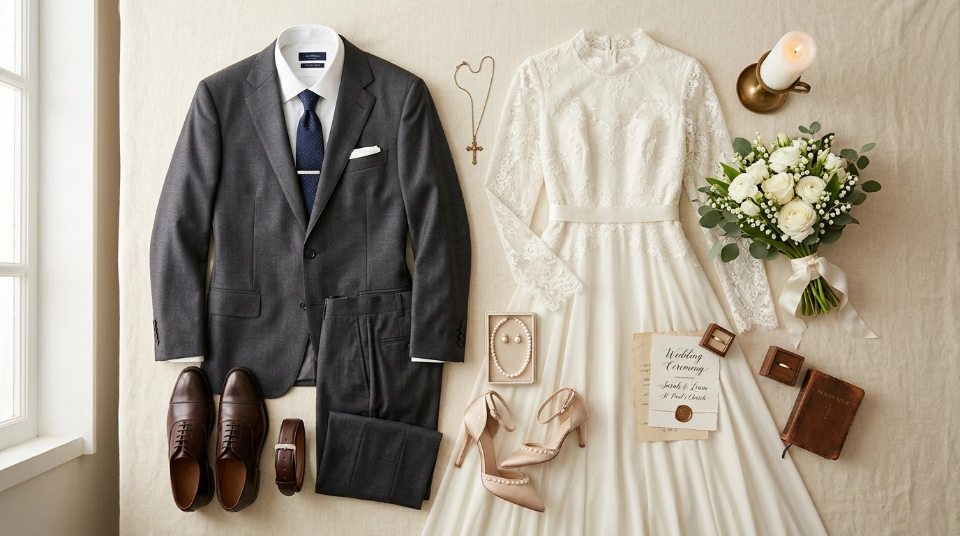
Realistic and varied looks for a church wedding, for both women and men