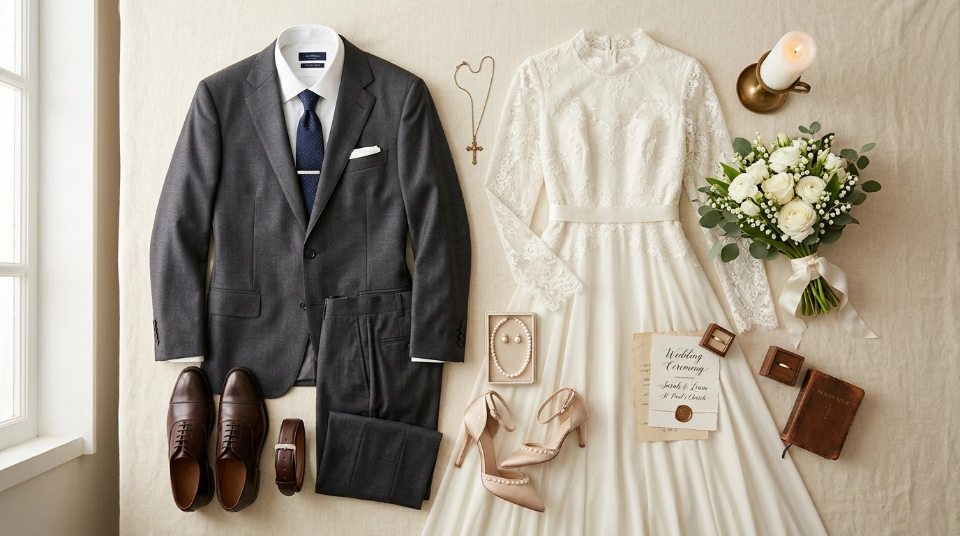
The sacrament of Catholic marriage has parts that no church can change, such as the Liturgy of the Word, the exchange of consent, and the final blessing. That structure is the same in every parish in Mexico and reflects centuries of church tradition. Around that fixed core, though, there is real room for personalization that many couples do not realize exists until they sit down with the priest during premarital counseling.
A modern Catholic wedding makes the most of that margin. It is not about questioning the rite, it is about understanding that the music, the decor, some of the readings, and the setting where the Mass takes place can reflect the couple's style without touching the sacramental heart of the ceremony.
Traditional vows remain the formula most couples in Mexico choose at the altar, but it is increasingly common to ask the priest for permission to add a personal line before or after the liturgical text. That request should be made in advance, during premarital counseling, because not every church allows changes to the official script. A modern Catholic wedding uses that small margin so the couple can share, in a couple of lines, what the commitment means to them, without replacing the sacramental text.
The lazo (wedding lasso) and the arras (unity coins) are two of the most recognizable symbols of a Catholic ceremony in Mexico, and they do not need to disappear for the wedding to feel current. What changes is how they are presented: today it is common to have arras engraved with the wedding date or the couple's initials, and to ask the padrinos to place a lazo made with fresh flowers instead of the traditional rosary. The religious meaning stays intact, only the physical object that represents it gets a modern update.
Music inside the church is usually subject to the venue's own policies, so it is worth checking ahead of time which genres and instruments are allowed during Mass. Outside of those restrictions, the couple can choose Bible readings that reflect their own story and ask a close family member to read them aloud, which adds an intimate moment within a structure that otherwise follows a fixed script.
| Element | Traditional Version | Modern Adaptation |
|---|---|---|
| Vows | Full liturgical text, without changes | A personal line added with the priest's prior permission |
| Arras | 13 classic coins with no engraving | Arras engraved with the wedding date or the couple's initials |
| Lazo | Large rosary or liturgical cord | Floral or ribbon lazo matching the event's color palette |
| Music | Organ and traditional church choir | String quartet or soloist with a repertoire chosen by the couple |
| Readings | Selected only by the priest | Chosen by the couple and read by a close family member |
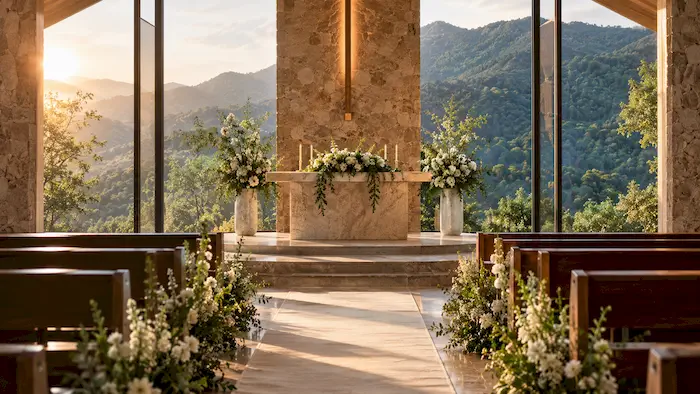
The choice of church or chapel directly affects how much the ceremony can be modernized. High demand parishes tend to have strict rules about decor, schedules, and music, while private chapels inside a venue allow more flexibility because the space is rented exclusively for a single wedding that day. Gran Malinalco, in the State of Mexico, has a private chapel surrounded by natural greenery, 90 minutes from Mexico City, a setting many couples choose because it combines the symbolic weight of a religious ceremony with the freedom to personalize the decor and enjoy the natural light of the place.
A couple who celebrated their modern Catholic wedding in a chapel surrounded by mountains chose to keep the lazo and the arras exactly as tradition calls for, but replaced the altar's floral arrangement with local greenery, in keeping with the natural landscape around them. The Bible reading was chosen by both of them and read by the bride's madrina, and the recessional was set to a string quartet instead of the usual organ. The result was a ceremony that still felt clearly Catholic, but with an identity of its own.
This kind of decision lines up with what several guides on Mexican wedding traditions and their recent adaptations have documented, noting that more and more couples keep the ritual itself while refreshing the object or gesture that represents it.
For couples deciding between a Catholic ceremony and a symbolic one, it helps to first review what each option involves legally and in terms of personalization (symbolic wedding vs. civil wedding), since a Catholic wedding always requires the religious process in addition to the civil one, while a symbolic ceremony carries no legal or liturgical weight. It also helps to review a practical guide on the general order of a wedding ceremony program, regardless of which type of rite is chosen.
Adapting a modern Catholic wedding is not about breaking the rules, it is about knowing them well and using the room that genuinely exists so the ceremony reflects the couple. Symbols like the lazo, the arras, and the vows can stay in their classic form or be updated with small details, and that decision depends on the conversation with the priest and the place chosen for the celebration. Couples looking for a venue with a private chapel, natural gardens, and the logistics between ceremony and reception already resolved can schedule a visit to Gran Malinalco and see firsthand what a modern Catholic wedding feels like, just 90 minutes from Mexico City.
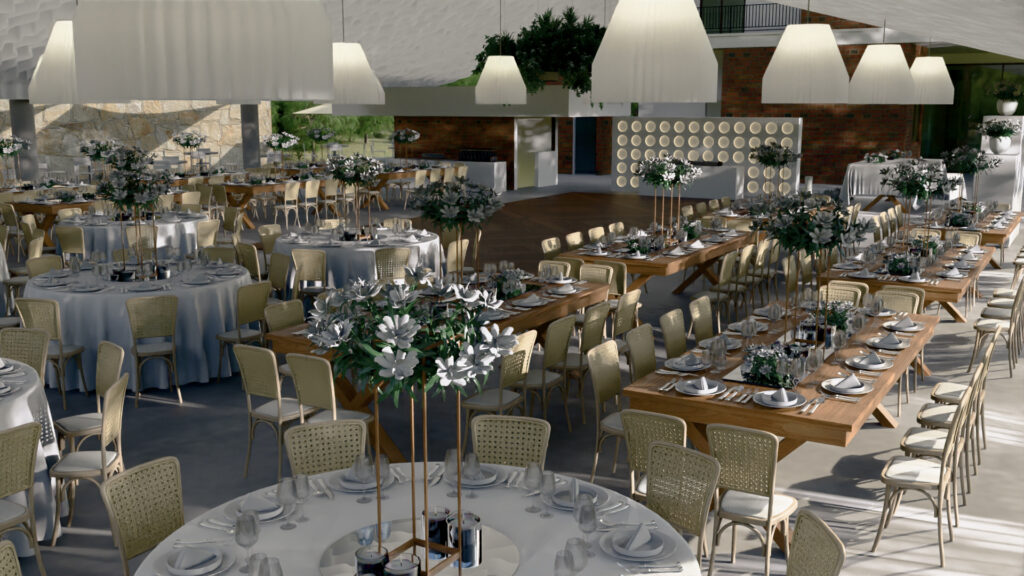
With accommodations for over 200 guests, a chapel, an event hall, and a private estate nestled in the natural surroundings of Malinalco.
Realistic and varied looks for a church wedding, for both women and men